
Delhi HC Dismisses Challenge To Copyright Suit Over Rajasthan Temple Made To Look Like Guruji's Bade Mandir
Riya Rathore
23 Sept 2026 12:58 PM IST
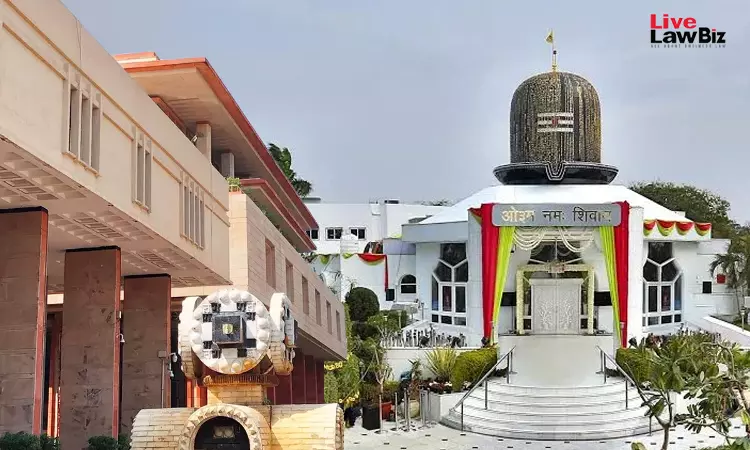
The Delhi High Court on Wednesday dismissed a challenge to a Saket commercial court order refusing to reject a copyright and passing-off suit filed by Guruji Ka Ashram Trust over allegations that a temple-like structure in Sri Ganganagar, Rajasthan, imitates its Bade Mandir in Delhi.
P.J. Sikand, who operates the Rajasthan premises, had sought rejection of the Trust's suit at the preliminary stage.
Justice Purushaindra Kumar Kaurav observed that the objections raised by Sikand required adjudication on evidence and could not be used to bring the suit to an end at this stage.
The Trust operates the Bade Mandir at Bhatti Mines, Chhatarpur, New Delhi. The temple was established by its founder, late Nirmal Singh Ji Maharaj, popularly known as Guruji.
The Trust claims Sikand constructed and operates a structure at Village 12Z in Sri Ganganagar that imitates the Bade Mandir's distinctive features. These include its Shivalinga-shaped structure, staircase, colour scheme, fountain and arrangement of idols and photographs.
It also alleges that the premises is being promoted as "Guruji Ka Darbar", creating an impression that it is associated with the Trust or the Bade Mandir. The Trust further claims that photographs or "swaroops" of Guruji in which it holds copyright are being displayed at the premises.
The Trust relies on a Copyright Assignment Deed dated February 13, 2024, executed by photographer Raghu Rai in its favour.
The Saket court had appointed a Local Commissioner to inspect both premises. The report recorded similarities in their arrangement and placement of idols, deities, swaroops and photographs.
The Saket court subsequently granted interim protection to the Trust. Sikand was restrained from operating or promoting the Rajasthan structure under "Guruji Ka Darbar" or in a manner suggesting an association with the Trust.
He was also restrained from using the photographs claimed by the Trust as copyrighted works.
The court also restrained Sikand from collecting or soliciting donations in the name of Guruji or the Trust, or in a manner suggesting an association with the Trust. However, the Local Commissioner's report said no donation box or other material indicating such collection was found at the site.
Sikand challenged the suit itself, questioning the validity of the 2024 copyright assignment. He argued that the deed was executed after criminal proceedings had begun between the parties.
He also argued that Guruji's photographs had been publicly circulated for years and could not be claimed exclusively by the Trust. Sikand further questioned the Trust's authority to institute the suit and its claims over the name "Guruji" and common religious and architectural features.
The Saket court rejected his application, holding that these objections involved disputed questions requiring adjudication on evidence. It found that the plaint disclosed a cause of action and could not be rejected at the threshold.
Sikand then approached the Delhi High Court against that order. The High Court has now dismissed his challenge, leaving the objections to be considered in the suit.