
Tata Trusts Move Bombay High Court Against N Chandrasekaran's Reappointment As Tata Sons Chairman
Kirit Singhania
26 Nov 2026 5:14 PM IST
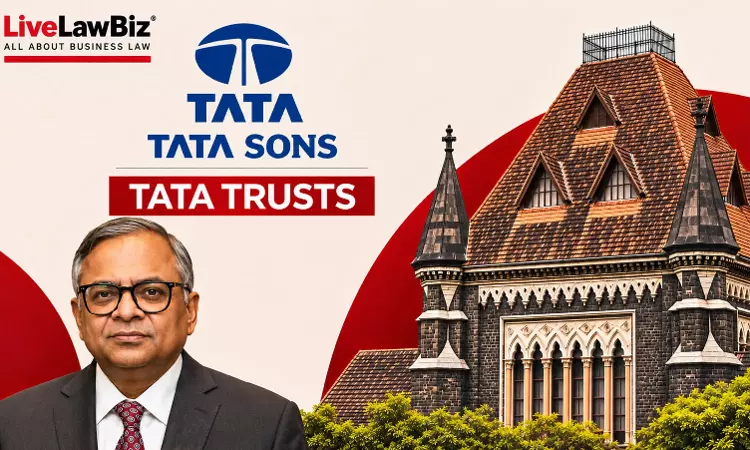
Ahead of Tata Sons' November 30 Board meeting, the Sir Dorabji Tata Trust (SDTT), which holds a 27.98% stake in the company, and the R.D. Tata Trust (RDTT) have moved the Bombay High Court to challenge the September 17 resolution reappointing N Chandrasekaran as Executive Chairman for another five years.
The two suits were mentioned before the Bombay High Court on Thursday
Justice Arif Doctor recused himself without assigning reasons, following which the matters were mentioned before Justice Abhay Ahuja, who is scheduled to hear them on November 27.
The two trusts have filed separate suits against Tata Sons and six of its directors. They contend that the resolution was passed in violation of Article 121 of Tata Sons' Articles of Association (AoA), which governs decision-making at Board meetings and requires the affirmative vote of a majority of directors appointed under Article 104B for matters requiring a majority decision.
The suit filed by SDTT states that at the September 17 Board meeting, Venu Srinivasan voted in favour of Chandrasekaran's reappointment, while Noel Tata opposed it. Despite the disagreement, the Chairman of the meeting, Harish Manwani, exercised a casting vote in favour of the resolution.
“The Chairman of the meeting cannot exercise a casting vote in respect of their differing votes and on that basis purport to pass a Board resolution contrary to Article 121,” the suit states.
The Trust argues that Article 121 does not permit the Chairman to use a casting vote to overcome a split between the two Trust-nominated directors. It contends that the provision's requirement of affirmative support from a majority of the Trust-nominated directors is independent of the overall majority required for a Board resolution.
The dispute traces back to August 12, when Chandrasekaran informed the Board that he would not seek another term after his tenure ended on February 20, 2027.
The following day, SDTT, along with five other Tata Trusts, wrote to Tata Sons proposing the constitution of a Selection Committee under Article 118 to appoint a new Chairman.
The plaintiff states that the company neither replied to the letter nor took steps to constitute the committee.
However, at the September 17 meeting, Chandrasekaran stated that he had reconsidered his earlier decision and was willing to serve another term. Despite objections from Noel Tata, the Board proceeded with his reappointment for another five years, from February 21, 2027 to February 20, 2032.
The SDTT has also raised concerns over the proposed Board meeting on November 30. Its agenda includes confirmation of the minutes of the September 17 meeting and convening an Extraordinary General Meeting (EGM).
The Trust apprehends that the proposed EGM may be used to seek shareholder approval for Chandrasekaran's reappointment.
“The agenda expressly includes confirmation of the minutes of the meeting of 17th September 2026 and convening an EGM. The Plaintiff apprehends that the proposed EGM may be used to seek shareholder approval for the reappointment of Defendant No. 2. A resolution passed in breach of Article 121, once communicated to statutory authorities or otherwise acted upon, could not readily be undone,” the suit states.
It further apprehends that resolutions concerning the Trusts may be passed at the November 30 meeting through a casting vote, without the affirmative support required under Article 121.
Among its reliefs, SDTT has sought a declaration that the September 17 resolution is invalid, a permanent injunction restraining Tata Sons from acting upon it, and an order preventing the Chairman from exercising a casting vote in respect of the votes of the Trust-nominated directors.
SDTT has also sought ₹50 crore in damages, alleging that the resolution and subsequent actions have jeopardised its special protective rights under the AoA and affected the value of its shareholding.
The separate suit filed by RDTT seeks ₹15 crore in damages. Both trusts have claimed interest at 18% per annum.