
Asset Sale Alone Can't Bar Financial Creditor From Seeking NCLT Transfer For Revival: Bombay High Court
Kirit Singhania
24 Aug 2026 1:47 PM IST
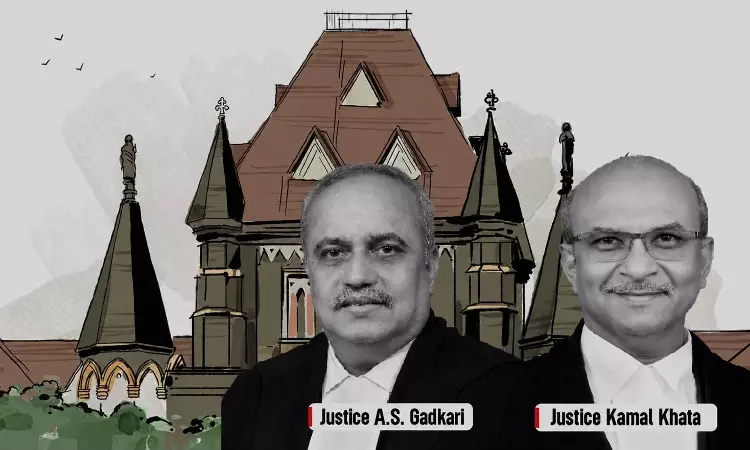
The Bombay High Court on 20 August held that a financial creditor can seek transfer of winding up proceedings to the National Company Law Tribunal (NCLT) for revival under the Insolvency and Bankruptcy Code, 2016 (IBC), even where secured creditors have sold the company's assets outside the winding up proceedings, as such sale does not by itself make revival irreversible.
A Division Bench of Justices A.S. Gadkari and Kamal Khata dismissed Omkara Assets Reconstruction Pvt Ltd's appeal against the Single Judge's order transferring the winding up proceedings concerning Patheja Forging & Auto Parts Manufacturing Ltd. to the National Company Law Tribunal (NCLT) under Section 434(1)(c) of the Companies Act, 2013. The judges held:
"...if there exists a possibility to revive the company under the IBC framework, the sale of assets by the secured creditors standing outside the winding-up proceedings does not by itself constitute an irreversible step warranting refusal of transfer. We are fortified by the decision of the Supreme Court in A. Navin Chandra Steels Pvt. Ltd. (supra)."
Patheja Forging & Auto Parts Manufacturing had been in winding up since 2008, while its net worth had eroded as early as 1997. Omkara Assets Reconstruction opposed the transfer of the proceedings to the NCLT, arguing that the sale of the company's core assets at Aurangabad and Pune through Debt Recovery Tribunal (DRT) proceedings had made revival impossible.
The Single Judge, on 3 February 2026, allowed an application under Section 434(1)(c) of the Companies Act and transferred the winding up proceedings against Patheja Forging & Auto Parts Manufacturing to the NCLT for consideration under the IBC. The respondent, representing erstwhile financial creditors holding more than 50% of the company's financial debt, argued that it was legally entitled to seek transfer of the proceedings to the NCLT to pursue revival under the IBC.
The High Court accepted the argument and held that a financial creditor is entitled to seek transfer of winding up proceedings to the NCLT for revival, particularly where the revival process can be undertaken in a time-bound manner. It held:
"A financial creditor is entitled in law to seek a transfer of proceedings to N.C.L.T. for the revival of the company. We find no justifiable reason to reject such an Application by an erstwhile financial creditor, particularly where the Applicant seeks to do the same in a time bound manner and within the rehabilitative framework provided under the I.B.C."
The judges relied on the Supreme Court's decision in Action Ispat and Power Pvt Ltd v. Shyam Metalics and Energy Ltd., which held that transfer of winding up proceedings depends on whether the winding up has reached an irreversible stage.
The Bench noted that assets remained at Thane, Bengaluru and Pune in the custody of a DRT receiver, while other assets remained with the Official Liquidator. It found that only limited steps had been taken in the winding up proceedings and that these steps had not made revival irreversible. It also observed that it was ultimately for investors to decide whether revival of the company would serve their interests.
Accordingly, the High Court dismissed Omkara Assets Reconstruction's appeal without costs, leaving intact the transfer of the winding up proceedings to the NCLT.
For Appellant: Advocates Prakash Shinde a/w Niyati Merchant, Rajlaxmi Pawar i/by MDP Legal
For Respondents: Zubin Behramkamdin, senior counsel a/w Sakshi Kashyap i/by Ms. Kaizeen Mistry