
Andhra Pradesh High Court Dismisses BGR Energy Appeal, Rules Solvency Cannot Defeat Winding-Up Petition
Sandhra Suresh
18 May 2026 3:31 PM IST
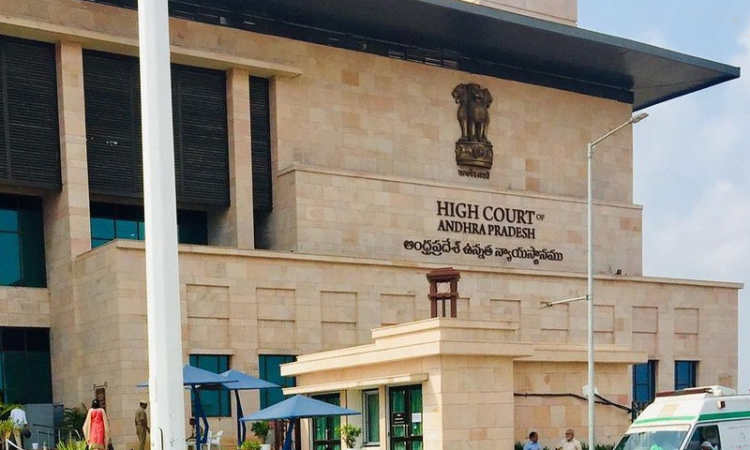
The Andhra Pradesh High Court at Amaravati on 7 May held that commercial solvency alone cannot defeat a winding-up petition when the debt is admitted and no bona fide dispute exists. The Court reiterated that the existence of a genuine dispute determines maintainability under Section 433(e) of the Companies Act, 1956.
A Division Bench comprising Justices Battu Devanand and Subhendu Samanta dismissed the appeal filed by BGR Energy Systems Ltd. and upheld the Single Judge's order dated 13 April 2015, which admitted the winding-up petition filed by Sanghvi Movers Ltd. and directed its publication. It held:
“It is clear and unambiguous that the appellant company has neglected to pay its admitted debts.”
The dispute arose from a service order dated 27 February 2012, under which Sanghvi Movers supplied a 600 MT crawler crane to BGR Energy for five months at a hire charge of Rs 2.40 crore, along with mobilisation and demobilisation charges of Rs 30 lakh each. Sanghvi Movers received the mobilisation charges, but BGR Energy refused to pay the demobilisation charges after the contract period was extended.
Sanghvi Movers issued a statutory notice and filed a winding-up petition under Section 433(e) read with Sections 434(1)(a) and 439(1)(b) of the Companies Act. The Single Judge admitted the petition and held that BGR Energy raised no bona fide defence.
BGR Energy argued that a genuine dispute existed over the demobilisation charges and relied on an amended service order dated 6 December 2012, which allegedly removed the demobilisation clause. It also argued that the company remained solvent and that winding-up proceedings could not continue against a solvent entity. In the alternative, it sought relegation to a civil suit on deposit of the disputed amount.
Sanghvi Movers denied the amendment and argued that the alleged revised service order was never communicated. It claimed that BGR Energy introduced it later only to create a defence. It further argued that solvency does not defeat a winding-up petition where no bona fide dispute exists.
The High Court found that BGR Energy failed to prove communication of the amended service order dated 06 December 2012. It held that this weakened the defence and confirmed that no bona fide dispute existed. The Bench reiterated that commercial solvency cannot, by itself, defeat a winding-up petition when the statutory conditions for debt and default stand satisfied.
It also held that civil court remedies and company court remedies operate in different fields. Where no bona fide dispute exists, a creditor can proceed under Section 433(e). The judges observed:
“The remedy available before the civil court and the remedy available before the company court are of separate perspective. Time and again different High Courts as well as the Hon'ble Supreme Court has held that when respondent company had shown a bona fide dispute, the Company Court may direct the petitioner to file a suit and may pass necessary directions to deposit the entire disputed amount along with interest in the Court”
Accordingly, finding no error in the Single Judge's reasoning, the High Court dismissed the appeal.
For Appellants: Advocate Karan Talwar
For Respondents: Advocates DS Sivadarshan