
COMPANY LAW
NCLT Chennai Approves Scheme Merging Dr. Agarwal's Eye Hospital With Dr. Agarwal's Health Care
The National Company Law Tribunal at Chennai has sanctioned the second motion petition seeking approval of the Scheme of Amalgamation between Dr. Agarwal's Eye Hospital Limited and Dr. Agarwal's Health Care Limited. A coram of Judicial Member Sanjiv Jain and Technical Member Venkataraman Subramaniam passed the order. The petition was filed after the Tribunal, in the first motion proceedings, had directed the companies to convene meetings of their equity shareholders, secured and unsecured...
Popular Finance Scam: NCLT Kochi Orders Winding Up Of 14 Group Entities
The National Company Law Tribunal at Kochi on Tuesday ordered the winding up of several companies and limited liability partnerships forming part of the Popular Finance Group in winding up proceedings initiated by the Union of India through the Serious Fraud Investigation Office (SFIO).A coram of Judicial Member Vinay Goel and Technical Member Ravichandran Ramasamy passed the order. The Tribunal also appointed the Official Liquidator as the Company Liquidator to take further steps in accordance...

LiveLawBiz Company Law Quarterly Digest: July- September 2026
SUPREME COURTNSEL Moves Supreme Court Against HC Order Refusing Joint Trial In CBI Cases Over Alleged Payment CrisisNational Spot Exchange Ltd (NSEL) has moved the Supreme Court challenging the Bombay High Court's March 27, 2026 judgment refusing to direct a joint trial in two CBI cases arising out of the alleged NSEL payment crisis.Case Title : National Spot Exchange Limited vs The Central Bureau of Investigation Bank Securities and Fraud Cell Case Number : Diary No. 37177 of 2026Supreme...
Mere Non-Payment Of Money Under Tribunal's Order Not Contempt Without Wilful Disobedience: NCLT Ahmedabad
The Ahmedabad bench of the National Company Law Tribunal (NCLT) has recently held that mere non-payment of an amount directed to be paid under an order does not, by itself, constitute civil contempt unless there is material showing conscious, deliberate and wilful disobedience.The bench of Judicial Member Shammi Khan and Technical Member Sanjeev Sharma observed, “However, the remaining unpaid amount, by itself, cannot constitute contempt in the absence of material establishing the requisite...
Directions In Quashed NCLT Order Cannot Survive Or Be Enforced Independently: NCLAT Delhi
The New Delhi Bench of the National Company Law Appellate Tribunal (NCLAT), on 30 September held that once an order of the National Company Law Tribunal (NCLT) is quashed by an appellate forum, the directions contained in the quashed order cannot survive or be enforced independently. A Bench of Judicial Member Sharad Kumar Sharma and Technical Member Indevar Pandey held: “…it is known by common judicial prudence that, once the order is quashed by an appellate forum, it does not exist in the...
NCLT Chandigarh Refuses To Recall Scheme Order, Holds Accounting Dispute Insufficient To Establish Fraud
The National Company Law Tribunal (NCLT), Chandigarh, has refused to recall its order dispensing with meetings of unsecured creditors for a Scheme of Demerger and Amalgamation involving Okaya Power Private Limited and three group companies.The tribunal held that the dispute over the dues claimed by two Microtek companies did not establish that Okaya had deliberately concealed an admitted liability or practised fraud to obtain the earlier order. It observed that the dispute essentially concerned...
NCLAT Dismisses Appeal Against Order Ensuring Compliance With Earlier Directions
The National Company Law Appellate Tribunal (NCLAT) at Delhi has dismissed an appeal against an order directing disclosure of machinery details, holding that the impugned order was intended to ensure compliance with earlier directions that had not been challenged by the appellant.The appeal was filed by director Ashok Kumar Kataria against the July 30, 2026, order of the National Company Law Tribunal (NCLT). The order directed the concerned respondents to confirm the list of machinery owned by...
Company Cannot Deny Deposit Repayment Claim Merely Because Depositor Was Non-Member: NCLT Allahabad
The National Company Law Tribunal (NCLT) at Allahabad has held that a company cannot defeat a non-member's claim for repayment merely by contending that the money was received from someone who was not its member, where the amount falls within the statutory definition of a "deposit."A bench comprising Judicial Member Praveen Gupta and Technical Member Ashish Verma held that a company's alleged non-compliance with the rules governing acceptance of deposits does not give it a right to retain money...
NCLT Chandigarh Allows First Motion In Duet India Hotels-Caspia Hotels Demerger, Dispenses With Meetings
The Chandigarh Bench of the National Company Law Tribunal (NCLT) on 28 September allowed the First Motion application filed jointly by Duet India Hotels (Hyderabad) Private Limited, the Demerged Company, and Caspia Hotels Private Limited, the Resulting Company. Judicial Member Khetrabasi Biswal and Technical Member Kaushalendra Kumar Singh dispensed with the meetings of shareholders and creditors for a Scheme of Arrangement after noting the consents obtained from them. The Bench observed: ...
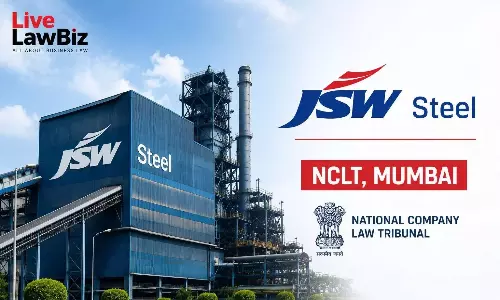
NCLT Mumbai Sanctions Demerger Of GE Power India With JSW Energy, Preserves Income Tax Rights
On 1 October, the Mumbai Bench of the National Company Law Tribunal sanctioned a Scheme of Arrangement providing for the demerger of GE Power India Limited's Durgapur-based business to JSW Energy Limited. A Bench comprising Judicial Member Sushil Mahadeorao Kochey and Technical Member Prabhat Kumar sanctioned the Scheme after considering reports from the Chairperson, Regional Director and Income Tax Department. It noted that the Scheme had received the requisite approval from shareholders and...
NCLT Mumbai Approves Merger Of Tata Group Firm Rujuvalika Investments Into Tata Steel
The National Company Law Tribunal at Mumbai has sanctioned merger of Rujuvalika Investments Limited, a wholly owned subsidiary of Tata Steel Limited into Tata Steel.A coram of Judicial Member Ashish Kalia and Technical Member Banwari Lal Meena while approving the second motion application, said “From the materials available on record, the Scheme appears to be fair and reasonable and is not in violation of any provisions of law or contrary to public interest/policy.” The Tribunal noted that...
NCLAT Upholds Waiver Allowing IMPPA Members To Pursue Oppression, Mismanagement Case
The National Company Law Appellate Tribunal (NCLAT) has upheld a waiver allowing members of the Indian Motion Picture Producers Association (IMPPA) to pursue an oppression and mismanagement case against the association, despite IMPPA's objection over the number of members supporting the petition.A bench of Judicial Member Justice Sharad Kumar Sharma, Technical Members Arun Baroka and Indevar Pandey upheld the National Company Law Tribunal (NCLT), Mumbai's decision to grant the waiver. The...