
COMPANY LAW
NCLT Mumbai Waives Membership Threshold For Film Producers' Association Members' Oppression Plea
The Mumbai Bench of the National Company Law Tribunal has allowed members of the Indian Motion Picture Producers' Association (IMPPA) to pursue an oppression and mismanagement petition by waiving the statutory membership requirement. It held that the allegations warranted further examination. The tribunal also found that the alleged refusal to approve publicity material for a member's already registered film, if correct, amounted to an exceptional circumstance justifying the waiver. A bench of...

Madras High Court Refuses To Quash CBI FIR Against Ind Barath Power Directors Despite Withdrawal Of Fraud Tag
The Madras High Court has refused to quash a CBI FIR against the directors of Ind Barath Power Gencom Limited. It held that the subsequent withdrawal of the company's "Fraud" classification by the lending bank does not wipe out criminal proceedings arising from allegations of diversion of funds, fabrication of records, and other cognisable offences. The court also observed that the FIR was not registered solely on the basis of the forensic audit that led to the fraud classification. Justice...
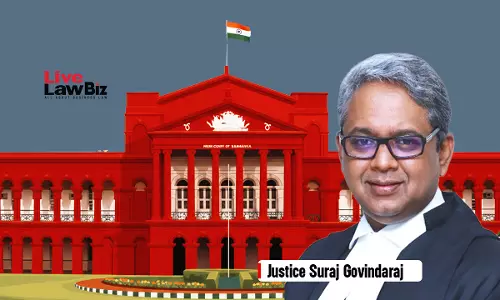
When Can A Disqualified Company Director Continue In Office? Karnataka High Court Clarifies
The Karnataka High Court has clarified that a director disqualified because of a company's statutory defaults can continue to hold office in that defaulting company so that the director can undertake the statutory compliance required to rectify the defaults and authorities can pursue proceedings against the person responsible. It also held that such a director must vacate office in companies that are not in default. Justice Suraj Govindaraj passed the order while partly allowing a review...

NCLT Ahmedabad Approves J B Chemicals-Torrent Pharmaceuticals Merger Scheme
The Ahmedabad Bench of the National Company Law Tribunal (NCLT) on 6 July approved the Scheme of Amalgamation between J.B. Chemicals & Pharmaceuticals Ltd. and Torrent Pharmaceuticals Ltd., observing that the merger was bona fide and in the interest of shareholders and creditors. Judicial Member Chithra Hankare and Technical Member Dr. V.G. Venkata Chalapathy sanctioned the scheme and held that the amalgamation would take effect in accordance with its terms. The Bench observed: “We are of...

NCLT Mumbai Approves Merger Of Wholly-Owned Subsidiary Embellish Houses Into Godrej Properties
The Mumbai Bench of the National Company Law Tribunal (NCLT) has recently sanctioned the scheme for amalgamation of Embellish Houses Private Limited, a wholly owned subsidiary of Godrej Properties Limited, with the listed real estate company after finding the proposal to be fair, reasonable, and in accordance with law. The tribunal fixed November 1, 2025, as the appointed date for the merger.A bench of Technical Member Anil Raj Chellan and Judicial Member K.R. Saji Kumar held that the scheme was...
NCLT Chennai Approves Merger Of India Radiators With Mercantile Ventures
The National Company Law Tribunal (NCLT) at Chennai has approved the Scheme of Amalgamation under which India Radiators Limited will merge with Mercantile Ventures Limited, holding that the scheme would benefit the companies and would not be detrimental to the interests of their shareholders.A bench of Judicial Member Sanjiv Jain and Technical Member Venkataraman Subramaniam observed,“After analysing the Scheme in detail, this Tribunal is of the view that the Scheme as contemplated amongst the...

Pre-Cognizance Hearing Under BNSS Doesn't Apply In Companies Act Cases: Punjab & Haryana High Court
The Punjab and Haryana High Court has held that companies and individuals prosecuted by the Serious Fraud Investigation Office (SFIO) under the Companies Act, 2013 are not entitled to a pre-cognizance hearing under the first proviso to Section 223 of the Bharatiya Nagarik Suraksha Sanhita (BNSS). It ruled that the Companies Act prescribes a separate procedure for taking cognizance in such prosecutions. Justice Subhas Mehla, who heard a petition filed by Vivo India Private Limited challenging...

NCLT Mumbai Sanctions Sarda Dairy Demerger Scheme With Chhatisgarh Investments
The Mumbai Bench of the National Company Law Tribunal (NCLT) has sanctioned a composite scheme of arrangement involving the demerger of the dairy manufacturing business of Sarda Dairy & Food Products Ltd into Chhatisgarh Investments Ltd.The Tribunal also approved the reorganisation of reserves and reduction of the equity share capital of the demerged company holding that the scheme was fair, reasonable and not contrary to law or public policy.A Bench of Technical Member Anil Raj Chellan and...
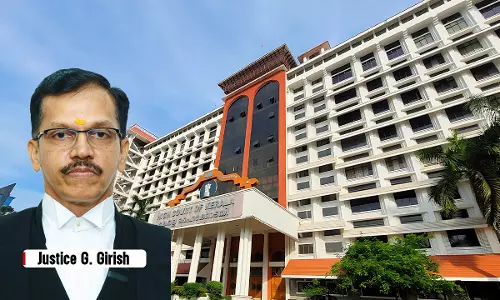
Section 452 Companies Act Not Decriminalised, Criminal Courts Retain Jurisdiction: Kerala High Court
The Kerala High Court on 1 July held that offences under Section 452 of the Companies Act, 2013, relating to the wrongful withholding of company property by an officer or employee, remain triable by criminal courts and were not decriminalised by the Companies (Amendment) Act, 2020. Justice G. Girish allowed Tata Coffee Limited's revision petition, set aside the Chief Judicial Magistrate, Thrissur's order returning the company's complaint against its former employee, and directed the Magistrate...
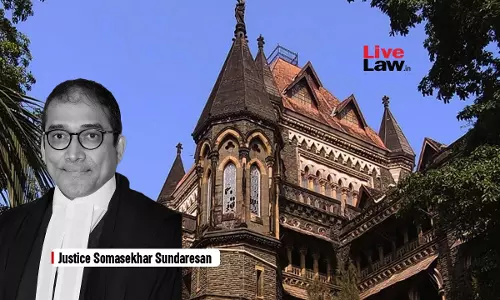
Asset Transfers To Defeat Creditors During Liquidation Are Void As Fraudulent Preference: Bombay HC
The Bombay High Court on 25 June held that a transfer of company property made during liquidation proceedings to promoters, without valid consideration and without a registered instrument, constitutes a fraudulent preference under Section 531(1) of the Companies Act, 1956, when it operates to defeat creditors' rights. Justice Somasekhar Sundaresan allowed an Official Liquidator's Report, and declared the transfer of agricultural land in favour of the promoters of Indage Vineyard Pvt Ltd void,...
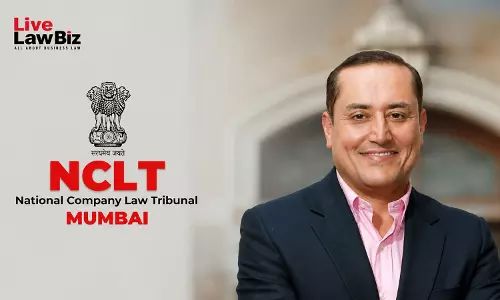
NCLT Mumbai Partly Allows Oppression Plea Against Hotmail Founder, Orders Rectification & Compensation
On 2 July, the Mumbai Bench of the National Company Law Tribunal (NCLT) partly allowed an oppression and mismanagement petition against Hotmail founder Sabeer Bhatia and other respondents in relation to Arzoo.com (India) Pvt Ltd, holding that their acts amounted to oppression in the company's shareholding and financial mismanagement through diversion of company funds. Judicial Member Sushil Mahadeorao Kochey and Technical Member Prabhat Kumar granted relief on certain oppression and financial...
Board Cannot Refuse Valid Requisition For EGM, Cannot Judge Its Legality: NCLT Kochi
The National Company Law Tribunal (NCLT) at Kochi has held that a company's Board of Directors is bound to convene an Extraordinary General Meeting (EGM) once it receives a valid requisition under the Companies Act. The tribunal observed that the Board cannot examine the legality, correctness, or genuineness of such a requisition before acting on it. A bench of Judicial Member Vinay Goel and Technical Member Ravichandran Ramasamy held, “The Board cannot assume the role of a court or Tribunal...