
Judgment On Admission Under CPC Requires Clear Admission Of Transaction And Amount Of Liability: Calcutta High Court
Shivani PS
16 March 2026 1:23 PM IST
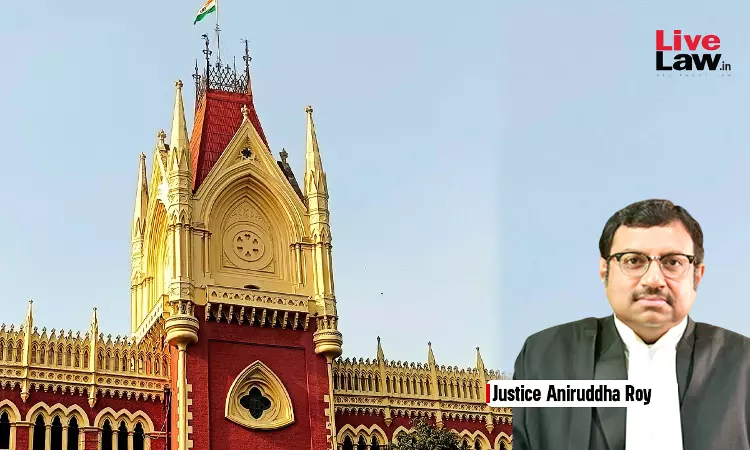
The Calcutta High Court has recently held that a court can grant a decree on admission under Order XII Rule 6 CPC only when the defendant clearly admits both the transaction and the amount due, observing that the rule must be applied strictly.
Holding that mere acknowledgement of transactions is insufficient unless the specific amount payable is admitted, the court granted a Rs 12 lakh decree on admission to Skipper Limited in its commercial dispute with Prabha Infrastructure Private Limited, while directing that the remaining claim proceed to trial.
A single bench of Justice Aniruddha Roy emphasised that the provision is discretionary and cannot be used to bypass trial where the extent of liability remains disputed. Clarifying the meaning of “admission” and “clear admission on facts”, the Bench held that:
“mere admission of the transactions by and between the parties that the goods were sold by plaintiff and the defendant had accepted it, would not suffice but also a clear admission of facts has to be there to the extent of unequivocal admission of quantum of liability. If the admission of transaction is admitted but the quantum is not unequivocally admitted or the admission is such coupled with any qualifying statement, the same should not be construed and treated as a clear admission of facts with regard to liability”.
The Court found that although certain correspondence showed acknowledgment of transactions, only one email constituted a clear admission of liability. It observed:
"The email dated September 08, 2021 clearly shows an unambiguous admission on the part of the defendant to pay a sum of Rs.10 to 12 lakhs on the next date. The next part of the email shows some proposal for reconciliation of the material. The email of the plaintiff dated August 24, 2021 shows that the plaintiff has also contended that balance payment beyond 20 lakhs may be released after site material reconciliation. Except this, there was no other admission on the part of the defendant with regard to quantum of its liability towards the plaintiff either in the written statement filed by it in the previous suit or in any of the inter-party correspondences exchanged by and between the parties on record or otherwise.”
The dispute arose from the supply of materials by Skipper Limited to Prabha Infrastructure Private Limited pursuant to purchase orders issued by the defendant. Skipper Limited supplied materials in two consignments worth Rs 1,06,39,068. Out of this amount, Prabha Infrastructure Private Limited paid Rs 66,31,966, leaving a balance principal claim of Rs 40,07,102.
Earlier, Skipper Limited had instituted a commercial suit seeking recovery of Rs 49,95,155 with interest. However, the Calcutta High Court rejected the plaint on December 20, 2023. Following this, Skipper Limited initiated mediation under the Commercial Courts Act, 2015, which failed. Skipper Limited thereafter instituted the present commercial suit before the Commercial Division of the Calcutta High Court and filed an application under Order XII Rule 6 CPC seeking judgment on admission for Rs 71,68,870.
Senior Advocate Sabyasachi Choudhury, appearing for Skipper Limited, argued that Prabha Infrastructure Private Limited had acknowledged the transactions and liability through emails dated 9 March, 20 March and 8 September 2021, as well as post-dated cheques issued in December 2020 and March 2021.
He submitted that under Section 42 of the Sale of Goods Act, 1930 and Section 55 of the Contract Act, 1872, the goods were deemed accepted and objections regarding delay could not be raised later.
Advocate Jayanta Sengupta, appearing for Prabha Infrastructure Private Limited, contended that the alleged admissions were not clear or unconditional. He argued that issues relating to specifications and a GST dispute freezing the company's bank account explained the payment delay, and the emails relied upon were merely proposals for reconciliation, not admissions of the full liability.
On examining the correspondence and pleadings, the Court held that admission of the transaction alone is insufficient unless the quantum of liability is clearly admitted. Explaining the nature of the provision, the Court observed:
“Rule 6 to Order XII of CPC is an enabling provision. It is neither mandatory nor peremptory but directory. The said expression 'the Court may ….' itself shows that the legislature thought it fit to reserve the discretion of the Court to be used judiciously, as if a judgment is passed under these provisions, the same will be a summary judgment without any trial which permanently adjudicates the rights of the parties by passing a decree against the defendant. Thus, unless the admission is clear, unambiguous and unconditional both in respect of the transaction and the liability, the discretion of the Court should not be exercised by negating the right of the defendant to defend the claim against it.”
Accordingly, Justice Roy ordered:
“In view of the foregoing reasons and discussions, there shall be a decree/judgment upon admission for a sum of Rs.12 lakhs against the defendant on account of principal only and not on interest. The decree shall be drawn up and completed by the department expeditiously.”
The court clarified that the remaining principal claim of Rs 28,07,102 and the entire claim for interest will proceed to trial.
For Skipper Limited: Advocates Sabyasachi Choudhury (Senior Advocate), Sayantan Bose, Shounak Mukhopadhyay, Manisha Das
For Prabha Infrastructure Private Limited: Advocates Jayanta Sengupta, Ritoban Sarkar, Dilawar Khan, Apple Mughali Jimo