
Bombay High Court Imposes ₹2 Lakh Costs On L&T Entities Over Suit Challenging Removal As Mumbai Slum Developer
Kirit Singhania
11 Jun 2026 9:34 AM IST
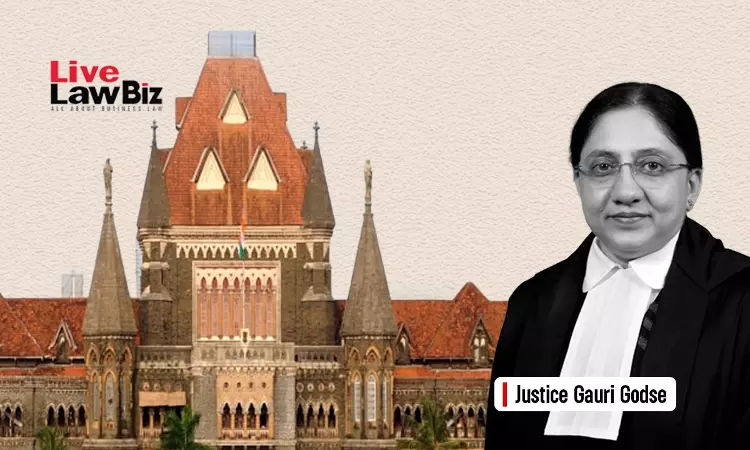
The Bombay High Court has recently imposed costs of ₹2 lakh each on L&T Asian Realty Project LLP and L&T Realty Limited, along with three other applicants, after holding that their pleas seeking rejection of a commercial suit unnecessarily delayed the proceedings and defeated the objective of speedy disposal of commercial disputes.
Justice Gauri Godse dismissed the applications filed by the L&T entities, Shiv Infra Vision Pvt Ltd, Portsmouth Buildcon Pvt Ltd and the Chief Executive Officer of the Slum Rehabilitation Authority.
The applications sought rejection of a suit filed by K.S. Chamankar Enterprises and its partner Krishna Shantaram Chamankar over their removal as developers of slum rehabilitation projects in Mumbai.
Observing that the applications consumed judicial time and ran contrary to the objective of speedy disposal of commercial suits, the court ruled:
“Such attempts by the defendants defeat the very object of the Commercial Courts Act, namely, the speedy disposal of suits and also unnecessarily consume the court's time. Hence, the applicant/applicants in each application shall pay the costs of their respective applications to the plaintiffs, quantified at Rs. 2,00,000/- per application. The costs shall be paid within two weeks from today.”
The suit has been filed by K.S. Chamankar Enterprises and Krishna Shantaram Chamankar. The plaintiffs contend that they were appointed developers for three slum rehabilitation schemes and were subsequently removed and replaced despite having undertaken substantial rehabilitation and infrastructure work.
According to the plaintiffs, they completed rehabilitation buildings, accommodated slum dwellers and carried out infrastructure work before receiving a termination notice in January 2017. They have alleged that officials of the Slum Rehabilitation Authority and several private entities acted in concert to facilitate their removal and the appointment of a new developer.
The plaintiffs have further alleged that reports prepared by SRA authorities contained factually incorrect statements. According to them, those reports were relied upon in the process that resulted in their removal and the appointment of a new developer.
The Court held that the allegations raised by the plaintiffs could not be examined at the threshold stage. It held that they raised triable issues requiring adjudication in the suit.
On the objection that the suit could not be entertained by a civil court, the Court observed:
“Whether the allegations pleaded in the plaint would constitute an action vitiated by malice in fact and lack good faith and is motivated by personal bias, grudge, oblique or improper motive or ulterior purpose raises triable issues and would fall within the civil court's jurisdiction. Hence, the plaint cannot be rejected at the threshold on the ground of the bar under Section 42 of the Slum Act.”
The court also rejected the contention that the suit was barred by limitation. It held that the plaintiffs were entitled to rely on the Supreme Court's orders extending limitation during the COVID-19 pandemic. The Court concluded that the suit instituted on September 11, 2023 was within time.
Explaining its conclusion on limitation, the court observed:
“Therefore, without the exemption period, the three-year limitation would expire on 3rd October 2021, i.e. during the exempted period. Therefore, as of 15th March 2020, the actual balance period of limitation was 1 year, 6 months and 17 days (From 15/3/2020 to 3/10/2021). Thus, after the exemption period ended on 28th February 2022, the actual balance period of limitation available was 1 year, 6 months and 17 days, which is longer than 90 days and would have ended on 17th September 2023. The suit was filed on 11th September 2023.”
The court further rejected the plea for rejection of the plaint based on an earlier counterclaim filed by the plaintiffs in separate proceedings. It held that the issue raised a triable question that could not be decided at the stage of considering an application for rejection of the plaint.
The court observed:
“Therefore, the cause of action and the relief in the counterclaim are based on contractual obligations. Even if the pleadings on the cause of action may seem overlapping, the issue, if any, as to the bar under Order II Rule 2 cannot be considered at this stage, as the present suit is filed on the basis of allegations of fraud, malice and collusion. Therefore, even if the issue of bar under Order II Rule 2 would arise, the same would be a triable issue and cannot be considered at the stage of Order VII Rule 11 of the CPC.”
Accordingly, the court dismissed all four applications seeking rejection of the plaint and directed the applicants to pay costs to the plaintiffs within two weeks.
For Plaintiff: Rohan Savant, Mr. Ish Jain, Mr. Vinayak Siraskar, Mr. Duj Jain, Mr. Soham Bhagwat, Mr. Agam Mehta, Mr. Aman Saraf i/b. Kiran Jain & Co
For Defendants: Aparna D. Vhatkar, Yashesh Kamdar, Mr. Brian Noronha, Ms. Amisha Upadhyay i/b. India Law LLP, Simil Purohit, Senior Advocate a/w. Mr. Shrikant Seegarla, Ms. Shraddha Achliya i/b. Law Associates, Pravin Samdani, Senior Advocate, Mr. Aditya Shiralkar, Ms. Disha Shetty and Ms. Jyoti Tated i/b. Wadia Gandhy and Co, Dushyant Purekar, Mr. Rajat Dedhia, Ms. Esther Mathew, Mayur Khandeparkar, Mr. Jagdish G. Aradwad (Reddy) and Mr. Abhijit Patil, Himanshu Takke, AGP, Priyanka Fadia, Mr. Shashank Fadia