
Supervisory Jurisdiction Of High Court Can Be Invoked Against Refusal To Reject Plaint In Commercial Suits: MP High Court
Jayanti Pahwa
31 March 2026 3:27 PM IST
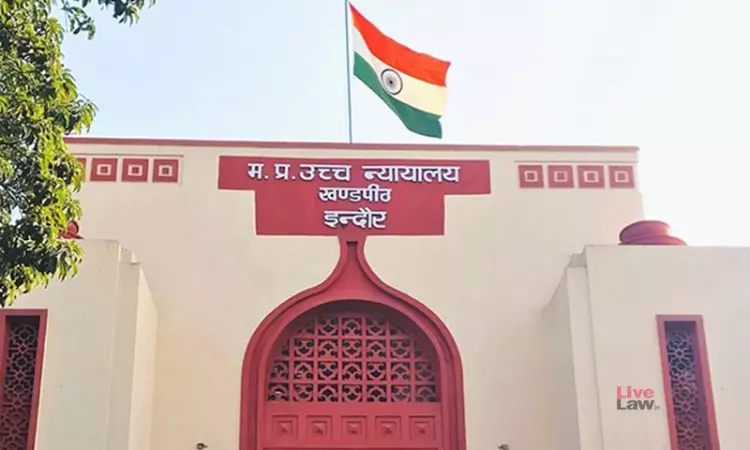
The Madhya Pradesh High Court has recently held that a party can invoke the supervisory jurisdiction of the High Court (Article 227 of the Constitution) to challenge a Commercial Court's refusal to reject a plaint at the threshold, even where no appeal or revision lies against such an order.
The court clarified that although statutory remedies are barred under the Commercial Courts Act, the High Court's supervisory jurisdiction remains available in limited cases, particularly where the impugned order is perverse or suffers from jurisdictional error.
The division bench of Justice Vijay Kumar Shukla and Justice Alok Awasthi observed:
"We have already held that in a case where the order is passed by the court other than the Commercial Court, the remedy of revision would lie against the order rejecting the application under Order 7 Rule 11 of CPC in view of the proviso to sub-section 1 of section 115 of CPC, however, the revision would not be maintainable against the order either allowing the application or rejecting the application under Order 7 Rule 11 of CPC by the Commercial Court in view of section 8 of Commercial Court Act, therefore, the question is that whether under these circumstances, a party before the Commercial Court can be left with no remedy and has to wait till the passing of the final order/decree".
It thereafter referred to various judgments and said that the power under Article 227 of the Constitution of India is supervisory in nature and the said power has to be exercised as an exceptional resort when an alternative and efficacious civil remedy by way of appeal, revision, or any order like Order 7 Rule 11 of CPC is not available. Noting that Section 8 of the Commercial Courts Act bars revision pleas against commercial court orders, the court said,
"The petitioner cannot left remediless against the order rejecting the application under Order 7 Rule 11 of CPC and to wait till the final decree is passed. If the order is perverse and suffers from jurisdictional error, the High Court can exercise its supervisory powers under Article 227 of the Constitution of India".
The petitioner approached the High Court under Article 227 of the Constitution, which empowers every High Court to have superintendence over all courts and tribunals within its territorial jurisdiction, challenging the order of the Commercial Court wherein his application under Order 7 Rule 11 CPC seeking rejection of the plaint was dismissed. The same, if allowed, would have resulted in termination of the suit.
The counsel for the respondents raised a preliminary objection contending that the petition was not maintainable in view of Sections 8 and 13 of the Commercial Courts Act, 2015. (2015 Act). It was argued that Section 13 provides for appeals only against specified orders enumerated under Order 42 CPC and Section 37 of the Arbitration and Conciliation Act.
Thus, an order rejecting an application under Order 7 Rule 11 CPC does not fall within the appealable category. Further, Section 8 of the 2015 Act bars revision petitions or challenges to interlocutory orders of Commercial Courts. Therefore, the only remedy available to the petitioner was to wait for final disposal and challenge the decree in an appeal.
The court first examined whether any alternative remedy was available, noting that an appeal would not be maintainable under Section 13 as the impugned order was not among those specifically enumerated. Further, revision was barred under Section 8, which prohibits revision petitions against interlocutory orders of Commercial Courts.
The bench observed that although Section 115 of the CPC, a revision may lie in certain circumstances, the provision of the Commercial Courts Act, being a special statute, overrides the CPC.
The court thereafter framed the primary issue- Whether Article 227 jurisdiction could be invoked when both appeal and revision remedies are barred.
The bench observed that Article 227 confers supervisory jurisdiction to the High Court over subordinate courts. Further, the bench held that though the discretionary power is to be used sparingly, a litigant cannot be left remediless, especially where the impugned order suffers from jurisdictional error or perversity.
The court relied on the case of Shallini Shyam Shetty v Rajendra Shankar Patil (2010) 8 SCC 329, reiterating that supervisory jurisdiction can be invoked in exceptional circumstances.
Thus, the bench held, "In view of the aforesaid, it is held that the present petition is maintainable under Article 227 of the Constitution of India".
The matter was listed for April 1, 2026, for further consideration.
For Petitioner: Advocates Ankur Tiwari and Manish Ahuja
For respondents: Advocate Bhaskar Agrawal