
Commercial Courts Act

Calcutta HC Sets Aside Injunction, Says Market Value, Not Plaint Valuation, Determines Commercial Suit Threshold
The Calcutta High Court has held that where a dispute relates to immovable property used for trade, the market value of the property, not the valuation stated in the plaint (for determining specified value under the Commercial Courts Act), must govern, while setting aside interim injunction orders in a tenancy dispute. A Division Bench of Justice Sabyasachi Bhattacharyya and Justice Biswaroop Chowdhury observed: “Thus, whatever might have been attributed as valuation in the plaint by the...
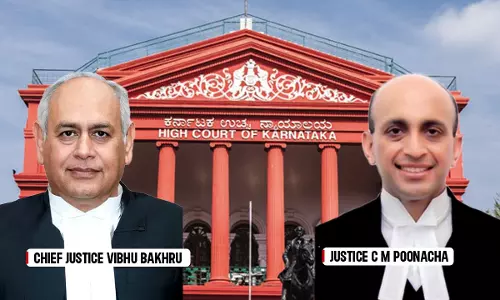
Karnataka High Court Dismisses State Commercial Appeal Over 444-Day Delay, Calls Explanation 'Misleading'
The Karnataka High Court on recently (April 28) refused to condone a 444-day delay by Karnataka Public Works Department authorities in filing a commercial appeal and dismissed the case. A Division Bench of Chief Justice Vibhu Bakhru and Justice C.M. Poonacha held that the explanation offered by the State authorities for the delay was “inaccurate and misleading.” “In view of the above, the averment that the notices had not been served on the appellants, is erroneous. Not only was the...
Commercial Courts Must Explain Refusal To Impose Safeguards While Denying Summary Judgments In Lease Disputes: Calcutta HC
The Calcutta High Court has recently held that when a tenant continues to occupy a property by relying on a lease agreement, a Commercial Court hearing a plea for summary judgment must explain why it is not requiring safeguards such as payment or security instead of simply sending the dispute to a full trial. Justice Hiranmay Bhattacharyya set aside a February 17, 2025 order of the Commercial Court at Rajarhat, which had rejected a summary judgment application filed by Flowers Valley...
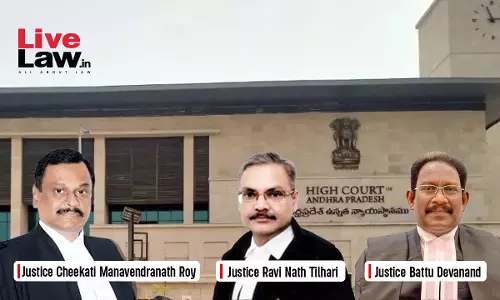
Commercial Courts Act Amendment Lowering Threshold To ₹3 Lakh Took Effect In 2018, Andhra Pradesh HC Rules In 2:1 Ruling
The Andhra Pradesh High Court has, by a 2:1 majority, held that Parliament's 2018 amendment lowering the minimum threshold for commercial disputes from ₹1 crore to ₹3 lakh took effect immediately, bringing such disputes within the commercial courts' framework without any separate State notification.The Court held that the threshold that determines whether a dispute qualifies as a commercial dispute (specified value) is distinct from the monetary limits that determine which court hears it...

Calcutta High Court Says Municipal Tax Dispute Over Office Space Is Commercial Dispute
The Calcutta High Court has upheld the transfer of a civil suit over municipal tax liability arising from a property conveyance dispute to its Commercial Division. The court held that the dispute qualified as a commercial dispute because the immovable property was being used as office space when the suit was filed.A division bench of Justice Debangsu Basak and Justice Md. Shabbar Rashidi ruled, “As on the date of filing of the suit, the immovable property was used as office space,” and held that...


Urgent Interim Relief Test Cannot Defeat Commercial Suit At Threshold: Bombay High Court
The Bombay High Court on 4 April held that a plea for urgent interim relief cannot be used to defeat a commercial suit at the threshold by invoking non-compliance with Section 12-A of the Commercial Courts Act. Justice Gauri Godse held that whether a case involves “urgent interim relief” must be assessed from the plaintiff's standpoint at the time of filing, and not on the basis of the final outcome of the relief. On this reasoning, the Court dismissed interim applications filed by IIFL Finance...

Karnataka High Court Reiterates Part Cause Of Action Gives Bengaluru Jurisdiction In Crochet Case
On 28 April, the Karnataka High Court reiterated that a suit for specific performance can be filed where part of the cause of action arises, including where the agreement is executed or the company has its registered office. A Division Bench of Chief Justice Vibhu Bakhru and Justice C.M. Poonacha allowed an appeal by Crochet Industries and set aside a Commercial Court order that had returned a plaint for lack of territorial jurisdiction in a Rs. 42.5 crore share purchase dispute involving LN...

Bombay High Court Sets Aside Order Striking Off Written Statements In Tata Steel Stockyard Licence Fee Dispute
On 28 April, the Bombay High Court set aside a Commercial Court order that had struck off the written statements filed by I K Marine Agencies Pvt Ltd and Gateway Distriparks Ltd in a dispute with Tata Steel concerning recovery of licence fees and related charges for use of a stockyard at Kalamboli, Navi Mumbai. A Single Judge Bench of Justice N.J. Jamadar held that Commercial Courts must adopt a nuanced approach while considering condonation of delay between 30 and 120 days for filing written...
Kerala High Court Dismisses Contempt Plea In Byju'S US Assets Sale Dispute, Imposes Costs
The Kerala High Court on April 6 dismissed a contempt petition arising out of the sale of US-based subsidiaries of BYJU'S, holding that contempt proceedings cannot be sustained once the underlying order has been set aside by the Supreme Court of India, and imposed costs of Rs. 50,000 on the petitioners.A Bench of Justice Easwaran S dismissed a contempt petition filed by Voizzit Technology Private Limited and its connected entity, and imposed costs of Rs. 50,000 on them, payable to the Kerala...

Karnataka HC Directs Return Of Plaint In ₹60 Lakh Recovery Suit Over 'Financial Help' To Agarbatti Firm
The Karnataka High Court recently ordered the return of plaints in three recovery suits after allowing a plea by Shalimar Incense Pvt Ltd seeking return of the plaints on the ground that the dispute is not a commercial dispute in relation to claims arising from about ₹60 lakh advanced as financial assistance to a business originally carried out by a partnership firm, Shalimar Agarbatti Company, and later transferred to the company. A Bench of Justice H.T. Narendra Prasad said, “The writ...

Calcutta HC Grants Summary Judgment In Commercial Suit After Defendants Forfeit Right To File Written Statement
The Calcutta High Court has held that in a commercial suit where defendants forfeit their right to file a written statement, they cannot set up any defence, and summary judgment can be granted where there is no real prospect of successfully defending the claim.A Bench of Justice Aniruddha Roy decreed a commercial recovery suit in favour of De Converter India Private Limited, directing La Chemico Pvt Ltd and others to pay Rs. 34.62 lakh towards unpaid dues, along with interest at 6% per annum...