
Legal Advice That Goes Wrong No Ground For Prosecution: Patna High Court Quashes Case Against UCO Bank Lawyer
Shilpa Soman
28 Oct 2026 6:48 PM IST
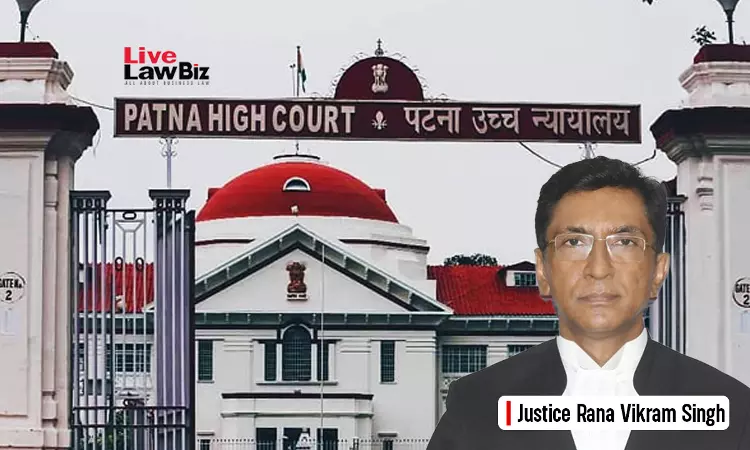
The Patna High Court has quashed criminal proceedings against a UCO Bank panel advocate accused in an alleged loan fraud case, ruling that an advocate cannot be prosecuted merely for rendering a legal opinion in the absence of material linking him to the alleged offences.
A coroner of Justice Rana Vikram Singh allowed the advocate's petition under Section 482 of the Code of Criminal Procedure, challenging the order by which the Additional Chief Judicial Magistrate had taken cognizance of offences under Sections 406, 409, 420, 467, 468, 471 and 120B of the Indian Penal Code.
The case arose from alleged irregularities in the sanction of cash credit facilities by UCO Bank's Exhibition Road Branch, Patna, to four borrowers, involving a total of ₹29.5 lakh. The prosecution alleged that the loans were secured by properties backed by fabricated title documents, causing financial loss to the bank.
Based on a complaint by the bank's then Chief Manager, Gandhi Maidan Police registered an FIR on December 3, 2008. Gopal Krishna Agrawal, an empanelled advocate of the bank, had furnished legal opinions on properties offered as security for loans to two of the borrowers. A chargesheet was filed in 2014, following which the Additional Chief Judicial Magistrate took cognizance of offences.
Agrawal approached the High Court seeking to quash the proceedings, contending that he had relied on the documents provided to him, advised the bank to independently verify them, and had no knowledge of the alleged forgery.
The bank and the State opposed the plea, arguing that the investigation materials disclosed a prima facie case against him.
The Court observed that the informant's written complaint specifically sought registration of an FIR against the borrowers, guarantors and concerned bank officials, but not against the lawyers and valuers who had provided legal opinions and property valuations.
It also noted that Agrawal had not asked the bank's Chief Manager to process the loan files solely on the basis of his legal opinion. Instead, he had advised the Chief Manager to independently verify the documents.
The Court held that the essential ingredients of criminal breach of trust under Sections 406 and 409 IPC were absent, as there was no allegation that the petitioner had been entrusted with any property or misappropriated it. It also found that the allegations did not disclose cheating under Section 420 IPC, as there was no dishonest inducement by the petitioner.
Regarding Sections 467 and 468 IPC, the Court noted that no specific act of making or forging a false document had been attributed to the advocate. It further observed that there was no evidence that he had used any forged document as genuine, or knew or had reason to believe that any document was forged, as required under Section 471 IPC.
“Thus, none of the offences for which cognizance has been taken by the learned Trial Court is made out against the petitioner” the Bench observed
On the allegation of criminal conspiracy, the Court observed that there was no material indicating any agreement or meeting of minds between the petitioner, bank officials, borrowers or guarantors to commit an illegal act. It held that the advocate could not be held liable for the acts of bank officials or beneficiaries merely because he was the bank's panel lawyer.
Emphasising that an advocate cannot be held criminally liable merely for rendering legal advice, the Court stated:
“Once an advice is given by an Advocate, it is the prerogative of the party concerned, to which it is tendered, to adhere to such advice, to follow the same or to negate the same or ignore the same. Such professional/legal advice, however, can, by no stretch of imagination, attract criminal proceedings as the professional advice is a very delicate issue between a client and an Advocate, more particularly, a very privileged communication between the two, for which an Advocate cannot held criminally liable. Thus, if any legal advice, rendered by an Advocate goes wrong, the same would not subject him to criminal prosecution, as a lawyer.”
The Court noted that the FIR contained no allegations linking the petitioner to the alleged offences or suggesting that he had advised the bank in exchange for illegal gratification.
It further observed that the petitioner had recommended safeguards for the bank to follow, but there was no material to show whether the bank had implemented those safeguards.
“If an Advocate is being prosecuted, as done in the present case, merely on rendering a legal advice/opinion, then it shall be not possible for any lawyer to tender such professional advice, more particularly, when such a professional advice, if found to be favourable for the client, the same would result into criminal prosecution against the lawyer, which would ultimately lead to sufferings to the justice delivery system.” it remarked
The Bench further added:
“The very efficacy of the administration of justice would be at stake, as any such interference with the professional integrity, efficiency and competence of an advocate, would not only be detrimental to the legal profession but would also strike at the very root of the edifice of justice delivery system, ultimately causing hardship and prejudice to the common man, compelling them to approach the Court of justice for the redressal of their grievances.”
The Court held that the prosecution against the petitioner amounted to malicious and vexatious prosecution, which was impermissible in law.
The Court also criticised the manner in which the cognizance order was passed, observing that it appeared to have been prepared by court staff, with the Magistrate merely filling in the blank space with the word “cognizance.” It noted that such practices had been repeatedly deprecated by the Supreme Court and High Court.
Accordingly, the Bench quashed the cognizance order and the consequential criminal proceedings against the petitioner.
For Petitioner: Advocates Siddhartha Prasad, Om Prakash Kumar and Shashank Shekhar
For State: Advocate Sanjay Kumar Tiwary, APP
For UCO Bank: Advocate Rajesh Kumar Pandey