
One Lender's Absence Doesn't Invalidate Resolution Under RBI's Stressed Asset Framework: Karnataka High Court
Kirit Singhania
27 Jun 2026 10:57 AM IST
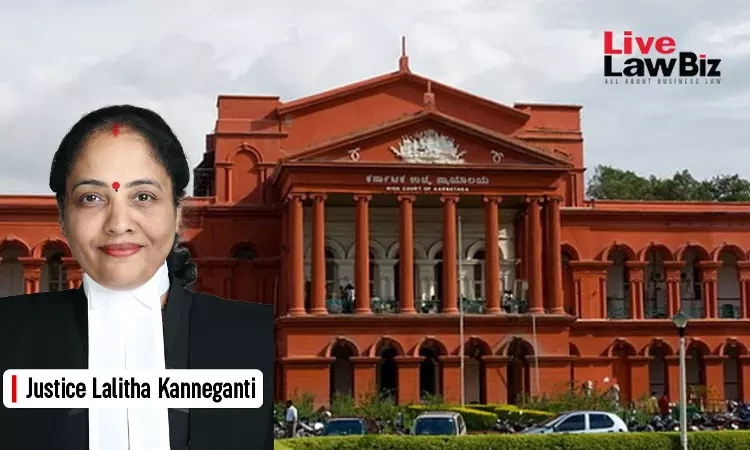
The Karnataka High Court has recently held that the absence of one lender from meetings convened to consider a borrower's resolution plan under the Reserve Bank of India's Prudential Framework for Resolution of Stressed Assets, 2019 does not invalidate the resolution process.
It also does not affect a decision approved by the requisite majority of lenders.
Justice Lalitha Kanneganti dismissed a writ petition filed by Ganjam Nagappa and Son Private Limited, a Bengaluru-based luxury jewellery retailer.
The court left it open to the company to challenge measures initiated under the SARFAESI Act before the Debt Recovery Tribunal. It also directed the Reserve Bank of India to consider any representations of the company that remained pending within four weeks.
“The requirement of a meeting is intended to facilitate collective deliberation, but the binding nature of decisions flows from the requisite majority approval and not from universal participation or unanimity. Non-participation of a lender in such a meeting does not, by itself, invalidate the resolution process nor prevent the implementation of a duly approved resolution plan.”, the court held.
The company had availed credit facilities from Deutsche Bank, State Bank of India, Canara Bank, ICICI Bank and Kotak Mahindra Bank between 2016 and 2021. After its business came under financial stress during the COVID-19 pandemic, it sought restructuring under the RBI framework.
According to the company, Deutsche Bank did not participate in lenders' meetings beginning with the meeting held in December 2020. It contended that the absence of one lender rendered the entire resolution exercise invalid.
The company also challenged the subsequent classification of its loan account as a non-performing asset and the recovery proceedings initiated by the lenders.
The court rejected the contention. It observed that the framework was intended to ensure that the resolution of stressed assets is not stalled by an individual lender. Accepting the company's interpretation, the court held, would allow a single lender to frustrate the entire mechanism merely by abstaining from participation, even though the prescribed majority had already taken a decision.
“Accepting the petitioner's contention would mean that any single lender, by abstaining from participation, can frustrate the entire resolution mechanism, which would defeat the very purpose of the regulatory framework. In this case, the majority of lenders have rejected the petitioner's proposal, and if the 3rd respondent participates in the meeting and takes a contrary decision, it will not make any difference, as the majority decision will prevail.”, the court observed.
The court also observed that where the conduct of a lender frustrates the framework, the Reserve Bank of India has supervisory and regulatory powers to ensure cooperative conduct and prevent obstruction of the collective resolution process.
Reiterating that the framework is based on majority decision-making under the Inter-Creditor Agreement, the court held that the absence of one lender from the meetings does not, by itself, invalidate the resolution process. Nor does it prevent implementation of a resolution plan approved by the requisite majority.
The court disposed of the writ petition with liberty to the company to pursue its remedy before the Debt Recovery Tribunal. It also directed the Reserve Bank of India to decide any pending representations of the company within four weeks.
For Petitioner: Senior Advocate Krishnendu Datta, Advocate Manjunath
For Respondents: Senior Advocates Vikram Huilgol, C.K. Nandkumar, Advocates Manik B.T., Lakshmi K. Valdalag, Vignesh Shetty, Francis Xavier, Raghuram Cadambi, Thimmanna Bhat, CGC, Mahabaleshwar, GC