
Repayment Of One Loan Does Not Extinguish Mortgage Securing Another Outstanding Loan: Karnataka High Court
Shilpa Soman
24 Nov 2026 7:00 PM IST
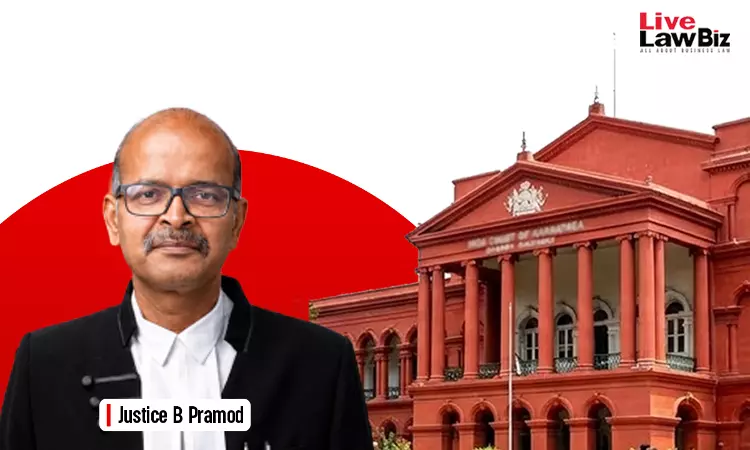
The Karnataka High Court recently held that repayment of one loan does not automatically extinguish a mortgage over a property when the same property has also been mortgaged to secure another outstanding loan liability.
“The discharge of the liability pertaining to the first loan transaction does not, by itself, result in extinguishment of the mortgage created in respect of the second loan transaction, particularly when the liability secured there under admittedly remains outstanding,” the court held.
Justice B Pramod was hearing a writ petition filed by MBM Constructions, a partnership firm, seeking a direction to the Bank of Baroda to refund an alleged excess payment of ₹1.79 crore, execute a deed of discharge and return the original title deeds of the property.
The firm had availed an overdraft facility from the Bank, which was renewed periodically from 2016 onwards. It had offered certain immovable properties, including the property in question, as collateral security for the facility.
The firm alleged that although the Bank claimed outstanding dues of ₹2.93 crore, its actual liability was only ₹1.14 crore. It claimed that the Bank had collected an excess amount of ₹1.79 crore, which remained unrefunded despite closure of the overdraft account.
The firm further claimed that it had discharged another loan liability of ₹2.08 crore and that the Bank had issued a loan closure letter. It alleged that, relying on the Bank's assurance that the mortgage would be released upon repayment, it sold the property to a third party for ₹3.30 crore under a registered sale deed dated December 9, 2024, and remitted the entire sale consideration to the Bank. However, the Bank allegedly failed to release the mortgage and return the original title deeds.
The Bank contended that the property secured two separate loan transactions. While the liability under the first loan had been discharged, the property also secured a ₹10 crore loan availed by M/s Power Systems, which remained outstanding. It denied permitting the sale or assuring MBM Constructions that the mortgage would be discharged.
The Court noted that the same property had been mortgaged under separate arrangements to secure the two loan facilities.
Rejecting the firm's contention that the Bank had permitted the sale of the property, the Court observed that the Bank's letter dated September 26, 2024, did not disclose any permission, consent or no-objection for the sale. It further noted that the firm had not placed any material on record to establish that the Bank had assured it that the mortgage would be discharged upon sale of the property.
“The execution of the sale deed and the alleged payment of the sale consideration, by themselves, do not extinguish the security interest created under the second mortgage, particularly when the liability secured thereunder admittedly remains outstanding,” the Court held.
The Court observed that a mortgagor's right to seek redemption and return of the original title deeds is governed by the terms of the mortgage and the liabilities secured by it. Since the property also secured the second loan, whose liability remained outstanding, the petitioner could not seek release of the mortgage merely because the first loan had been repaid.
The Court also took note of an earlier writ petition filed by the firm's Managing Partner, Arun Kumar, in which he had undertaken to comply with a payment schedule fixed by the Debts Recovery Tribunal and voluntarily surrender possession of the property in the event of default.
The Bank contended that Arun Kumar had failed to honour the undertaking, leading to initiation of contempt proceedings. The Court observed that his conduct was relevant while considering the petitioner's entitlement to discretionary relief under Article 226 of the Constitution, without expressing any opinion on the merits of the pending contempt proceedings.
The Court further observed that the petitioner-firm could not approbate and reprobate by taking a contrary stand in the present proceedings after its Managing Partner had undertaken to comply with the DRT's payment schedule and surrender possession in the event of default.
As regards the alleged excess payment, the Court held that determining the actual amount due, adjustment of payments and entitlement to a refund would require reconciliation of accounts and examination of supporting documents. Such disputed questions, it held, could not appropriately be adjudicated in writ proceedings.
The Court also noted that the Bank had initiated proceedings under Section 13 of the Securitisation and Reconstruction of Financial Assets and Enforcement of Security Interest Act, 2002 (SARFAESI Act), and invoked Section 14 to obtain possession of the secured asset.
Holding that the firm had failed to establish an enforceable right to seek discharge of the mortgage and an undisputed entitlement to the alleged excess refund, the Court dismissed the petition.
For Petitioner: Advocate B.R Viswanath
For Respondent: Advocate Vignesh Shetty