
Banks Must Share Forensic Audit Reports Before Declaring Accounts Fraudulent: Bombay High Court
Sandhra Suresh
5 Aug 2026 4:41 PM IST
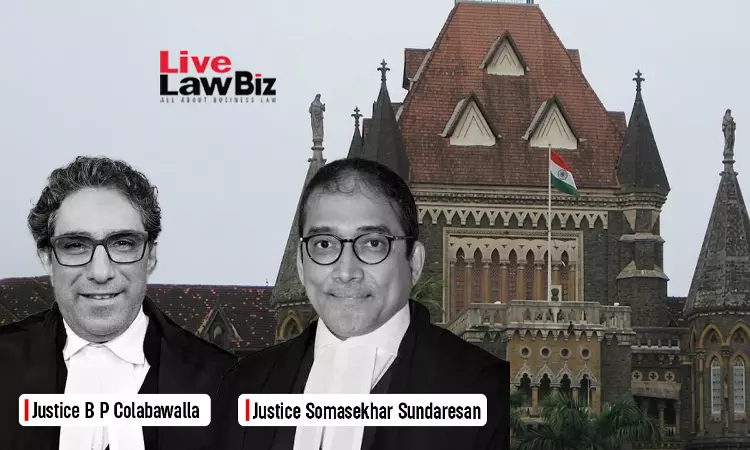
The Bombay High Court on 31 July held that banks cannot classify a borrower's account as fraudulent without supplying the investigation and forensic audit reports relied upon for such classification, ruling that withholding these documents violates the borrower's right to a fair opportunity of hearing.
The Division Bench of Justices B. P. Colabawalla and Somasekhar Sundaresan quashed Canara Bank's order dated 25 February 2026 declaring businessman Jayesh V Valia's account as “fraudulent” under the Reserve Bank of India's Master Directions on Fraud Risk Management in Commercial Banks (including Regional Rural Banks) and All India Financial Institutions 2024. It observed:
“As can be seen from this decision, the supply of the Forensic Audit Report is the rule, and the exceptions are what have been set out in the Judgement, and unlike in the case of T. Takano (supra) which dealt with the securities market, instances would be rare where, in Forensic Audit Reports of Banks, any claim for privilege may arise. To put it in a nutshell, it is only in very rare and limited cases, redactions may be justified, namely, which affect or impinge third party rights.”
Valia's account was classified as fraudulent by Canara Bank on 25 February 2026 based on an investigation report dated 5 August 2015 and a forensic audit report dated 28 June 2015. However, the bank supplied only a heavily redacted copy of the investigation report and did not provide the forensic audit report. He had sought complete copies of the documents in December 2024 and again in July 2025. Canara Bank refused disclosure, citing confidentiality and internal deliberations. Challenging the classification before the High Court, Valia argued that denial of the reports deprived him of an effective opportunity to respond.
The Court noted that the impugned order relied upon both the investigation report and the forensic audit report, but the forensic audit report was never furnished to the petitioner. It further observed that the investigation report supplied to him was “highly redacted and therefore incomplete”. It observed:
“Hence, atleast from a reading of the Impugned Order, there appears to be not only an Investigation Report which is referred to at page 156 of the paper book, but also a Forensic Audit Report referred to at page 155. Admittedly, the Forensic Audit Report has not been furnished to the Petitioner. On this ground alone, we are of the view that the Impugned Order deserves to be quashed and set aside…”
Further, the Bench held that disclosure of the forensic audit report is the rule and that redactions can be permitted only in rare cases where disclosure would affect third-party rights. It rejected Canara Bank's reliance on confidentiality, internal processes and deliberations as insufficient grounds for withholding the reports.
It also clarified that it had not examined the merits of whether Valia's account should be classified as fraudulent and left the issue open for fresh consideration by Canara Bank after following due process. It granted liberty to the bank to initiate fresh proceedings by issuing a show cause notice, supplying complete copies of the investigation and forensic audit reports, and granting Valia a personal hearing.
Accordingly, the High Court quashed Canara Bank's order dated 25 February 2026 declaring Valia's account as fraudulent.
For Petitioners: Senior Advocate Birendra Saraf with Advocates Rupesh Geete, Aman Saraf and Priya Dangat
For Respondents: Advocate Mahesh H. Chandanshiv