
Banks Are Custodians, Cannot Assume Coercive Powers Over Customers' Transactions: Delhi High Court
Kirit Singhania
10 Oct 2026 11:47 AM IST
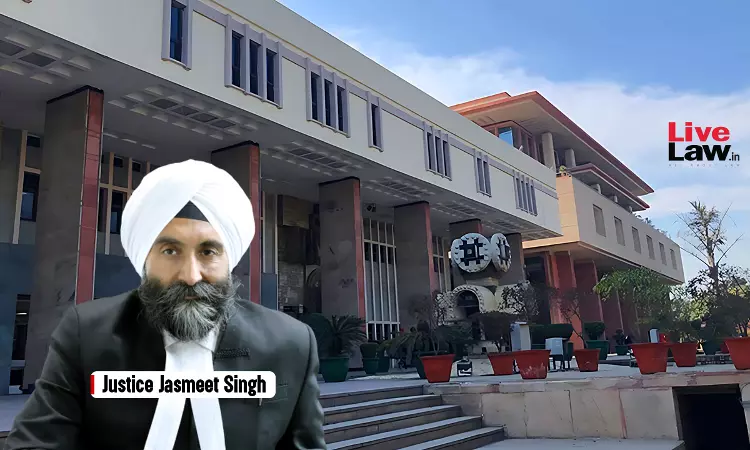
The Delhi High Court has ruled that banks cannot impose account restrictions or assume coercive powers to investigate customers' banking transactions without legal authority.
“The Bank is a custodian of funds for individuals/entities and after being satisfied by the KYC documents permits the opening of an account. Thus, the Bank cannot be permitted to put any banking restrictions on the same and assume coercive powers to investigate banking transactions of its customers and to interdict them in any manner,” Justice Jasmeet Singh observed.
The court made the observation while directing UCO Bank to make the current account of S.S. Enterprises operational and remove the debit freeze forthwith. It held that the bank's action was contrary to the Reserve Bank of India's (RBI) Know Your Customer Directions, 2025.
S.S. Enterprises maintained a current account with UCO Bank. The account was transferred from the Defence Colony branch to the Punjabi Bagh branch following the firm's written request dated June 10, 2026.
On July 8, the firm received ₹3.71 crore from Teja Engineering Industries Ltd. under a commercial agreement dated June 24. The bank did not process a subsequent RTGS transfer.
The bank initially cited pending KYC formalities before freezing the account. It also relied on an internally fixed transaction threshold of ₹5 lakh. S.S. Enterprises completed biometric e-KYC on July 10, but the account remained frozen.
The firm had approached the high court earlier as well. On August 18, the court directed the bank to review the transaction threshold and unfreeze the account if the documents were in order.
The bank subsequently sought details of GST turnover, sales invoices and transaction-wise reconciliation. The firm declined to provide the information, citing the confidentiality of its client and business transactions.
UCO Bank argued that it was required to monitor customer accounts and report suspicious transactions to prevent money laundering. It relied on Clause 17.3 of the RBI Directions, its account-opening form and an internal circular governing transaction thresholds.
The court rejected the bank's reliance on Clause 17.3, which requires banks to follow customer due diligence procedures before undertaking a transaction or commencing an account-based relationship. It held that the provision did not authorise a bank to freeze an already operational account.
The court noted that S.S. Enterprises' account had been opened after the bank completed the required due diligence.
Clause 54 of the RBI Directions prohibits banks from restricting account operations merely because a suspicious transaction report (STR) has been filed. The court held that the provision imposes a reporting obligation but does not confer the power to freeze accounts.
It also rejected UCO Bank's reliance on its internal circular, holding that the relevant provisions permitting debit freezes were contrary to Clauses 52, 53 and 54 of the RBI Directions. Accepting the bank's interpretation would render Clause 54 redundant, the court observed.
The court further found that UCO Bank had imposed the freeze without issuing a show-cause notice or giving prior intimation to the firm. It held that the action violated the principles of natural justice.
The bank also relied on suspicious transactions flagged by its anti-money laundering system on September 9. The court rejected this justification, noting that the account had already been frozen over the transaction-threshold issue.
A subsequent flag could not retrospectively justify the earlier action, the court observed.
“Additionally, it is evident that the respondent No. 1-3 Bank had no authority to question the legitimate transactions of its customer in furtherance to its business activities as the Bank is not an enforcement agency and it cannot be allowed to assume this role in order to govern the business activities of its customers in an autocratic manner conferring itself with unbridled powers against the rule of law,” the court observed.
The court allowed the petition and directed UCO Bank to make the current account operational and remove the debit freeze forthwith.
For Petitioner: Mr. T. Singhdev, Sr. Advocate with Advocates Ritaj Kacker Adv, Abhijit Chakravarty
For Respondents: Advocates Brijesh K Tamber, Chanchala Kumari, Vinay Singh Bist, Abhishek Baid, Mohit Kumar Bafna, Praneet Das and Ravinder Kumar