
Writ Court Cannot Appoint Arbitrator Where Contract Mandates Statutory Mechanism: Patna High Court
Shivani PS
5 Oct 2026 1:45 PM IST
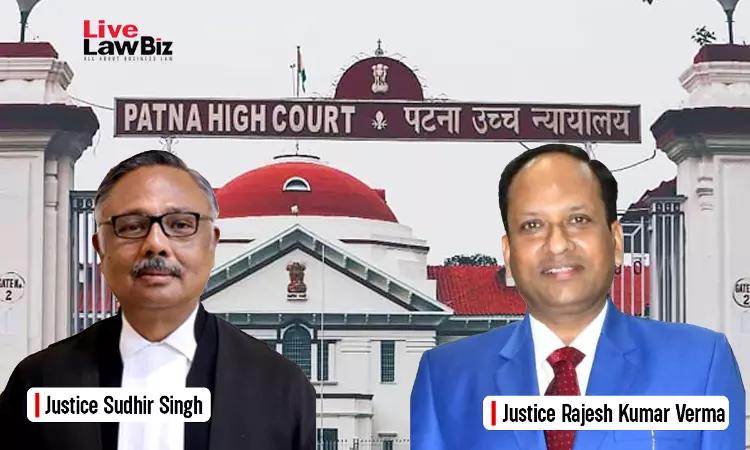
The Patna High Court on 29 September held that a writ court cannot appoint an arbitrator under the Arbitration and Conciliation Act, 1996 when the parties' agreement provides for resolution of disputes through a statutory arbitration mechanism.
A Division Bench comprising Justices Sudhir Singh and Rajesh Kumar Verma set aside the Single Judge's order appointing a sole arbitrator in a dispute between Bihar's Mines and Geology Department and Mahadev Enclave Pvt. Ltd., noting that Clause 9 of the Standard Bid Document required the dispute to be resolved under the Bihar Public Works Disputes Arbitration Tribunal Act, 2008. The judges stated:
“From a bare perusal of the aforesaid Clause, it transpires that the dispute between the parties are to be resolved under the Bihar Public Works Disputes Arbitration Tribunal Act, 2008, apart from the aforesaid, the learned Writ Court has no power to appoint Arbitrator and Clause 9 of the Standard Bid Document has binding force between the parties.”
Mahadev Enclave was granted settlement of sand ghats in Nalanda district for the period from 1 January 2015 to 31 December 2019 through a public auction conducted by the Mining Department.
A dispute arose over the settlement amount after mining operations were suspended. Mahadev Enclave sought adjustment or refund of the proportionate amount already recovered by the State. The dispute also concerned non-payment of the third instalment and the company's claim for waiver or adjustment.
On 13 January 2026, a Single Judge appointed a sole arbitrator under Section 11(8) read with Section 12(1) of the Arbitration and Conciliation Act, 1996. The Single Judge also held that limitation would not arise in view of a Supreme Court order dated 13 November 2025.
The Mines and Geology Department challenged the appointment, arguing that Clause 9 of the Standard Bid Document required disputes to be resolved under the 2008 Act. It contended that the writ court could not bypass the binding mechanism and appoint an arbitrator under the 1996 Act. Mahadev Enclave defended the appointment by relying on the Supreme Court's earlier order.
The Division Bench found that Clause 9 specifically required disputes between the Department and the successful bidder or settlement holder to be resolved under the 2008 Act.
It also relied on the Supreme Court's decision in Bihar Industrial Area Development Authority v. Rama Kant Singh, which held that where an agreement does not contain an arbitration clause, the dispute must be referred to the statutory Arbitration Tribunal under the 2008 Act and the Arbitration and Conciliation Act, 1996 would not apply. the Bench held:
“In view of the aforesaid, it appears that the learned Single Judge has passed the order without considering Clause 9 of the Standard Bid Document and the judgment passed in the case of Bihar Industrial Area Development Authority (Supra)”
Accordingly, the High Court set aside the order appointing the sole arbitrator. After Mahadev Enclave agreed to proceed under Clause 9, the Bench directed it to approach the competent authority, which was asked to decide the dispute within six months after hearing all stakeholders.
Appearances for appellants (Principal Secretary-cum-Commissioner, Department of Mines and Geology & Anr.): Advocates Naresh Dikshit, Brij Bihari Tiwari, Shruti Singh, Utkarsh Pathak.
Appearances for respondent (M/s Mahadev Enclave Pvt. Ltd.): Advocates Gautam Kejriwal, Atal Bihari Pandey, Alok Kumar Jha.