
High Court Cannot Extend Arbitrator's Mandate Merely Because It Appointed Arbitrator: Supreme Court
Kirit Singhania
28 Oct 2026 5:36 PM IST
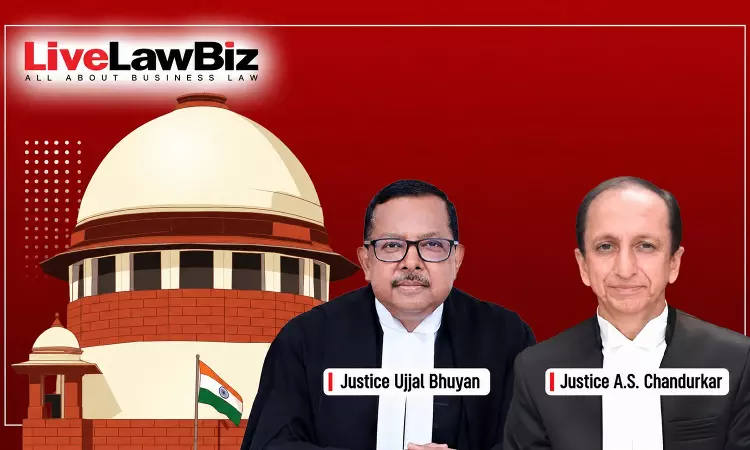
The Supreme Court has held that a High Court's power to appoint an arbitrator under Section 11 of the Arbitration and Conciliation Act, 1996 does not automatically empower it to extend the arbitrator's mandate under Section 29A(4) of the Act, even when the arbitrator was appointed by the Chief Justice of the High Court or his designate.
The Court said that the power to extend the mandate rests with the competent court as defined under Section 2(1)(e) of the Act.
"Based on our above discussion and analysis, we hold that the view taken by the High Court in so far the third question is concerned i.e. the Chief Justice of the High Court or his designate empowered under Section 11 of the 1996 Act can grant extension of time under Section 29A(4) is clearly unsustainable in law. The conclusion reached by the High Court that the jurisdiction to extend the period of time has to be exercised by the High Court under Section 29A of the 1996 Act is not correct and is accordingly set aside.", a division bench of Justices Ujjal Bhuyan and Atul S. Chandurkar observed.
The Court upheld the Patna High Court's findings on the waiver of objections to the sole arbitrator and the authority of Vikriti Power Ltd to pursue arbitration. However, it set aside the High Court's ruling on its jurisdiction to extend the arbitral mandate.
The dispute arose from a Distribution Franchisee Agreement dated December 31, 2013, involving South Bihar Power Distribution Company Ltd, India Power Corporation Ltd and India Power Corporation (Bodhgaya) Ltd. The latter was subsequently renamed Vikriti Power Ltd. The agreement provided for a three member arbitral tribunal to resolve disputes between the parties.
Following disputes, a sole arbitrator was appointed in April 2018. After the arbitrator could not continue, the Patna High Court appointed former Chief Justice of India Justice Dipak Misra as the new arbitrator on March 10, 2021 with the parties' consent.
The arbitration remained incomplete despite an extension of six months. The respondents subsequently approached the Patna High Court seeking a further four months to conclude the proceedings.
South Bihar Power opposed the extension and questioned the appointment of a sole arbitrator, contending that the agreement required a three-member tribunal. It also disputed Vikriti Power's authority to pursue the arbitration.
On September 15, 2023, the Patna High Court rejected these objections, holding that South Bihar Power had waived its challenge to the sole arbitrator through its conduct. It also extended the arbitrator's mandate by four months.
The Supreme Court agreed with the High Court that South Bihar Power had waived its objection to the composition of the arbitral tribunal. It noted that the company had participated in the proceedings, consented to the extension of time, and filed counterclaims and supplementary counterclaims before the sole arbitrator.
The Court held that this conduct amounted to acquiescence. Having continued with the arbitration without raising its objection within the prescribed period, the company could not challenge the appointment of a sole arbitrator at such a belated stage.
The Court also upheld the finding that Vikriti Power Ltd. was competent to pursue arbitration. Although the letter of intent had been issued to India Power Corporation Ltd, the responsibility for implementing the agreement rested with the special purpose vehicle, which had been incorporated as a subsidiary specifically for that purpose.
It further held that insolvency proceedings against the special purpose vehicle did not prevent it from pursuing an arbitration claim to recover its dues. The moratorium under the Insolvency and Bankruptcy Code was intended to protect the corporate debtor from recovery proceedings against it and did not necessarily prevent the corporate debtor from pursuing its own claims.
Turning to the question of jurisdiction, the Court explained that the term “court” under the 1996 Act refers to the principal civil court of original jurisdiction in a district or a High Court exercising ordinary original civil jurisdiction, where applicable. The provisions governing the appointment of arbitrators do not alter this statutory definition.
The Supreme Court noted however, that the Principal District Judge cum Commercial Court, Patna, had already extended the arbitrator's mandate by six months on March 23, 2026. Consequently, setting aside the High Court's finding on this issue would not materially affect the outcome of the proceedings.
The Court accordingly upheld the Patna High Court's findings on the first two issues but set aside its decision on the third.
It also lifted the restraint imposed by its order dated February 12, 2024, and directed the sole arbitrator to conclude the proceedings and pass the award within six weeks. The civil appeals were dismissed with no order as to costs.
For the Appellant: Advocates Manish Kumar Choudhary, Ashutosh Kumar, Srishti Choudhary, Shefali Choudhary, Namita Choudhary, AOR
For the Respondent: Advocates Harminder Chawla, Gajanand Kirodiwal, Astha Nigam, Shivam Rajpal, Ayush Chatterjee, Faisal Sherwani, AOR