
Supreme Court Alone Can Decide Replacement Of Arbitrator It Appointed: Karnataka High Court
Shivani PS
25 July 2026 2:25 PM IST
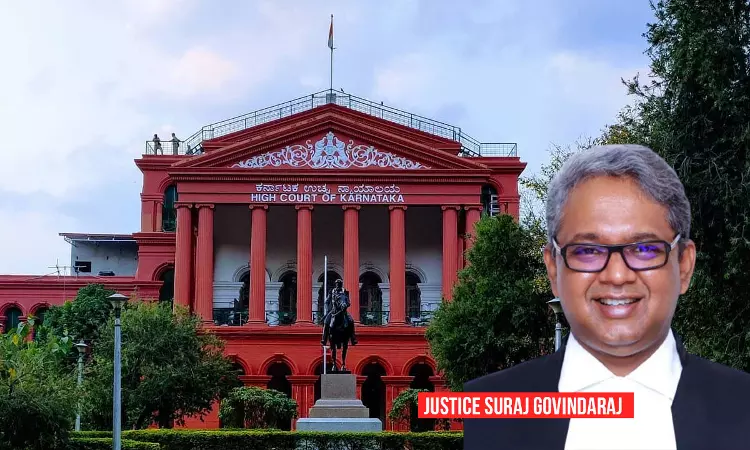
The Karnataka High Court has held that once the Supreme Court appoints an arbitrator under Section 11 of the Arbitration and Conciliation Act, 1996, any issue arising later that affects the constitution of the arbitral tribunal, including the arbitrator's recusal, withdrawal or substitution, can be decided only by the Supreme Court.
A single-judge bench of Justice Suraj Govindaraj observed, "The appointment of the Arbitrator was not by the institutional mechanism of SIAC or from any consensual process between the parties but from a judicial order passed by the Hon'ble Supreme Court. Once the appointment of the Tribunal has been made by the Hon'ble Supreme Court, any supervening event affecting the constitution of the Tribunal, including the recusal, withdrawal or substitution of the Arbitrator, necessarily falls within the domain of the Hon'ble Supreme Court that originally constituted the Tribunal."
The ruling came on a writ petition filed by Waterline Hotels Private Limited challenging a communication issued by the Singapore International Arbitration Centre (SIAC) in a dispute with Intercontinental Hotels entities. The communication called upon the parties to jointly nominate a substitute sole arbitrator after the arbitrator recused himself.
After the parties disagreed over whether the dispute should be heard by a sole arbitrator or a three-member tribunal, the matter reached the Supreme Court, which appointed a former Karnataka High Court judge as the sole arbitrator in January 2022.
According to the petitioner, the arbitrator submitted a draft award in December 2024. The SIAC Secretariat reviewed it over several rounds and eventually concluded that the arbitrator had failed to address its comments despite multiple opportunities. It then initiated the process for his removal under the SIAC Rules.
Before that process concluded, the arbitrator informed the Secretary General of the Supreme Court that he was recusing himself. The Supreme Court later recorded the recusal without issuing any further directions. Meanwhile, SIAC had already asked the parties to jointly nominate a substitute sole arbitrator.
Aggrieved by SIAC's communication, Waterline Hotels approached the high court under Articles 226 and 227 of the Constitution. It sought to have the communication declared void and to restrain SIAC from proceeding with the appointment of a substitute arbitrator.
Waterline Hotels argued that the SIAC Secretariat had stepped beyond its role by making substantive comments on the draft award instead of confining itself to procedural scrutiny. It contended that this interference with the arbitrator's adjudicatory role led to his recusal.
The company also alleged institutional bias, pointing out that counsel for the Intercontinental Hotels entities was a member of the SIAC Court of Arbitration. It further submitted that, after spending years and substantial costs on the arbitration, it was now being forced to restart the proceedings before a new arbitrator.
Considering the nature of the order it proposed to pass, the high court dispensed with notice to SIAC and the Intercontinental Hotels entities.
The high court held that it could not examine those grievances because the arbitral tribunal had been constituted by the Supreme Court.
It noted that the Supreme Court had merely recorded the arbitrator's recusal. It had not examined the legality of SIAC's actions or decided whether a substitute arbitrator should be appointed. Nor had it determined how the arbitration should proceed. Those issues, the high court said, remained open.
The court further observed, "Equally, the order cannot be construed as foreclosing the right of the parties to approach the Hon'ble Supreme Court seeking appropriate directions in relation to the future conduct of the arbitral proceedings. Since those issues remain open, it would neither be proper nor permissible for this Court to adjudicate upon them."
Rejecting the petition, the high court said the relief sought would directly affect the process of reconstituting a tribunal appointed by the Supreme Court. It added that judicial discipline required such issues to be placed before the Supreme Court, which had appointed the arbitrator and alone was competent to issue appropriate consequential directions.
For Petitioner (Waterline Hotels Private Limited): Advocate Navkesh Munish Batra.