
Sports Association Election Disputes Under Rajasthan Sports Act, 2005, Must Go Through Arbitration: Rajasthan HC
Shivani PS
21 April 2026 2:22 PM IST
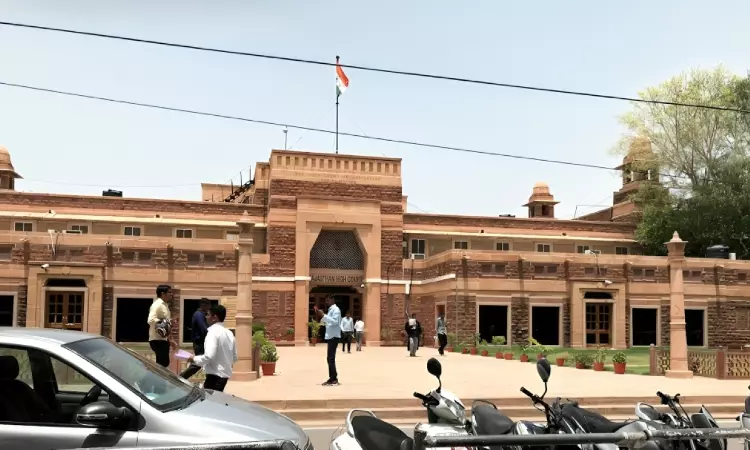
The Rajasthan High Court has recently held that disputes touching the constitution, management, or election of a sports association are required to be resolved through the statutory mechanism of conciliation and arbitration under the Rajasthan Sports (Registration, Recognition and Regulation of Association) Act, 2005, and not by invoking the writ jurisdiction of the court.
A Division Bench of Justice Inderjeet Singh and Justice Ashok Kumar Jain allowed a special appeal filed by the Rajasthan Chess Association and set aside a Single Judge's order, which had stayed the effect of elections held on March 4, 2026, and directed the appointment of an administrator to manage the association.
The court observed that the association is governed by the 2005 Act, which provides a complete framework for regulating sports bodies in the State.
Referring to this, the bench said, “Admittedly, the association is governed by the "Act of 2005". The "Act of 2005" was enacted to provide registration, recognition, and regulation of sports associations and to facilitate and regulate the activities of the sports associations in the State of Rajasthan."
It went on to underline the role of arbitration within that framework, observing, “The Arbitration and Conciliation Act itself provides a legal framework for efficacious dispute resolution through the arbitration mechanism. While enacting the "Act of 2005" the Legislature kept this object in its mind and enacted provision for resolution through arbitration mechanism. In normal circumstances, a writ jurisdiction is not exerciseable in matter of arbitration."
The bench noted that Section 16 of the Act specifically provides that disputes touching the constitution, management activity, election or claim to affiliation of a sports association are to be adjudicated through arbitration. It also pointed out that the statute provides an appellate remedy against orders of the Registrar.
The case arose from elections conducted on March 4, 2026, after an earlier order dated February 25, 2026 had given liberty to proceed with the election process. Upon declaration of results, the elected body took charge on the same day.
Ashok Kumar Bhargava, who had served as Honorary Secretary for the 2021–2025 term, filed a writ petition seeking directions to conclude an inquiry initiated on June 10, 2023 into alleged irregularities in the functioning of the association. He also sought to have the election notice dated December 3, 2024 declared invalid and for fresh elections to be conducted.
On March 13, 2026, the Single Judge stayed the effect of the election and directed the Registrar, Cooperative Societies to appoint an administrator for the day-to-day functioning of the association.
The Division Bench found that this interim order affected the rights of the elected body and effectively granted final relief at an interim stage. It held that such an order was amenable to appeal.
On the scope of writ jurisdiction, the Court held that where a complete adjudicatory mechanism is available under the statute, interference under Article 226 is not warranted except in exceptional circumstances. It observed that the exercise of writ jurisdiction in such cases is “almost impermissible except in extraordinary circumstances”.
The bench also dealt with allegations of bias and irregularities in the election process, including claims relating to the Election Officer. It held that such issues involve disputed questions of fact and cannot be adjudicated in writ proceedings. A writ court, it said, is not a fact-finding court and has no jurisdiction to decide such disputes.
Clarifying the earlier order dated February 25, 2026, the court noted that it only granted liberty to conduct elections and did not direct replacement of the Returning Officer. Any grievance regarding the conduct of the election, the bench said, had to be raised under the statutory mechanism.
Holding that the challenge to the March 4, 2026 election could not be entertained in writ jurisdiction, the Court observed, “The subsequent event of election is required to be challenged under Section 16 of the Act of 2005. There is no remedy provided under Article 226 of the Constitution of India, as it is beyond the scope of the writ petition."
Terming the single judge's order “contrary to the settled canons of law,” the Division Bench held that it travelled beyond the statutory framework and could not be sustained.
The appeal was accordingly allowed, and the order dated March 13, 2026, was set aside.
For Appellant (Rajasthan Chess Association): Advocates Kamlakar Sharma, Alankrita Sharma, Madhusudan Rajpurohit, Yogesh Kala, Harshil Bansal.
For Respondents (Ashok Kumar Bhargava & Ors.): Additional Advocate General B.S. Chhaba, assisted by Hardik Singh, Advocates Akhil Simlote, Dikshant Jain, Ashvini Raj Tanwar