
Relief Sought, Not Property Location, Decides Jurisdiction If Arbitration Seat Is Unspecified: Bombay High Court
Shivani PS
15 July 2026 12:39 PM IST
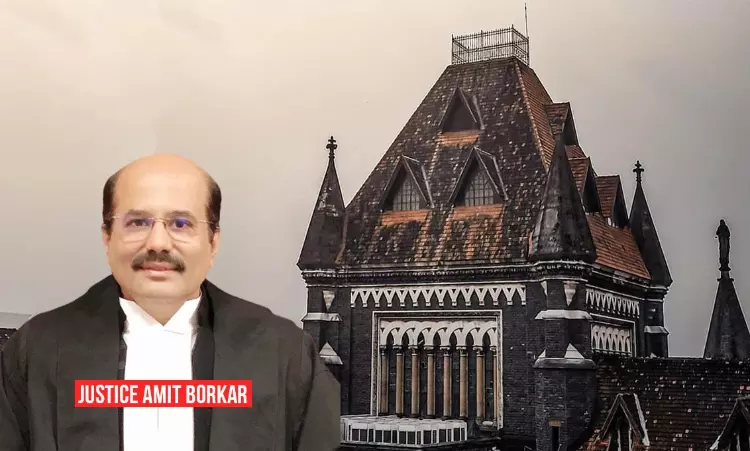
The Bombay High Court has recently held that territorial jurisdiction cannot be determined solely by the location of partnership properties or the registered office of a partnership firm where the partnership deed containing an arbitration clause does not specify the arbitral seat.
Instead, the court held, the material facts constituting the foundation of the relief sought must determine jurisdiction.
Justice Amit Borkar delivered the ruling while deciding a petition filed by Vinod Kumar Saraf seeking interim protection against Villayati Ram Mittal and its partners in a partnership dispute.
The court observed, "The authorities discussed above establish that territorial jurisdiction cannot be determined either looking at the place where immovable properties are situated or merely by referring to the registered office of the partnership. Jurisdiction cannot be assumed solely because eviction proceedings are pending before a Court situated within a particular territory. What is required is identification of material facts which constitute the foundation of the relief sought under Section 9 of the Arbitration and Conciliation Act."
The dispute arose out of a reconstituted partnership deed dated April 16, 2014, under which Saraf held a 5% share in Villayati Ram Mittal, while Surinder Kumar Mittal held the remaining 95% share and controlled the firm's management, accounts and records.
According to Saraf, an affidavit and an indemnity bond dated February 18, 2025, were fabricated to falsely show that he had retired from the partnership. He alleged that the respondents subsequently inducted new partners and instituted three eviction suits concerning partnership-owned flats in Vakola and Andheri before the Mumbai Small Causes Court.
On March 7, 2026, Saraf invoked arbitration, issued a notice seeking dissolution of the partnership and moved the Bombay High Court for interim protection.
He argued that because the partnership deed did not specify the arbitral seat, the High Court had territorial jurisdiction as the apprehended dispossession, pending eviction proceedings and partnership assets were all in Mumbai.
Opposing the plea, the partnership firm and the other partners contended that the dispute primarily concerned dissolution of the partnership and rendition of accounts. They argued that the firm's registered office and books of account were in Delhi, and that the location of some partnership assets in Mumbai could not by itself confer jurisdiction.
The court rejected both contentions, holding that territorial jurisdiction could not be determined solely by the location of the partnership properties or the firm's registered office.
The decisive question, it held, was whether the material facts underlying the relief sought gave rise to jurisdiction.
It further clarified that although disputes concerning retirement, dissolution and settlement of accounts would ultimately be decided by the arbitral tribunal, the proceedings before it had the limited object of preserving the subject matter of arbitration.
The court observed, "Thus, while the respondents are correct in submitting that the disputes relating to retirement, dissolution, and accounts will fall for adjudication before the Arbitral Tribunal, the present proceedings have a limited object."
The court observed that the firm's registered office and books of account in Delhi were relevant connecting factors, but held they could not be brushed aside merely because the partnership owned immovable properties in Mumbai.
It also held that the reliefs sought had a direct nexus with the apprehended dispossession from the Mumbai premises, the pending eviction proceedings before the Small Causes Court and preservation of the partnership assets.
Those facts, the court held, constituted the foundation for invoking its territorial jurisdiction.
The court declined to stay the eviction suits, holding that the possibility of findings in one proceeding affecting another could not justify restraining proceedings before a competent court. It further held that all remedies available before the Small Causes Court remained open to the parties in accordance with law.
However, the court restrained Villayati Ram Mittal and its partners from creating third-party rights over the three Mumbai flats. It also directed another party to preserve the original affidavit, indemnity bond, and records relating to the change in the firm's constitution based on Saraf's alleged retirement.
In addition, the court directed the respondents to maintain the firm's accounts in the ordinary course and preserve its books of account, statutory records, and financial documents.
It further restrained them from inducting any further partner or effecting any further change in the constitution of the firm on the basis of Saraf's alleged retirement without the arbitral tribunal's prior leave. Saraf was directed to take effective steps to constitute the arbitral tribunal within four weeks.
For Petitioner (Vinod Kumar Saraf): Advocates Mayur Khandeparkar, Muttahar Khan, Anand R. Pai, Sachin Mhatre, Sujit Rao, Smriti Yadav and Roshan Reji, instructed by Mhatre Law Associates.
For Respondents (Villayati Ram Mittal & Ors.): Senior Advocate Simil Purohit with Advocate Rashmin Khandekar, instructed by Mohit Sant.