
Party Cannot Invoke HC's Supervisory Jurisdiction After Withdrawing Arbitral Award Challenge: Punjab & Haryana HC
Shivani PS
16 May 2026 7:51 PM IST
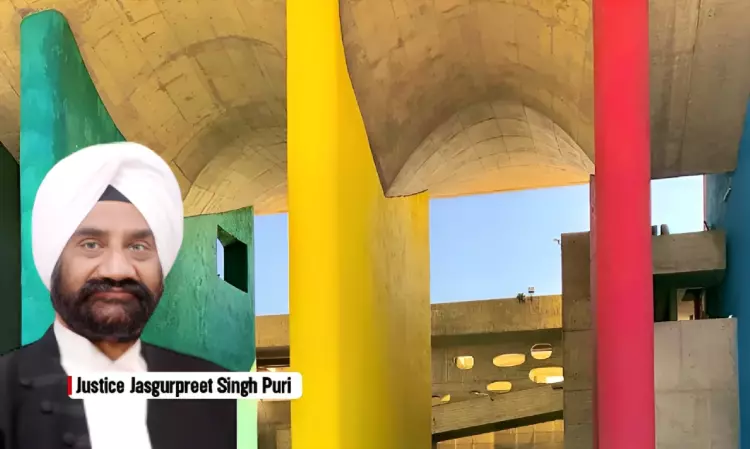
The Punjab and Haryana High Court on Friday held that a party that withdraws its challenge to an arbitral award cannot later use the High Court's supervisory jurisdiction to reopen the same dispute through a different route.
“The supervisory jurisdiction under Article 227 being discretionary and equitable ought not to be exercised in favour of a litigant who has by withdrawing the objections abandoned the statutory remedy and now seeks to circumvent the consequences of that withdrawal."
Justice Jasgurpreet Singh Puri dismissed a civil revision petition filed by Pahwa Impex Pvt. Ltd. against execution proceedings initiated by Kanuj Home Textiles Exim to recover ₹84.21 lakh along with interest awarded in arbitration.
The dispute arose from proceedings under the Micro, Small and Medium Enterprises Development Act, 2006.
After conciliation failed, the Haryana Micro and Small Enterprises Facilitation Council referred the dispute for arbitration to a sole arbitrator, a retired Additional District Judge, who passed an award in favour of Kanuj Home Textiles Exim on January 9, 2020, after contested proceedings in which Pahwa Impex participated.
Pahwa Impex challenged the award before the Additional District Judge, Karnal under Section 34 of the Arbitration and Conciliation Act, 1996.
Pahwa Impex withdrew its challenge to the award on July 25, 2025, citing a technical defect linked to Haryana government notifications issued in 2007 and 2021.
Just three days later, the executing court rejected its objections to the award's enforcement, leading the company to approach the High Court.
Before the High Court, Pahwa Impex argued that the sole arbitrator had no authority to issue a binding award, contending that only the Facilitation Council itself could have passed the final decision.
Relying on an earlier Punjab and Haryana High Court ruling in Indian Oil Corporation Limited v. Haryana Micro and Small Enterprise Facilitation Council, it argued that the arbitrator's decision was only a report requiring approval by the Council before becoming enforceable.
Kanuj Home Textiles Exim opposed the plea, arguing that once conciliation failed, the matter was validly referred for arbitration and the Arbitration and Conciliation Act fully applied.
It also argued that Pahwa Impex had failed to deposit 75% of the awarded amount as required under Section 19 of the MSMED Act for challenging the award and could not sidestep that requirement by invoking Article 227 after withdrawing its earlier challenge.
The High Court accepted the respondent's objection on maintainability.
It noted that Pahwa Impex had participated in the arbitration proceedings, challenged the award on merits, and later withdrew that challenge.
It also held that having itself treated the decision as an arbitral award during execution proceedings, Pahwa Impex could not later contend that it was not an arbitral award.
“Therefore, the petitioner after having withdrawn objections under Section 34 of the Arbitration Act, 1996 could not have filed the present revision petition by invoking Article 227 of the Constitution of India as the same was not entertainable as the petitioner is estopped from doing so because it creates an embargo upon it."
The court also noted that related legal issues concerning MSMED arbitral proceedings are currently pending before a larger bench of the Supreme Court in Tamil Nadu Cements Corporation Limited v. Micro and Small Enterprises Facilitation Council.
Accordingly, the High Court dismissed the revision petition and allowed execution proceedings to continue.
For Petitioner (M/s Pahwa Impex Pvt. Ltd.): Senior Advocate Amit Jhanji, and Advocate Shashank Shekhar Sharma.
For Respondent (M/s Kanuj Home Textiles Exim): Advocates Vikram Dhakla and Daman Dhir.