
Party Autonomy In Arbitration Is Being Misunderstood As Right To Choose Favourable Decision-Makers: CJI Surya Kant
Shivani PS
5 Jun 2026 5:36 PM IST
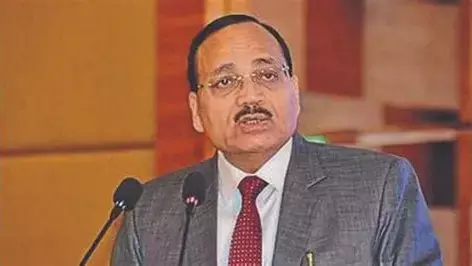
Chief Justice of India Surya Kant on Friday said that the principle of party autonomy, often regarded as one of arbitration's defining strengths, has in some respects been misunderstood and stretched beyond its intended purpose, warning that it is increasingly being equated with an unrestricted ability to select favourable decision-makers.
Speaking at the 4th International Conference on "Arbitrating Indo-UK Commercial Disputes: ADR as a Catalyst for Strengthening India-UK Economic Partnership," organised by the Indian Council of Arbitration (ICA) at Church House Westminster in London as part of London International Disputes Week 2026, Justice Surya Kant said the concept of party autonomy was never intended to permit parties to influence the identity of adjudicators.
"The principle of party autonomy, which is often described as one of the defining strengths of arbitration, has in certain respects, in my humble opinion, come to be misunderstood and stressed beyond its intended purpose," he said.
According to the Chief Justice, party autonomy is increasingly being invoked to justify attempts to select particular adjudicators, giving rise to concerns regarding neutrality and confidence in the arbitral process.
"Party autonomy was never intended to mean that parties are entitled to engineer the identity of the decision-maker, most likely to favour their position. Rather, it signifies the right of the parties to insist upon a process that is independent, impartial, fair and capable of inspiring confidence in its outcome," he said.
Justice Surya Kant added that disputes over appointments often become the subject of prolonged challenges before courts, undermining the very efficiency and credibility that arbitration seeks to provide. He said clearer guidelines, institutional safeguards, and stronger institutional arbitration mechanisms may be required to ensure that party autonomy remains a guarantee of procedural fairness rather than a source of contestation.
The Chief Justice also cautioned that international arbitration is increasingly exhibiting characteristics of the litigation process it was designed to replace.
Referring to high-value international arbitrations, he noted that appointments frequently appear concentrated among a relatively small group of repeat participants serving as arbitrators, counsel, and experts.
While expertise is often built through experience, he said such concentration can create a perception that arbitration is exclusive and difficult for newcomers to enter.
Justice Surya Kant said arbitration was increasingly being treated "as a product to be promoted rather than a mechanism to be refined."
"At times one is reminded of an automobile expo where every manufacturer is eager to showcase the virtues of his latest model. In a similar vein, institutions, practitioners and stakeholders often compete to highlight the attractions of arbitration, sometimes with greater emphasis on its commercial appeal than on the practical objectives it was intended to achieve," he said.
"The concern is visible also in the cost and duration of many proceedings. In some cases, international arbitration has absorbed the very habits of litigation that it was designed to avoid," he observed.
Justice Surya Kant said many arbitrations today involve heavy pleadings, multiple procedural rounds, lengthy hearings, and fee structures that users often find difficult to justify.
He also criticised the growing complexity of arbitration clauses, saying they are sometimes drafted with language that creates uncertainty rather than clarity.
According to him, disputes frequently arise over threshold issues such as whether a valid arbitration agreement exists, which law governs it, where the juridical seat is located, whether the venue carries legal significance and which forum has jurisdiction to decide those questions.
By the time such preliminary issues are resolved, parties may have already spent considerable time and resources in litigation before the dispute reaches arbitration.
Tracing the origins of arbitration, Justice Surya Kant said it did not begin as a creature of statute but evolved from commercial necessity. Referring to the medieval merchant law and India's traditional community-based dispute resolution systems, he said arbitration's central purpose has always been to resolve disputes in a manner that is fair, informed, timely, and final.
He warned that the system was drifting away from that foundational objective.
"What these issues amount to are a form of institutional self-congestion which we must guard against. Arbitration was built to be the answer to the pathologies of formal litigation, and it is seemingly acquiring each of those very failings. In other words, the remedy has come to resemble the disease it was designed to cure," he said.
Turning to the recently concluded India-UK Free Trade Agreement, Justice Surya Kant said the anticipated expansion of bilateral trade would require a robust alternative dispute resolution architecture capable of converting commercial confidence into day-to-day business practice.
"The answer begins with confidence. A corridor is not strengthened merely because goods, capital and services are allowed to move across it. It is strengthened when those who use that corridor know that if something goes wrong, they will not be priced out, delayed out, or forced into a process that they had no real power to choose," he said.
He noted that many smaller exporters, suppliers, start-ups, and medium-sized businesses entering cross-border contracts often accept dispute-resolution clauses and fee structures chosen by stronger counterparties. While such consent may be legally valid, he said it is not always accompanied by genuine bargaining power.
"This is not a peripheral concern, especially when we know that the next wave of Indo-UK trade will not be carried out by conglomerates. It will be carried by pharmaceutical suppliers, fintech firms, clean energy businesses, digital platforms and mid-market manufacturers on both sides," he said.
Justice Surya Kant stressed that ADR systems must remain accessible to such businesses if they are to support the commercial objectives of the FTA.
"Real party autonomy, therefore, requires accessible model clauses, transparent costs, diverse panels, digital case management and procedures proportionate to the value and urgency of the disputes. In short, the autonomy that arbitration promises must be made genuinely usable for all parties to the corridor, not just the most powerful ones," he said.
The Chief Justice said India and the United Kingdom now have an opportunity to jointly shape the future of dispute resolution.
"What is needed now is not comparison. But co-creation," he said.
To strengthen the Indo-UK ADR framework, Justice Surya Kant proposed a three-pronged roadmap.
First, he called for a joint India-UK arbitrator accreditation and cross-training programme to create a shared pool of practitioners familiar with the commercial and regulatory realities of both jurisdictions.
Second, he proposed fast-track arbitration procedures for technology, fintech, and other medium-sized commercial disputes, with capped costs, streamlined procedures, online hearings where appropriate, a short mediation window and defined timelines for final determination.
Third, he advocated greater integration of arbitration and mediation through hybrid dispute-resolution mechanisms for disputes arising from continuing commercial relationships such as joint ventures, distribution networks, technology partnerships, and infrastructure contracts.
"We must ensure that arbitration is not a privilege of scale, but an instrument of justice," he said in conclusion.
The inaugural session also featured addresses by Dr N.G. Khaitan, President of the ICA; Brett Dixon, Vice-President of the Law Society of England and Wales; Kartik Pande, Deputy High Commissioner of India to the United Kingdom; and Sir Geoffrey Vos, Master of the Rolls and Head of Civil Justice of England and Wales.
Dr. Khaitan described arbitration as central to India's future growth and remarked, "To me personally, to arbitrate is a divine function. In India, arbitration is an emotion. It's just not business."
He also urged businesses to "try India, to taste India" as an arbitration destination.
Dixon highlighted the importance of trusted and efficient dispute-resolution systems in strengthening business confidence, facilitating cross-border investment and supporting long-term commercial partnerships between India and the United Kingdom.
Pande linked expanding India-UK trade under the Free Trade Agreement to the need for stronger ADR frameworks, while Sir Geoffrey Vos highlighted AI-assisted arbitration as a means of delivering faster and more cost-effective dispute resolution.