
Multiple Arbitration Venues In Agreement Do Not Make Any One The Seat: Delhi High Court
Shivani PS
26 Nov 2026 12:52 PM IST
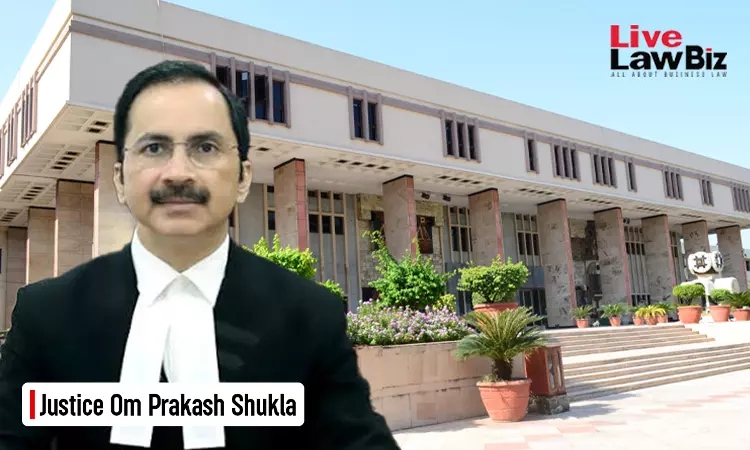
The Delhi High Court has held that mentioning multiple cities as possible venues for arbitration does not, by itself, make any one of them the juridical seat.
Justice Om Prakash Shukla dismissed Tata Capital Housing Finance Limited's request to appoint an arbitrator in a loan dispute with two borrowers. It held that listing Delhi as a convenient hearing venue under Clause 12.11(a) of the loan agreement was insufficient to establish it as the seat.
“Clause 12.11(a) mentions three places, namely Chennai, Delhi and Mumbai, and therefore, it is apparent that there was no intention of the parties to anchor the arbitral proceedings to Delhi alone,” the Court observed.
"In the opinion of this Court, such convenience, by itself, cannot confer jurisdiction upon this Court. Accepting such a contention would also run contrary to the conditions required to construe a venue as the seat of arbitration, particularly when the mention of Mumbai and Chennai in the same clause constitutes a contrary indication against treating Delhi as the exclusive juridical seat", it added.
Tata Capital Housing Finance Limited extended a loan to Rajesh Behal and another borrower in 2017 and later restructured it at their request.
The lender alleged that the borrowers fell behind on repayments under the revised terms and owed ₹69,35,871 as of May 23, 2026.
Clause 12.11(a) of the loan agreement required the parties to first try to resolve disputes through negotiation or conciliation. If those efforts failed, the clause provided for arbitration in Chennai, Delhi or Mumbai.
Tata Capital invoked the arbitration clause through a notice dated April 1, 2026, under Section 21 of the Arbitration and Conciliation Act, 1996.
The lender said it chose Delhi for convenience.
It then asked the Delhi High Court to appoint a sole arbitrator under Section 11 of the Act.
That choice put a threshold question before the Court. Did naming Delhi as one of three places for arbitration allow Tata Capital to make it the legal seat, the city whose courts would supervise the proceedings?
Tata Capital argued that the agreement allowed it to choose among the three cities and that its selection of Delhi should prevail over the loan's links to other places.
The borrowers countered that the agreement fixed no seat and that the dispute had no connection with Delhi.
They lived in Panchkula; Tata Capital's Chandigarh branch had sanctioned and serviced the loan, and the mortgaged property was in Zirakpur, Mohali.
Proceedings to enforce the security had also been brought before forums in Mohali and Chandigarh.
On the other hand, the borrowers argued that the Punjab and Haryana High Court was the appropriate forum.
Justice Om Prakash Shukla found that the loan agreement, read as a whole, did not designate Delhi as the seat of arbitration.
Clause 12.11(a) listed Delhi alongside Chennai and Mumbai, and nothing in the parties' conduct indicated that they had agreed to make Delhi the seat.
“Clause 12.10 merely provides that the Agreement shall be governed by the laws of India. It neither identifies Delhi as the seat nor confers exclusive jurisdiction upon the courts at Delhi,” the Court said.
The Court explained that a hearing venue may be chosen for convenience, while the legal seat determines which court supervises the arbitration.
Tata Capital's notice invoking arbitration could not give the lender a power to choose the seat that the agreement itself did not grant.
“To accept the Petitioner's contention would amount to conferring upon it a unilateral right to select the seat, in the absence of any such stipulation in the Agreement, and would effectively amount to rewriting the contractual terms at the behest of one party,” the Court held.
Applying the closest and most intimate connection test, it found no independent link between Delhi and the dispute.
The borrowers lived in Panchkula, Tata Capital's Chandigarh branch had sanctioned and serviced the loan, and the mortgaged property was in Zirakpur, Mohali. Proceedings to enforce the security had also been brought before forums in Mohali and Chandigarh.
Holding that the court lacks the territorial jurisdiction to entertain the petition, it dismissed Tata Capital's application to appoint an arbitrator, leaving the lender free to seek relief before the competent court.
It also recorded the borrowers' undertaking that they would not oppose a petition filed before the Punjab and Haryana High Court.
For Petitioner (Tata Capital Housing Finance Limited): Advocate Taniya Bansal.
For Respondent (Rajesh Behal & Anr.): Advocates Shaurya Mittal, Dhanya Visweswaran.