
MSMEs Need Not Always Approach Facilitation Council; Arbitration Clause Enforceable: Karnataka High Court
Shivani PS
16 Feb 2026 8:10 PM IST
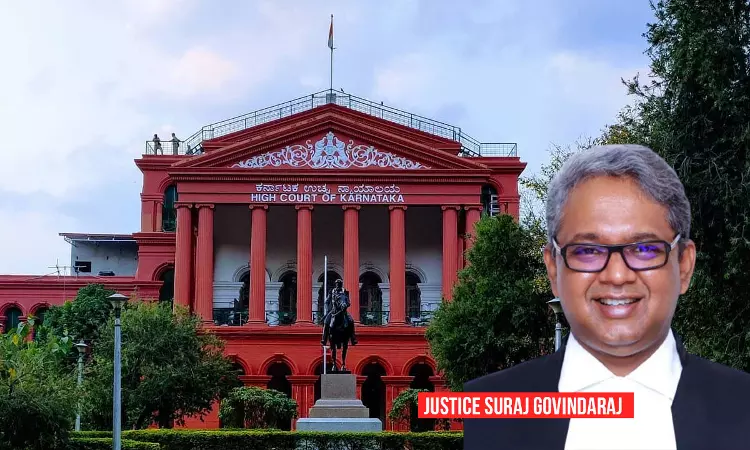
The Karnataka High Court has recently held that enterprises are not required in every case to move the Facilitation Council under Chapter V of the Micro, Small and Medium Enterprises Development Act, 2006, which provides a mechanism for referring delayed payment disputes to the Council.
Justice Suraj Govindaraj clarified that a contractual arbitration clause remains enforceable unless the statutory process under Section 18 is actually invoked.
“It cannot be said, as an absolute proposition, that micro, small or medium enterprises are required in every case to proceed only under Chapter V of the MSMED Act and to refer all disputes to the Facilitation Council under Section 18. The requirement arises only upon invocation of the statutory mechanism in the case of micro and small enterprises, and does not arise at all in the case of medium enterprises,” the Court observed.
Section 18 provides that if a dispute arises regarding any amount due for goods supplied or services rendered, either party may refer the matter to the Facilitation Council.
The Council must first attempt conciliation. If that fails, it either takes up the dispute for arbitration or refers it to an arbitral institution. The Court clarified that once this statutory mechanism is invoked, it overrides the contractual arbitration process. Until then, the arbitration agreement remains operative.
The Court further held that Chapter V, titled “Delayed payments to micro and small enterprises,” applies only to micro and small enterprises. Referring to Section 2(n), which defines “supplier” as a micro or small enterprise, it held that the definition cannot be stretched to include medium enterprises. Medium enterprises are therefore outside the scope of Section 18.
Mobisy Technologies Pvt. Ltd. and J G Hosiery Pvt. Ltd. had entered into a “Bizom Customer Agreement” dated February 21, 2023. It provided for an arbitration in Bengaluru.
When disputes arose over alleged unpaid dues, Mobisy invoked the arbitration clause on December 12, 2025, and nominated an arbitrator. However, J G Hosiery resisted, contending that no amount was payable. It also argued that a Section 11 for appointing arbitrator petition was not maintainable in view of the MSMED Act.
Mobisy then approached the High Court seeking appointment of an arbitrator.
Examining Section 18, the Court noted that it uses the word “may,” indicating discretion, not compulsion. The mechanism is triggered only when a party actually approaches the Facilitation Council. In the absence of such a reference, the arbitration agreement continues to be enforceable.
The court also observed that the Supreme Court's decision in Gujarat State Civil Supplies Corporation Ltd. v. Mahakali Foods (P) Ltd. applies where the statutory mechanism under Section 18 has been invoked, and does not lay down that arbitration clauses become inoperative in every case involving an MSME entity.
At the Section 11 stage, the court reiterated that it is required only to examine the existence of a valid arbitration agreement and the presence of a live dispute. Since both conditions were satisfied and no reference had been made to the Facilitation Council, there was no legal bar to the appointment of an arbitrator.
Accordingly, the Court allowed the petition and appointed Justice (Retd.) Nagmohan Das, former Judge of the Karnataka High Court, as the sole arbitrator.
For Petitioner (M/s Mobisy Technologies Pvt Ltd) : Advocate Sri. Christopher E
For Respondent (M/s J G Hosiery Pvt Ltd) : Advocate Sri. Abhilesh J