
Not-Producing Power Of Attorney Is A Curable Defect, Cannot Terminate Arbitration: Gujarat High Court
Shivani PS
23 Jun 2026 3:11 PM IST
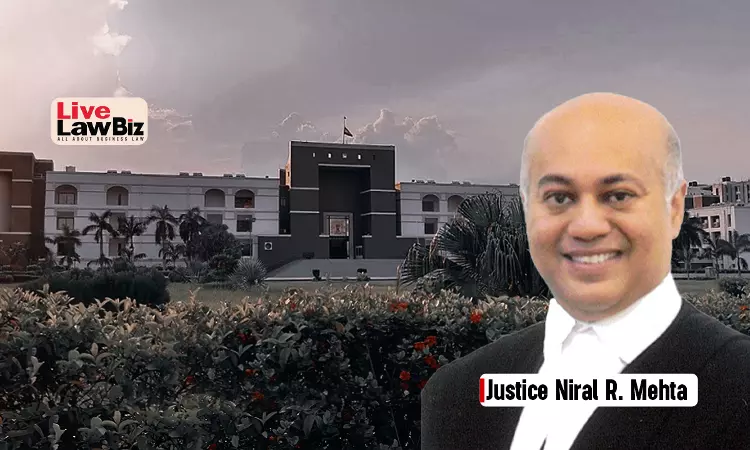
On 22 June, the Gujarat High Court held that non-production of a Power of Attorney in arbitral proceedings is a curable procedural defect and cannot, by itself, justify rejection of a claim or termination of arbitration proceedings.
Justice Niral R. Mehta allowed a writ petition filed by a homebuyer and set aside an arbitral tribunal's order rejecting his claim against Shalin Infrastructure, restoring the arbitral proceedings. The Bench observed:
“The jurisdiction vested in an arbitral tribunal is intended to facilitate adjudication of disputes on their substantive merits and not to defeat legitimate claims by resorting to hyper-technical procedural objections, particularly where the defect is capable of rectification. In that view of the matter, the rejection of the claim solely on account of non-production of the Power of Attorney amounts to an exercise of jurisdiction not sanctioned by the provisions of the Act and is therefore liable to be characterised as jurisdictionally erroneous.”
The dispute arose from three Agreements to Sell executed by Shalin Infrastructure in favour of Pandya Naresh Chandra and his wife for three flats in the “Shalin Heights” project. Pandya, an 87-year-old resident of London, paid Rs. 61,00,500 towards the flats. He alleged that the developer failed to hand over possession within the stipulated period of twelve months and did not refund the amount. He invoked the arbitration clause on 21 November 2023.
Following non-resolution of the dispute, Pandya approached the Gujarat High Court under Section 11 of the Arbitration and Conciliation Act, 1996. By order dated 10 January 2025, the Court appointed retired District Judge I.R. Dave as sole arbitrator.
The Arbitration Centre directed Pandya to file his statement of claim by 24 February 2025. Since communication reached him in the United Kingdom only on 2 March 2025, time was extended till 15 April 2025.
Pandya filed the claim within the extended time but without the original Power of Attorney, stating that it had not yet reached India. The arbitral tribunal granted time till 8 October 2025 to produce the document but rejected the claim on that date solely for non-production.
Aggrieved, Pandya approached the High Court under Articles 226 and 227 of the Constitution and challenged the rejection as a procedural lapse capable of rectification. Shalin Infrastructure opposed the petition and argued that absence of proper authorisation went to the root of jurisdiction and vitiated the proceedings.
The High Court held that Sections 25 and 32 of the Arbitration and Conciliation Act, 1996, read with Rule 48 of the Arbitration Centre (Domestic and International), High Court of Gujarat Rules, 2021, exhaustively prescribe the circumstances for termination of arbitral proceedings, and no additional grounds can be read into the statute. It further held that termination of proceedings outside the statutory framework would be contrary to the scheme and intent of the Act.
On a conjoint reading of the provisions, the Bench ruled that non-production of a Power of Attorney does not fall within any recognised ground for termination of arbitral proceedings. It found that the tribunal had wrongly treated a curable defect as a jurisdictional failure. Justice Mehta reiterated the objective of arbitration as expeditious adjudication on merits and disapproved of a hyper-technical approach that frustrates substantive rights.
Accordingly, the High Court quashed the Tribunal's order, restored the arbitral proceedings and permitted Pandya to place the Power of Attorney and amended statement of claim on record within one week, and directed the tribunal to decide the dispute on merits.
Appearances for petitioner (Pandya Naresh Chandra Through POA Gaurang Bhavsar): Advocate A.H. Mohapatra.
Appearances for respondent (Shalin Infrastructure & Ors.): Advocate Yashkumar S. Pandya.