
Procedural Irregularity Without Prejudice Not Ground To Set Aside Arbitral Award: Delhi High Court
Shivani PS
8 July 2026 3:53 PM IST
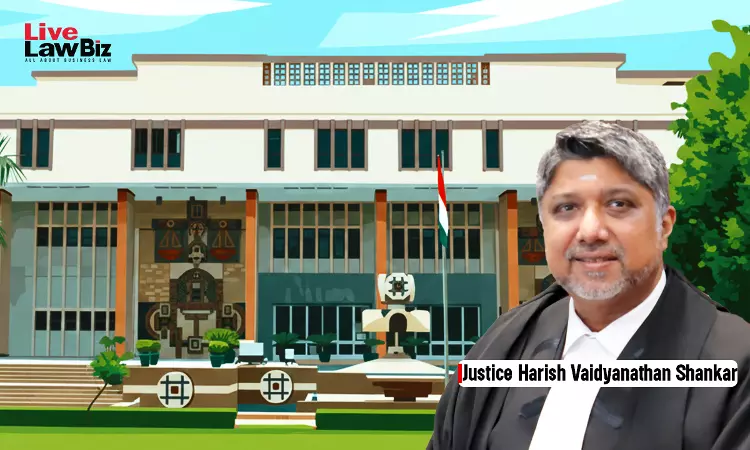
The Delhi High Court on 6 July held that a party challenging the constitution of an arbitral tribunal must establish actual prejudice caused by the alleged procedural irregularity, and that mere dissatisfaction with the appointment process cannot be a ground to set aside an arbitral award.
Justice Harish Vaidyanathan Shankar dismissed a petition filed by Shriram Pistons & Rings Limited challenging an arbitral award passed in favour of Usha International Limited. He observed:
“It is also pertinent to note that the Petitioner has not demonstrated how the alleged procedural deficiencies in the appointment process translated into any actual prejudice during the conduct of the arbitral proceedings. The Petitioner actively participated in the proceedings, filed detailed pleadings, examined witnesses, cross-examined the witnesses produced by the Respondent and fully contested the claims on merits. In the absence of any demonstrated prejudice, the challenge cannot succeed merely on speculative assertions concerning the process of appointment.”
The dispute arose from agency agreements dated 30 April 1999 and 31 March 2000 between Shriram Pistons & Rings and Usha International. Under the arrangement, Usha International Limited was appointed to procure export orders for automotive components manufactured by Shriram.
On 27 March 2004, Shriram informed Usha that the agency arrangement would not be renewed beyond 30 April 2004. Disputes subsequently arose regarding unpaid commission on export orders and pending shipments.
Usha invoked arbitration before the Federation of Indian Chambers of Commerce and Industry on 25 May 2005, claiming around Rs. 81.81 lakh. Shriram opposed the arbitration proceedings, contending that the 1999 agreement was not signed by Usha and therefore could not create a valid arbitration agreement. The arbitral tribunal passed an award directing Shriram to pay Rs. 68.57 lakh with 10% pre-award, pendente lite and post-award interest, along with Rs. 50,000 as costs.
Shriram approached the High Court under Section 34 of the Arbitration and Conciliation Act, 1996, seeking to set aside the award. It challenged the award on grounds including alleged defects in the arbitrator's appointment under Section 12, jurisdictional objections under Section 16, patent illegality and delay in pronouncement of the award.
Usha had also filed an enforcement petition under Section 36 of the Act, which was heard along with Shriram's challenge.
Shriram argued that the 1999 agreement was not binding as it lacked Usha's signature, that the tribunal failed to decide certain issues and jurisdictional objections, and that the delay in delivering the award had affected the validity of the proceedings. Usha contended that both parties had acted upon the agreements for several years, that a valid arbitration agreement existed, and that Shriram was seeking an impermissible re-appreciation of evidence under Section 34.
Rejecting the challenge, the High Court held that the arbitrator had examined the parties' commercial conduct, contemporaneous correspondence, commission payments and other documentary evidence before concluding that a valid contractual relationship and arbitration agreement existed.
It further held that an arbitral award need not replicate a civil court judgment or contain separately numbered findings on every issue, provided the disputes referred to arbitration have been substantively adjudicated.
On the issue of delay, the Court held that although timely pronouncement of arbitral awards is desirable, delay alone cannot justify setting aside an award unless it results in demonstrable prejudice. It observed:
“Mere delay, without anything more, cannot lead to an automatic inference that the learned Arbitrator failed to consider the evidence or submissions advanced by the parties. Such a presumption would run contrary to the settled principle that arbitral awards carry a presumption of regularity.”
Accordingly, the High Court dismissed Shriram Pistons & Rings's Section 34 petition, upheld the arbitral award, directed the company to deposit the awarded amount along with accrued interest before the High Court Registry within four weeks, and ordered that Usha International's enforcement petition proceed.
Appearances for petitioner (Shriram Pistons & Rings Ltd.): Advocates Amit Agrawal, Rahul Kukreja, Jatin Shrivastava and Akanksha Chauhan.
Appearances for respondent (Usha International Ltd.): Senior Advocate J. Sai Deepak with Advocates Divya Bhalla, Abhishek Chauhan, Devansh Jain and Abhishek.