
Madhya Pradesh High Court Holds ICA Award Void, Says Only CJI Can Appoint Arbitrator
Shivani PS
23 April 2026 11:23 AM IST
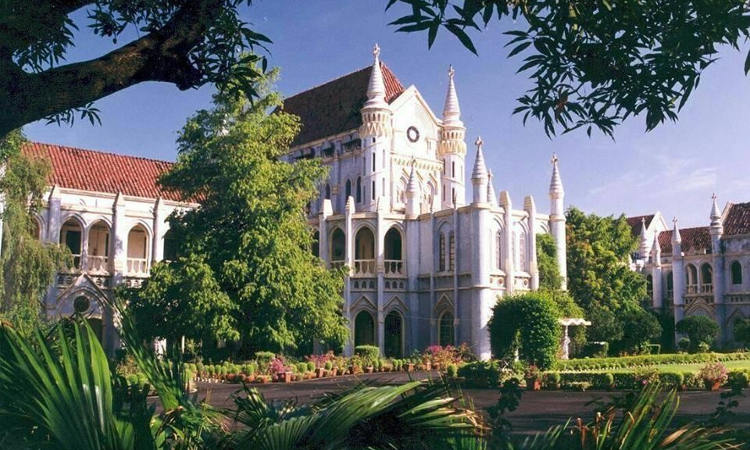
Madhya Pradesh High Court- Principal Seat at Jabalpur
The Madhya Pradesh High Court has held that an arbitral award against Ssangyong Engineering and Construction Company Ltd is a nullity in law, as the dispute was an international commercial arbitration and, under Sections 11(9) and 11(12) of the Arbitration and Conciliation Act, 1996, only the Chief Justice of India or a person or institution designated by him could appoint the arbitrator.
The court noted that Ssangyong is a company incorporated in the Republic of Korea, and therefore the arbitration between the parties falls within the definition of an international commercial arbitration under Section 2(1)(f). In such a case, it held, the jurisdiction to appoint an arbitrator lies exclusively with the Chief Justice of India. The appointment made by the High Court was thus without jurisdiction.
It also observed that a defect of this nature goes to the root of the matter and can be raised at any stage, even if no objection was taken earlier.
Chief Justice Sanjeev Sachdeva and Justice Vinay Saraf observed, “Section 11(6) of the Arbitration Act does not empower the person designated by the Chief Justice of High Court to appoint an arbitrator in International Commercial Arbitration but only empowers the Chief Justice of India. The provisions are mandatory in nature and cannot be waived.”
The bench held that once the appointment itself was without jurisdiction, the arbitral proceedings were void ab initio and the award passed by the tribunal was non est in law.
The dispute arose out of a highway construction contract awarded on April 12, 2006. Ssangyong subsequently entered into a works contract with S.B. Engineering Associates on November 3, 2007, subcontracting part of the work for a value of about nineteen crore fifty-five lakh.
On June 2, 2009, Ssangyong terminated the contract alleging failure on the part of S.B. Engineering to perform its obligations. S.B. Engineering invoked arbitration under Clause 19 of the agreement.
As Ssangyong did not appoint an arbitrator, S.B. Engineering approached the High Court under Section 11(6). By order dated November 17, 2009, a retired judge, Justice P.C. Naik, was appointed as the sole arbitrator. The proceedings continued without any objection to jurisdiction and culminated in an award on January 31, 2016, which was later corrected on April 28, 2016.
Under the corrected award, Ssangyong was directed to pay about seven crore sixty-two lakh to S.B. Engineering with interest at eighteen percent per annum. S.B. Engineering was also directed to pay about two crore thirty-eight lakh to Ssangyong with interest at the same rate.
Before the High Court, Ssangyong contended that the arbitration was an international commercial arbitration and that the arbitrator could have been appointed only by the Chief Justice of India. S.B. Engineering argued that Ssangyong had participated in the proceedings without objection and had therefore waived its right to challenge the appointment under Section 4 of the Act.
Rejecting this contention, the Court held that Section 4 applies only to provisions from which parties “may derogate” and not to mandatory provisions. It explained that procedural aspects such as conduct of hearings, place and language of arbitration, timelines and similar matters are derogable. In contrast, provisions relating to jurisdiction and appointment of arbitrators are mandatory and cannot be waived.
The court further observed that in case of conflict, mandatory provisions of the Act prevail over any agreement between the parties.
Referring to the statutory scheme, the bench noted that Section 11(9) provides that in an international commercial arbitration, the appointment of an arbitrator is to be made by the Chief Justice of India or a designated authority. Section 11(12) clarifies that references to the “Chief Justice” in such cases must be read as references to the Chief Justice of India.
On a conjoint reading of Sections 2(1)(f), 4 and 11, the Court held that the power to appoint an arbitrator in an international commercial arbitration lies exclusively with the Chief Justice of India or a person or institution designated by him.
In view of this, it concluded that the appointment made by the High Court was without jurisdiction. The arbitral proceedings were therefore void from the outset, and the award was a nullity in law.
For Petitioner (Ssangyong Engineering and Construction Company Ltd.): Advocates Ravindra Singh Chhabra, Praneesha Nayyar, Rashmeet Kaur, Jubin Prasad.
For Respondent (S.B. Engineering Associates): Advocates Om Prakash, Devendra Singh.