
International Arbitration
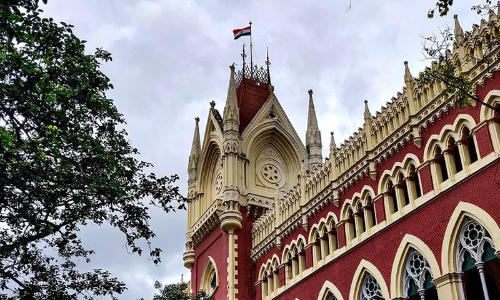
Section 9 Of The A&C Act Is A Provision In Aid Of The Arbitration, Applies To Foreign Seated Arbitration Also: Calcutta High Court Reiterates
The High Court of Calcutta has held that Section 9 of the A&C Act that provides for interim relief by the Court applies to foreign seated arbitration as well. The bench of Justice Shekhar B. Saraf held that Section 9 is a provision that is in aid of the arbitration proceedings in contrast to other provisions of Part-I that relates to the conduct of the arbitration proceedings and has been mandated to apply to foreign seated arbitrations as well. The Court further held that...

Request For Oral Hearing Cannot Be Denied by The Arbitral Tribunal On The Ground That The Claims Involved Are Modest: Telangana High Court
The Telangana High Court has ruled that where the Arbitral Tribunal has passed a foreign arbitral award after denying the request of a party for oral hearing, the said arbitral award is contrary to the fundamental policy of Indian law as it is in conflict with the basic notions of justice and hence, it cannot be enforced in India. The Bench, consisting of Justices P. Naveen Rao and Sambasivarao Naidu, held that a person has a right of fair hearing and that a request for oral hearing...
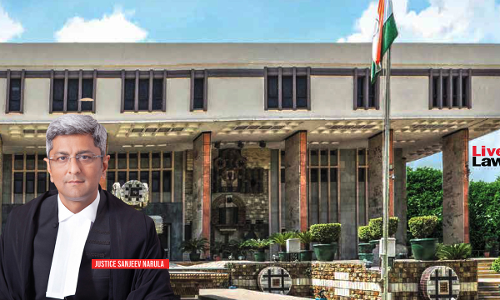
Non Applicability Of Section 9 Of The A&C Act Can't Be Presumed If Parties Opted For Foreign-Seated Institutional Arbitration: Delhi High Court
The High Court of Delhi has held that merely because the parties have chosen a foreign-seated institutional arbitration under the UNCITRAL Law, they cannot be presumed to have entered into an agreement to exclude the applicability of Section 9 of the A&C Act as provided under the proviso to Section 2(2) of the A&C Act. The Bench of Justice Sanjiv Narula held that the words "an agreement to the contrary" appearing under Section 2(2) cannot be presumed or interpreted on the mere...
CPC Contemplates Execution Of A Foreign Decree And Not An Order: Delhi High Court
The High Court of Delhi has held that remedy before the foreign arbitral tribunal would not be inefficacious when the bulk of the assets of a party are located in India as the interim order in a foreign-seated arbitration is not enforceable under the A&C Act. The Bench of Justice Sanjeev Narula also held that an interim award passed in arbitration with seat in India is enforceable under Section 17(2) of the Act, however, there is no provision in the Act for the enforcement of an...

Enforcement Of A Foreign Arbitral Award Can Be Filed In More Than One High Court: Madras High Court
The High Court of Madras has held that more than one High Court can exercise jurisdiction for the recognition and enforcement of a part of arbitral award if the claims are decided for and against the parties thereto. The Single Bench of Justice Senthilkumar Ramamoorthy held that the Court for the purpose of the enforcement of a foreign award would be the one within whose jurisdiction either the award debtor carries his business or its assets are located within its jurisdiction. The...
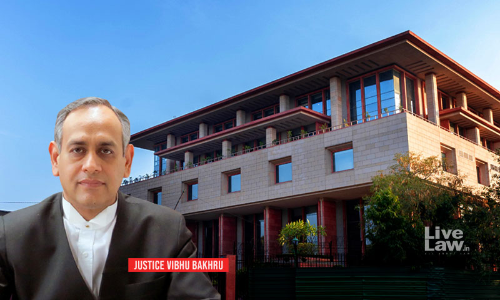
No Distinction Between Decree Or Awards Where Amounts Are In Foreign Currencies For Purposes Of Enforcement Of Arbitral Award: Delhi High Court
The Delhi High Court has observed that for the purposes of enforcement of arbitral award, no distinction can be made between decree or awards where amounts are decreed or awarded in foreign currencies on the basis of the nationality of the disputing parties.Justice Vibhu Bakhru was dealing with a plea filed by a Decree Holder under sec. 36 of the Arbitration and Conciliation Act, 1996 seeking to enforce an Arbitral Award dated 07.01.2017. The issue before the Court was regarding the rate of...
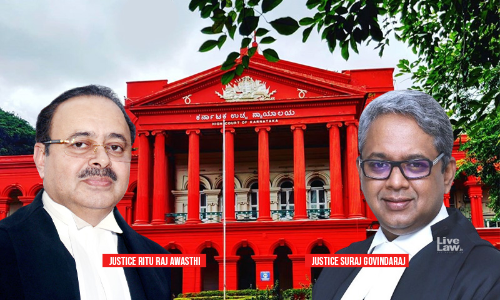
Execution Of Foreign Arbitral Award, Singapore Being Reciprocating Country , Enforceable: Karnataka High Court
The Karnataka High Court has ruled that an international commercial arbitral award rendered between parties that have no connection with India can be enforced by a Court in India if the property against which the award is sought to be enforced lies within the territorial jurisdiction of the Court. The Bench, consisting of Chief Justice Ritu Raj Awasthi and Justice Suraj Govindaraj, held that India being a signatory to the New York Convention was required to enable execution of a...