
Interim Arbitration Relief Plea Cannot Be Rejected At Threshold Merely Because It Covers Two Agreements: Rajasthan High Court
Shivani PS
3 Oct 2026 12:15 PM IST
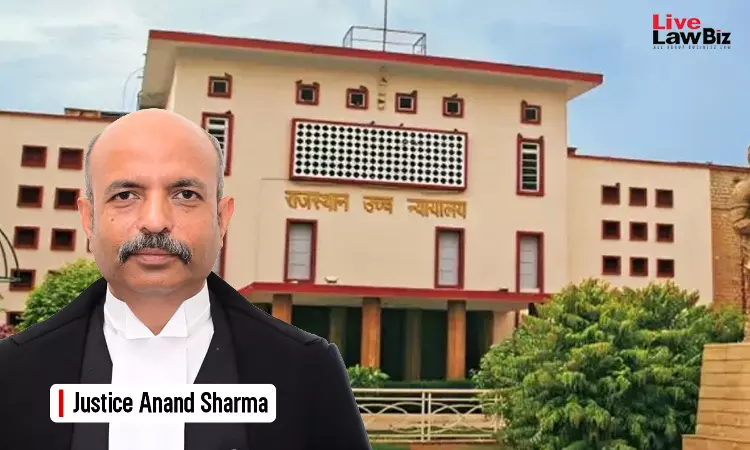
The Rajasthan High Court has held that an application seeking interim relief in aid of arbitration cannot be rejected at the threshold under Order VII Rule 11 merely on an objection that it covers two separate agreements containing separate arbitration clauses.
Justice Anand Sharma observed, “The question whether two agreements are wholly independent or are interrelated is not necessarily capable of determination merely by looking at the title of the agreements or the fact that they contain separate arbitration clauses. The contractual scheme, nature of obligations, interdependence, subject matter and the interim relief sought may all become relevant. Consequently, it would be inappropriate at this stage for this Court, in exercise of supervisory jurisdiction under Article 227 of the Constitution of India, to record a final finding on that controversy when the competent Court has consciously kept it open.”
The ruling came in a dispute between Marudhara Primeinfra Pvt. Ltd. and Lahoty Buildcon Limited over a composite application seeking interim relief.
Lahoty Buildcon approached a Jaipur Commercial Court under Section 9 of the Arbitration and Conciliation Act, 1996, based on two agreements dated November 9, 2024, and June 20, 2025, both containing arbitration clauses.
Marudhara objected that the agreements covered different projects and obligations and could not be combined in one application. It raised the objection in February and later sought rejection under Order VII Rule 11. The Commercial Court dismissed the application on September 8, 2026, leaving the objection open for consideration while deciding the Section 9 application.
Marudhara then approached the High Court under Article 227 of the Constitution, challenging the order.
It argued that the common parties did not justify combining two independent agreements. The agreements concerned different projects and obligations and contained separate arbitration clauses.
Lahoty Buildcon argued that Section 9 proceedings are meant to provide interim protection in aid of arbitration. It contended that such proceedings are not equivalent to a civil suit and that Order VII Rule 11 could not be mechanically applied.
The High Court accepted this submission.
The court observed that a Section 9 application “cannot, by any stretch, be equated with a plaint or a suit.” Such proceedings provide interim protection in aid of the arbitral process rather than adjudicate substantive rights like an ordinary civil suit.
The court held that Order VII Rule 11 specifically concerns rejection of a plaint. Since there is no statutory provision making it applicable to Section 9 proceedings, it could not be used to reject the application at the preliminary stage.
The court, however, did not decide whether the two agreements were actually independent or interrelated.
It observed that this would require examination of the agreements, their arbitration clauses, the nature and scope of the disputes, the contractual obligations, and the interim protection sought. The Commercial Court would have to determine that issue while considering the Section 9 application.
The court also found no reason to interfere with the Commercial Court's decision to keep the objection open.
“The Commercial Court has chosen not to bifurcate the proceedings under Section 9 of the Act of 1996 by first deciding one aspect of maintainability under Order VII Rule 11 and thereafter, proceeding to examine the application on merits. Such an approach, particularly in proceedings intended to secure interim protection in aid of arbitration, cannot be said to be contrary to law.”
The High Court expressly clarified that it had not decided whether Lahoty Buildcon's composite Section 9 application was ultimately maintainable. Marudhara's objection that the two agreements were independent was left open for the Commercial Court to decide on merits.
The High Court dismissed Marudhara's writ petition.
In Lahoty Buildcon's connected writ petition, the court directed the Commercial Court to decide the pending interim-relief application expeditiously. It said the application should preferably be decided within four months from the date of receipt of a copy of the judgment, without being influenced by observations in the judgment on the merits of the underlying dispute.
For Petitioner (Marudhara Primeinfra Pvt. Ltd.): Advocates Prateek Kasliwal, Hemant Kothari, Parneet Kaur.
For Respondent (Lahoty Buildcon Limited): Advocates S.S. Hora, Aman Garg.