
Arbitral Tribunal Cannot Compel Production Of Evidence Through Interim Relief Mechanism: Calcutta High Court
Shivani PS
29 July 2026 1:30 PM IST
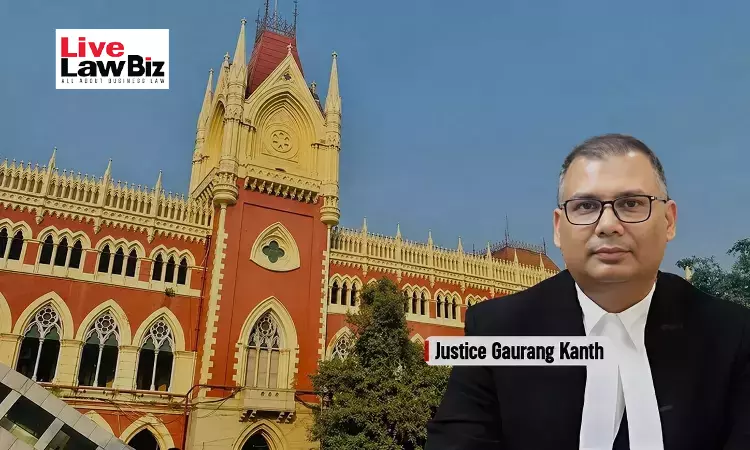
The Calcutta High Court has held that an arbitral tribunal cannot use its power to grant interim relief as a mechanism to compel a party to produce evidence.
Justice Gaurang Kanth observed that interim powers under Section 17 are meant to protect the subject matter of a dispute, while matters relating to production of evidence are governed by Section 19 of the Arbitration and Conciliation Act, 1996.
The judge observed, “Two features of this provision merit immediate attention. First, the powers conferred are interim and protective in nature, designed to preserve the status quo pending the conclusion of the arbitral proceedings. Secondly, the provision is confined to property or things which are the subject matter of dispute, or as to which a question may arise therein. On a plain reading, Section 17 does not contemplate or authorise an Arbitral Tribunal to compel a party to produce documents as evidence in support of the other side's claim. Matters relating to procedure and evidence are governed by Section 19 of the Act. This distinction between preservation of subject matter and compelled production of evidence is fundamental and goes to the root of the jurisdictional question.”
The ruling came in an appeal filed by construction companies, Harsha Constructions against VKM Projects Private Limited.
The court partly allowed the appeal and set aside the arbitral tribunal's directions requiring Harsha Constructions to disclose running account bills, books of account, profit and loss statements, balance sheets, and revenue records relating to its subcontract with Rapiscan Systems Private Limited.
The dispute arose from a Joint Venture Agreement and a Supplementary Agreement executed in September 2021 for civil and structural works connected with the installation of an X-ray-based drive-through container scanner at Syama Prasad Mookherjee Port, Kolkata.
Under the Supplementary Agreement, it was agreed that if the subcontract was awarded, it would stand in the name of Harsha. VKM Projects and Marketing Point were each entitled to 5 per cent of the value of every running account bill.
VKM later claimed it was being denied information about payments received under the subcontract. It approached the arbitral tribunal seeking financial records. It relied on clauses of the JV for the same.
The sole arbitrator allowed the application and directed Harsha Constructions to disclose the documents. Challenging that order, Harsha argued that Section 17 cannot be invoked to compel discovery or production of documents, as matters relating to evidence are governed by Sections 19 and 27 of the Act.
VKM Projects, on the other hand, argued that the documents formed part of the subject matter of the arbitration. It also contended that Clause 5.2 of the Joint Venture Agreement gave it a contractual right to inspect those records.
The court noted that Section 17 empowers an arbitral tribunal to grant interim measures to preserve the subject matter of a dispute, including orders relating to preservation or inspection of property.
It said the character and purpose of the relief sought, rather than the label attached to it, determines whether it falls within Section 17 or Section 19. Section 17, the court held, cannot be expanded into a mechanism for compelling production of evidence.
Justice Kanth said where the relief is aimed at obtaining documents to establish or quantify a claim, the applicable provision is Section 19 and not Section 17.
The court, thus, found that while the tribunal's reasoning referred to preservation and inspection, its operative directions required disclosure, validation, submission, and discovery of financial records. Those directions went beyond both the tribunal's own reasoning and the limits of Section 17.
It observed, "The reasoning portion employs the language of "preservation andinspection," yet the operative directions go well beyond that, extending todisclosure, validation, submission and "discovery." The operative directionsthus exceed not only what is contemplated in the reasoning portion of theimpugned order but also the jurisdiction conferred upon the learnedArbitrator under Section 17 of the Act, and are, to that extent liable to beset aside."
The court accordingly partly allowed the appeal and set aside the tribunal's directions requiring Harsha Constructions to disclose, validate and submit the records. It clarified that if VKM Projects seeks production or inspection of the documents for the arbitration proceedings, it is free to take appropriate steps before the arbitral tribunal in accordance with law.
For Petitioner (Harsha Constructions and Ors.): Advocates Jishnu Choudhury, Senior Advocate, Avijit Ghoshal, Sreeja Mukherjee.
For Respondent (VKM Projects Private Limited and Ors.): Advocates Rachit Lakhmani, Aditya Chakraborty, Pooja Sah, Siddharth Makkar.