
Interim Arbitral Orders Cannot Be Enforced Separately Once Subsumed Into Final Award: Delhi High Court
Shivani PS
4 May 2026 5:12 PM IST
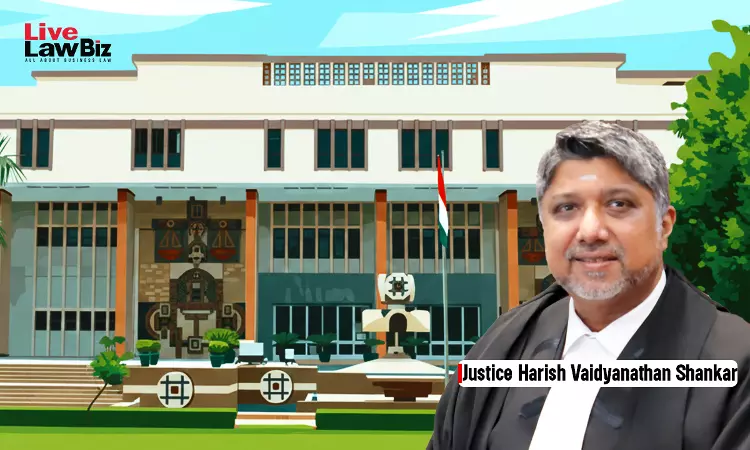
The Delhi High Court has held that interim orders passed by an arbitral tribunal cannot be independently enforced in cases where they stand subsumed into a final arbitral award covering the same subject matter, holding that such directions must thereafter be enforced only under the statutory framework governing arbitral awards.
Justice Harish Vaidyanathan Shankar dismissed an enforcement petition filed by Sunder Lal Gupta, ruling that the interim direction requiring Sahyog Hospitality to deposit 81.25% of monthly mesne profits could not be executed once it stood merged into the final award.
“Where the directions contained in an interim order are effectively subsumed into the operative part of the Final Award, the enforcement of such directions must thereafter be governed by the regime applicable to the enforcement of arbitral awards. Consequently, the provisions of Sections 34(3) and 36(1) of the A&C Act must be allowed to operate in their full play, without being circumvented through parallel enforcement proceedings under Section 17(2) of the A&C Act," the bench observed.
The court held that permitting separate enforcement of such interim directions after the award would render the statutory scheme governing enforcement of arbitral awards ineffective by bypassing the prescribed challenge period.
The dispute arose out of a lease agreement, with Sunder Lal Gupta seeking mesne profits from Sahyog Hospitality and its partners.
During the arbitration, the Sole Arbitrator issued an interim order on November 6, 2025, directing Sahyog Hospitality to deposit ₹2,97,53,023, calculated as 81.25% of the monthly profits for the period from November 2024 to October 2025.
The amount was not deposited, prompting Gupta to move the High Court to enforce the interim direction.
While that petition was still under consideration, the arbitrator delivered the final award on March 2, 2026. The award retained the obligation to pay mesne profits and extended it until the property is actually vacated.
Taking note of this, the court found that the final award did not merely reflect the interim order but absorbed it and widened its scope. The interim directions, it said, no longer stood independently once the award was in place.
It also clarified that although a petition to enforce interim orders is maintainable in principle, the position changes once a final award addressing the same issue is rendered. From that point on, enforcement has to follow the route prescribed for arbitral awards.
Gupta argued that the law confers a continuing and independent right to enforce interim orders at any stage, even after a final award.
Sahyog Hospitality contended that the interim order had merged into the final award and that separate enforcement would prematurely bypass the statutory challenge window available against the award.
The court observed that legislative amendments were intended to make interim orders enforceable, while also clarifying that the tribunal's power to grant such measures is confined to the pendency of arbitral proceedings.
Holding that the statutory scheme must be harmonized, the court concluded that once an interim order is subsumed into a final award, it cannot be enforced independently.
The High Court dismissed the petition, while granting liberty to Sunder Lal Gupta to pursue remedies available in law in accordance with the framework governing arbitral awards.
For Petitioner (Sunder Lal Gupta): Advocates Manoj Chouhan, Neha Raj Singh.
For Respondent (M/s Sahyog Hospitality): Senior Advocate Apoorv Kurup with Advocates Vijay Kasana, Aayush Mishra, Gurjas Narula, Vaibhav Sharma.