
High Courts' Supervisory Jurisdiction In Arbitration Falls Within 'Razor-Thin Compass': Delhi High Court
Sandhra Suresh
25 May 2026 4:06 PM IST
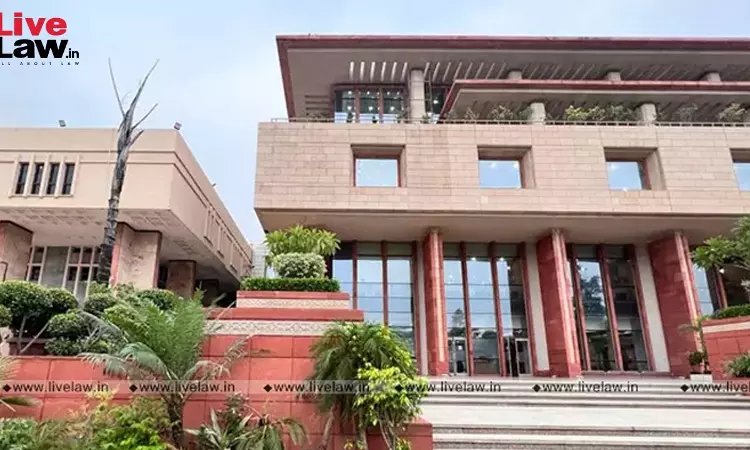
The Delhi High Court has held that its power to interfere in arbitral proceedings is confined to a “razor-thin compass,” refusing to interfere with an arbitral tribunal's rejection of Sunil Walia's jurisdictional objections in a partnership dispute involving Jason Enterprises.
Justice Purushaindra Kumar Kaurav observed that judicial intervention in arbitral matters must remain exceptional.
“At the outset, it may be observed that there is no absolute bar on the exercise of jurisdiction under Article 227 of the Constitution of India in matters arising out of arbitral proceedings. However, the scope of such interference is extremely limited and falls within a razor-thin compass,” the court observed.
“The legislative intent behind the enactment of the Act of 1996 clearly reflects that there ought to be minimal judicial interference in arbitral proceedings, save and except to the extent specifically contemplated under the statute itself,” it added.
Walia had challenged an April 11, 2026 order of the arbitral tribunal rejecting his jurisdictional objections and sought to have the entire arbitration declared void.
The dispute arose from Jason Enterprises, a partnership firm constituted in 2004. Disputes arose between the partners around 2010, following which Walia issued a dissolution notice. Respondent Prakash Chand Goyal (HUF) had earlier initiated arbitration before the Delhi International Arbitration Centre.
That first round ended in a 2014 arbitral award rejecting Goyal's claims on the ground that the unregistered partnership attracted the statutory bar under the Partnership Act. In 2017, the Delhi High Court set aside that award and granted liberty to the parties to pursue fresh arbitration in accordance with law.
Walia argued that after the earlier award was set aside, no fresh invocation notice was issued before a sole arbitrator was appointed and proceedings resumed, rendering the arbitration void from the outset.
“It was further stressed that, in the absence of a valid invocation of arbitration in accordance with law, the very initiation and continuation of the subsequent arbitral proceedings is wholly without jurisdiction and void ab initio,” Walia's counsel argued.
The court rejected the contention, relying on the Supreme Court's ruling in Bhagheeratha Engineering Ltd. v. State of Kerala, which held that failure to issue such a notice is not by itself fatal if the dispute is otherwise arbitrable and the claim is valid.
“An even-handed assessment of the facts of the present case, including the record of the arbitral proceedings, would show that the petitioner has been participating in the proceedings before the Arbitral Tribunal,” the court observed.
“It is also seen that, prima facie, no objection with respect to the alleged absence of invocation or non-issuance of notice under Section 21 of the Act of 1996 was raised at the inception of the proceedings,” it added.
Finding no exceptional circumstances warranting intervention, the court dismissed the writ petition while leaving it open to Walia to raise available challenges against any eventual arbitral award.
For Petitioners: Advocate Bharat Bhushan Bhatia