
Withdrawal Of Civil Suit Doesn't Extinguish Arbitration Agreement: Calcutta High Court
Ananya Tangri
15 July 2026 12:01 PM IST
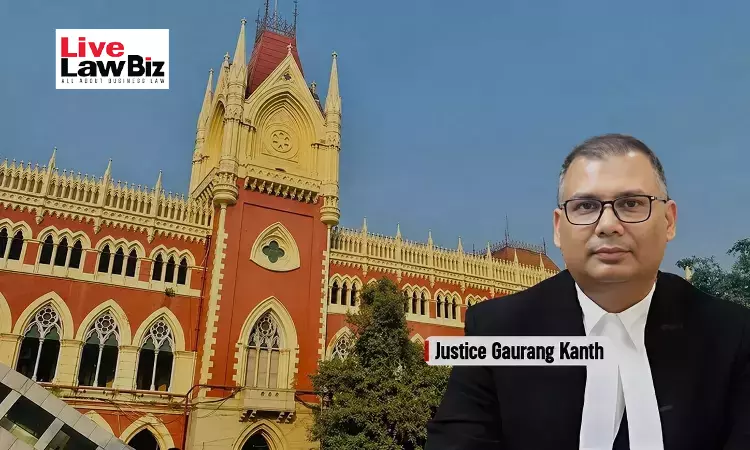
The Calcutta High Court has held that withdrawal of an earlier civil suit without liberty to institute fresh proceedings does not extinguish the arbitration agreement or bar a subsequent petition under Section 11(6) of the Arbitration and Conciliation Act, 1996 for constitution of an arbitral tribunal.
In doing so, the Court distinguished the Supreme Court's decision in HPCL Bio-Fuels Ltd. v. Shahaji Bhanudas Bhad, which involved the unconditional withdrawal of an earlier Section 11 application.
Justice Gaurang Kanth held that the effect of withdrawing the civil suit may be raised as a defence against the maintainability of particular claims before the arbitral tribunal, but it cannot prevent the constitution of the tribunal itself.
The Court observed, “The present proceeding is not one for adjudication of claims but merely for constitution of the arbitral forum. The Court is therefore not required to determine whether a particular claim would ultimately be maintainable before the Tribunal. The withdrawal of the suit may furnish a defence before the Tribunal regarding the maintainability of any particular claim, but cannot extinguish the arbitration agreement itself. At this stage, this Court is merely called upon to constitute an Arbitral Tribunal for adjudication of the disputes between the parties. It would, therefore, be premature for this Court to examine whether the claim which the petitioner intends to pursue before the Tribunal would be barred by principles of res judicata, or otherwise.”
The dispute arose from a registered development agreement dated June 27, 2019 concerning development of a property in Howrah.
The petitioner, Lipika Ghosh, was one of the co-owners of the property. Under the agreement, Great Island Development Company was required to obtain sanction for construction of a G+4 building and pay ₹33.34 lakh towards the petitioner's owner's allocation.
The petitioner earlier instituted a civil suit before a Howrah court seeking, among other reliefs, a declaration that she was entitled to receive ₹33.34 lakh under the development agreement. She also sought declarations concerning alleged unauthorised construction and injunctions against alienation of the property.
The suit was subsequently withdrawn and dismissed as not pressed on March 18, 2025. No liberty was sought or granted to institute a fresh suit on the same cause of action. Thereafter, the petitioner invoked Clause XIII of the development agreement, which provided for arbitration. Since the respondents neither appointed an arbitrator nor replied to the notice, she approached the High Court under Section 11(6).
Petitioner's Submissions
Advocate Abhilash Chatterjee, appearing for the petitioner, submitted that a valid and subsisting arbitration agreement existed between the parties and that the disputes concerning non-payment of the balance owner's allocation fell within its scope.
He argued that the earlier civil suit and the proposed arbitral claim sought materially different reliefs. Further, the development agreement had not become frustrated, as the developer had acted upon the agreement, constructed a G+2 building and sold the units.
Respondent's Submissions
Advocate Supriyo Das, appearing for the developer, contended that the Section 11 petition was barred by the principles underlying Order XXIII Rule 1 of the Code of Civil Procedure.
He argued that the earlier civil suit and the proposed arbitration arose from the same development agreement and the same alleged failure to pay the owner's allocation. Since the petitioner withdrew the suit without liberty to initiate fresh proceedings, she could not re-agitate the dispute in another forum, it was submitted.
Reliance was placed on HPCL Bio-Fuels, where the Supreme Court held that the principles underlying Order XXIII Rule 1 may apply to Section 11 proceedings.
On merits, the developer also contended that the petitioner's right to receive the balance allocation would arise only after sanction for a G+4 building was obtained. Since only a G+2 plan had been sanctioned, no enforceable dispute had yet arisen, it argued.
Court's Findings
The High Court rejected the developer's objection and distinguished HPCL Bio-Fuels.
It noted that the Supreme Court case concerned an earlier Section 11 application which had itself been withdrawn unconditionally, followed by another Section 11 application founded on the same cause of action.
In the present case, however, the earlier proceeding was a civil suit seeking declaratory and injunctive reliefs, whereas the present petition merely sought constitution of an arbitral tribunal under the parties' agreed dispute-resolution mechanism.
The “nature, object, forum, and reliefs” in the two proceedings were fundamentally distinct, the Court said.
It further noted that the arbitration agreement had not been disputed and that the respondents had admittedly received the notice invoking arbitration but failed to take steps under the agreed appointment procedure.
The court also rejected, at the referral stage, the contention that the agreement stood frustrated. Whether the developer was justified in not obtaining sanction for a G+4 structure, whether frustration applied and whether the petitioner was entitled to the balance allocation were questions concerning the merits and fell within the tribunal's domain.
Reiterating the limited scope of scrutiny under Section 11(6), the Court held, “At the stage of consideration of a petition under Section 11(6) of the Act, the scope of examination by this Court is limited. Once the existence of a valid arbitration agreement and the failure of the agreed appointment procedure stand established, issues touching upon the merits of the claims, the applicability of the doctrine of frustration, the effect of withdrawal of the earlier suit, or any other preliminary or jurisdictional defence, are matters that may appropriately be urged before the Arbitral Tribunal.”
All questions concerning arbitrability, admissibility, limitation and the maintainability of the claims were kept open for determination by the tribunal, and the Section 11 application was allowed.
For Respondents: Abhilash Chatterjee and Najmee Parveen for the petitioner; Supriyo Das, Aman Baid and Avishek Chatterjee