
Vague Or Ambiguous Arbitration Notice Cannot Validly Commence Arbitral Proceedings: Calcutta High Court
Ruchi Shukla
12 May 2026 9:20 PM IST
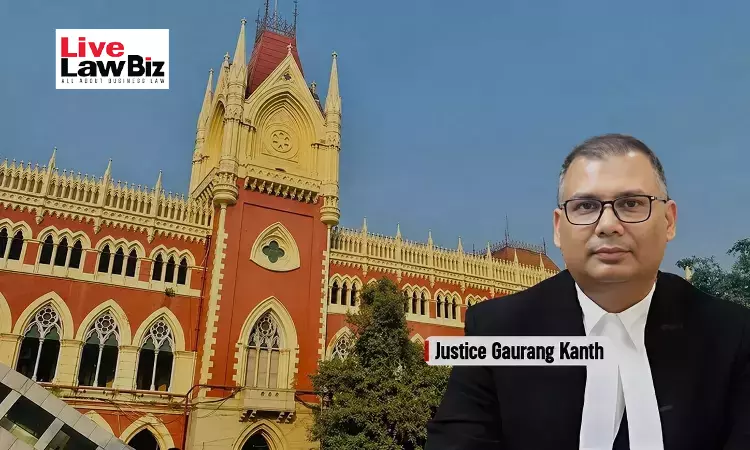
The Calcutta High Court has recently held that arbitral proceedings cannot be validly commenced on the basis of a vague or ambiguous invocation notice that fails to clearly identify the arbitration agreement or clause relied upon, or is not shown to have been received by the opposing party.
Justice Gaurang Kanth held, “The Section 21 notice is not a mere procedural formality, rather it is a jurisdictional prerequisite that marks the very commencement of arbitration proceedings.”
He added, “A notice that is vague, ambiguous, or fails to identify the arbitration agreement or clause sought to be invoked, or a notice that does not clearly indicate that arbitration is being invoked as the dispute resolution mechanism under the Act, does not satisfy the requirements of Section 21 and cannot be treated as constituting a valid commencement of arbitration proceedings.”
The ruling came while dismissing a plea by Malathy Constructions seeking appointment of an arbitrator in a payment dispute with Bridge and Roof Co. India Ltd.
The dispute arose out of civil works executed by Malathy Constructions, a partnership firm, in connection with a 756/400 KV Substation at Ariyalur, Tamil Nadu. Bridge and Roof had awarded subcontract works relating to excavation, PCC, RCC and shuttering to the firm pursuant to a tender floated in December 2017.
Malathy alleged that Bridge and Roof withheld 5% of payments as a security deposit, failed to clear outstanding dues, and did not pay for additional excavation work allegedly carried out beyond the contractual scope.
It also claimed that because of disputes between Bridge and Roof and the principal employer, parts of the work were not certified, forcing it to keep manpower and machinery at the site longer than expected and incur additional costs.
After sending repeated emails seeking payment, Malathy issued a legal notice in May 2020 claiming Rs 1.72 crore in outstanding dues. Bridge and Roof rejected the claims in its reply, while maintaining that any disputes between the parties would have to be resolved through arbitration.
A June 30, 2022 notice followed, through which Malathy sought to invoke arbitration. When Bridge and Roof did not respond, the contractor moved the High Court seeking appointment of an arbitrator.
Before the Court, Malathy contended that a valid arbitration agreement existed under Clause 26 of the December 16, 2017 tender document. It argued that at this stage, the court was only required to examine whether an arbitration agreement existed and whether the appointment mechanism had broken down.
Bridge and Roof resisted the plea, arguing that the claims were barred by limitation, that no valid notice invoking arbitration had ever been received, and that Malathy had failed to show that the disputed work orders were governed by the tender document containing the arbitration clause.
The Court found that Malathy had failed to produce any proof showing that its June 2022 notice had actually been received by Bridge and Roof, holding that this by itself was fatal since receipt of such notice marks the commencement of arbitral proceedings.
It also found substantive defects in the notice, observing that it did not expressly state that it was issued under Section 21 of the Arbitration and Conciliation Act, did not clearly identify the arbitration clause relied upon, and did not clearly set out the disputes sought to be referred.
The Court said a valid invocation notice must clearly communicate the claimant's intention to invoke arbitration, identify the relevant contract and arbitration clause, indicate the nature of the disputes, and be received by the other side.
The Bench also found a fundamental inconsistency in Malathy's case. While the petition before the High Court relied on a tender dated December 16, 2017, the arbitration notice referred to a different tender dated January 8, 2018.
The Court observed, “The petition and the arbitration invocation notice thus project inconsistent and irreconcilable cases as to the very tender document out of which the work orders and the consequent disputes are stated to arise.”
It added, “It is a well-established principle that a party cannot be permitted to approbate and reprobate simultaneously, that is to say, a party cannot blow hot and cold by adopting one position when it suits its purpose and an inconsistent position when that suits better.”
The court further held that the only admitted notice received by Bridge and Roof was the May 2020 legal demand notice, which could not be treated as a valid arbitration invocation notice because a demand notice and an arbitration invocation notice serve entirely different legal purposes.
Holding that Malathy had failed to establish both a valid invocation of arbitration and that the disputes fell under the arbitration clause it relied upon, the Court dismissed the petition.
However, since both parties had acknowledged arbitration as the appropriate route for resolving disputes, the Court clarified that Malathy would be free to initiate fresh arbitral proceedings in accordance with law.
For Petitioner: Advocate Anubhav Sinha, Advocate Shirsho Banerjee
For Respondent: Advocate Sanjib Dawn