
Arbitrator Appointment Without Written Waiver Under Section 12(5) Is Void Ab Initio: Delhi High Court
Arpita Pande
12 Jun 2026 5:17 PM IST
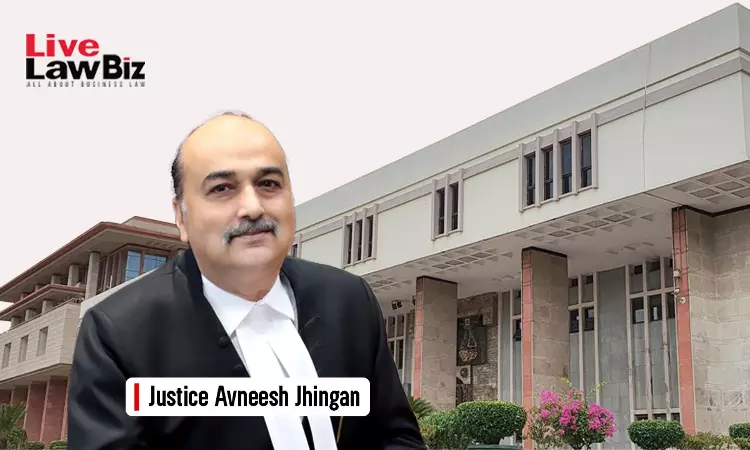
On 26 May, the Delhi High Court reiterated that waiver of the applicability of Section 12(5) read with the Seventh Schedule of the Arbitration and Conciliation Act cannot be inferred from conduct and must arise only from an express written agreement between the parties.
A Bench of Justice Avneesh Jhingan set aside an arbitral award in a dispute between a developer and the Air Force Naval Housing Board (AFNHB) concerning construction of a residential complex. It observed:
“The unilateral appointment in absence of an express agreement in writing between the parties to waive applicability of Section 12(5) of the Act is void ab initio. The filing of the statement of claim or participation in the arbitral proceedings cannot be construed as waiver under the proviso to Section 12(5) of the Act. The unilateral appointment of the arbitrator can be objected to for the first time under Section 34 of the Act.”
AFNHB entered into a contract with N.G. Construction on 10 June 2010 for construction of a residential complex. Clause 18.2 of the agreement provided for dispute resolution through a sole arbitrator to be nominated exclusively by the Chairman of AFNHB.
When disputes arose, N.G. Construction invoked arbitration on 18 November 2019. AFNHB unilaterally appointed the sole arbitrator in terms of the contract. The arbitrator filed a disclosure under Section 12 of the Arbitration and Conciliation Act, and no objection was raised at that stage. Both parties participated in the proceedings, and the arbitral award was passed on 27 July 2022. Thereafter, both parties challenged the award under Section 34 of the Act.
AFNHB contended that the appointment violated Section 12(5) as it had unilaterally nominated the arbitrator despite being a party to the dispute. It argued that the appointment was void ab initio and the award a nullity.
NG Construction, however, submitted that AFNHB never objected at the disclosure stage, participated fully without protest, and was seeking to invalidate the award only due to an adverse outcome. It further argued that AFNHB's conduct amounted to implied waiver or consent under Section 12(5).
The Court held that after the 2015 amendment, unilateral appointment by an interested party is impermissible unless there is an express written agreement waiving Section 12(5), and such waiver cannot be inferred from conduct such as participation in proceedings.
It further held that no such express written waiver or mutual consent existed between the parties. It concluded that the appointment of the arbitrator was contrary to Section 12(5) read with the Seventh Schedule, rendering the award void ab initio.
Accordingly, the High Court allowed the Section 34 petitions and set aside the arbitral award.
For Petitioner - Yoginder Handoo, Ashwin Kataria, Khushboo Mittal, Garvit Solanki, Gaurav Vishwakarma. Aditya Aggarwal
For Respondent – Bhupesh Narula, Rinku Narula, Poonam Nagpal, Anugrah Ekka & Kanishk Taneja (through VC)