
Association's Unilateral Arbitrator Appointment Under Bye-Laws Violates Public Policy: Bombay High Court
Arpita Pande
19 Jun 2026 2:29 PM IST
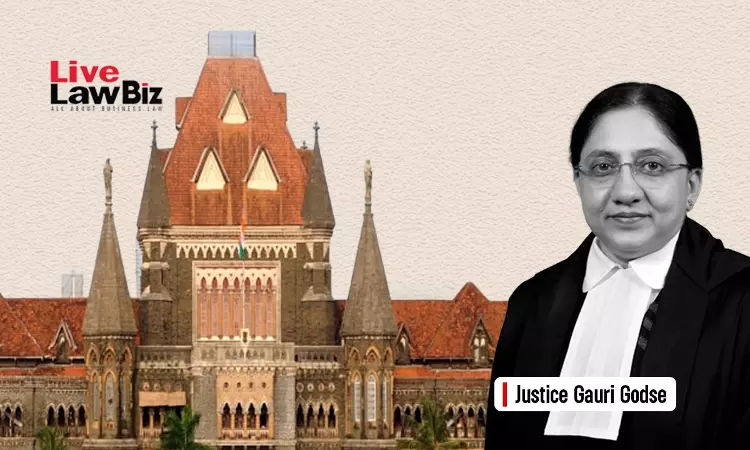
The Bombay High Court on 8 June held that an arbitral award passed by an arbitrator unilaterally appointed under an association's bye-laws, despite the absence of an arbitration agreement and where one party was not a member of the association, is contrary to Section 12(5) of the Arbitration and Conciliation Act, 1996 and the public policy of India.
Justice Gauri Godse allowed a petition filed by Traviera Silk Mills and set aside an arbitral award passed in favour of Toto Toya Spin under the Bombay Yarn Merchants Association and Exchange Limited bye-laws. She observed:
“Hence, in view of these facts, there is substance in the arguments raised on behalf of the petitioners that the impugned award is based on a unilateral constitution of the arbitral tribunal by the association by relying on the byelaws of the association to which the petitioners are admittedly not members. Hence, in absence of any arbitration agreement between the petitioners and respondent no.1 and in the absence of a valid constitution of the arbitral tribunal, the impugned award would not be sustainable as it is against the public policy of India.”
The dispute arose from the supply of yarn between Toto and Traviera. Toto, a member of the Bombay Yarn Merchants Association and Exchange Limited, invoked arbitration under the association's bye-laws by a letter dated 12 March 2021, claiming Rs. 1,72,308 with interest towards unpaid invoices.
Traviera and its directors were not members of the association. The association informed them of Toto's claim through a notice dated 1 April 2021 but did not serve the original claim letter or its enclosures.
At Traviera's request, the first hearing was adjourned because of the COVID-19 pandemic. The matter was rescheduled to 26 July 2021, when the arbitrator proceeded ex parte and delivered an award in Toto's favour. Traviera thereafter filed the present petition under Section 34 of the Arbitration and Conciliation Act, 1996 seeking to set aside the award.
It argued that the parties had never entered into a written arbitration agreement and that the invoices did not contain an arbitration clause. It contended that the association lacked jurisdiction because Traviera was not its member.
It further submitted that the association's President had unilaterally appointed the arbitrator under Bye-laws 150 to 152, rendering the constitution of the arbitral tribunal invalid under Section 12(5) read with the Seventh Schedule of the Act. Traviera also argued that a challenge based on inherent lack of jurisdiction could be raised even at the stage of proceedings under Section 34.
Toto defended the award, contending that Traviera became bound by the association's arbitral mechanism through its commercial dealings with a member of the association and that the exchange of correspondence amounted to acceptance of arbitration. It further argued that Traviera ought to have raised its jurisdictional objections under Section 16(2) before filing its statement of defence and had waived its objections under Section 4 of the Act.
The Court relied on the Supreme Court's decision in Bhadra International (India) Pvt. Ltd. v. Airports Authority of India, which held that unilateral appointment of an arbitrator is void ab initio and that an ineligible appointing authority cannot validly nominate an arbitrator.
It also relied on its decision in Manmohan Bhimsen Goyal v. Madhuban Motors Pvt. Ltd., which held that the doctrine of waiver does not apply to the ineligibility contemplated under Section 12(5) of the Act.
Applying these principles, the Bench found that Traviera was not a member of the association and had never agreed to resolve disputes under its bye-laws. Its reply to the arbitration notice also demonstrated that it had not consented to the constitution of the arbitral tribunal. It observed that the arbitral tribunal had been unilaterally constituted, rendering the award contrary to Section 12(5) of the Arbitration Act and against the public policy of India.
Accordingly, the High Court set aside the award.
For Appellant: Aman Kacheria, Sakshi Agarwal, Saloni Doshi i/b Bipin Joshi
For Respondent: Sandesh Shukla, Arshaan Lentin i/b K.Ashar