
Jharkhand High Court Rejects State's Challenge To Delhi As Arbitral Seat After 2.5 Years
Rushil Batra
25 Aug 2026 3:52 PM IST
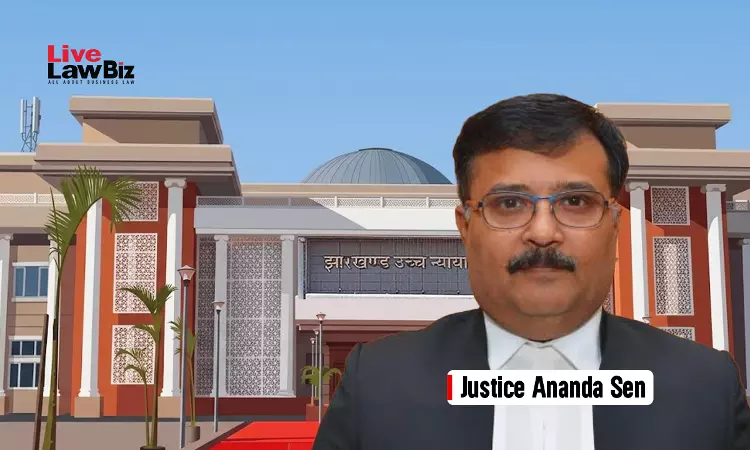
The Jharkhand High Court on 20 August, dismissed the Jharkhand Road Construction Department's challenge to an Arbitral Tribunal's decision fixing Delhi as the seat of arbitration in its dispute with Ramky Infrastructure Limited.
A Single Judge Bench of Justice Ananda Sen held that the Department's continued participation in the proceedings without a timely objection amounted to waiver under Section 4 of the Arbitration and Conciliation Act, 1996. He explained:
“The 'seat of arbitration' is the juridical home of arbitration. The seat of arbitration is an anchor and determines the procedural law and the Courts that will exercise supervisory jurisdiction over the arbitration…This seat of arbitration cannot be changed or varied. It remains constant and static, because a procedural law governing the arbitration and the supervisory jurisdiction of Courts over the arbitration proceeding cannot be allowed to change in the midst of an arbitration proceeding.”
The dispute arose from a 2010 agreement between the Road Construction Department and Ramky Infrastructure Limited for the rehabilitation and upgradation of the Barhet-Sahebganj section of the Govindpur-Sahebganj Jharkhand State Road Project.
Clause 20.6(b)(iii) of the agreement provided that arbitration proceedings would be held at the Conference Building at Mantralaya, Ranchi. However, the agreement did not expressly specify the seat of arbitration.
To address issues, an Arbitral Tribunal was constituted and held its first procedural hearing virtually in September 2023. Through Procedural Order No. 1, passed in the presence of representatives of both parties, the Tribunal fixed Delhi as the seat of arbitration while providing that the venue would be decided with the parties from time to time. The State did not challenge the decision.
Ramky Infrastructure subsequently approached the Delhi High Court under Section 29A of the Arbitration and Conciliation Act, 1996, seeking an extension of the Tribunal's mandate. The Road Construction Department objected to the Delhi High Court's territorial jurisdiction, contending that Ranchi was the seat under the agreement.
The Delhi High Court nevertheless extended the Tribunal's mandate by one year, noting that Delhi was the seat of arbitration as it stood and that the Tribunal's decision fixing Delhi as the seat had not been challenged.
The State thereafter moved an application under Section 16 of the Arbitration and Conciliation Act, 1996, challenging the fixation of Delhi as the seat. The Tribunal rejected the application through Procedural Order No. 30 and maintained its earlier decision. The State then approached the Jharkhand High Court.
Before the High Court, the State argued that since the agreement fixed Ranchi as the venue of arbitration, the Tribunal had no jurisdiction to independently fix Delhi as the seat. It submitted that the seat determines the supervisory jurisdiction of Courts, including jurisdiction under Sections 34 and 37 of the Arbitration and Conciliation Act, 1996.
Ramky Infrastructure, on the other hand, pointed out that Delhi had been fixed as the seat in September 2023 in the presence of the State's representative, but the State raised no objection for around two-and-a-half years.
The High Court noted that the agreement had not fixed the seat of arbitration and had only designated Ranchi as the venue. It held that the Tribunal had fixed Delhi as the seat in its first procedural order, in the presence of representatives of both parties, and that the decision was not contrary to any clause of the agreement.
It further noted that the State did not challenge the order fixing Delhi as the seat for more than two-and-a-half years and continued to participate in the arbitration proceedings.
The Bench also considered the State's conduct before the Delhi High Court. Although the State questioned that Court's jurisdiction in the Section 29A proceedings, it accepted the extension of the Tribunal's mandate and did not challenge the Delhi High Court's order or its observations concerning the seat before a Division Bench.
Calling the State's position “peculiar”, the it held that it could not accept the part of the Delhi High Court's order extending the Tribunal's mandate while opposing its finding concerning the seat of arbitration. On waiver, the Court observed:
“The order fixing the seat of arbitration at Delhi, was passed in presence of both the parties and this order was within the knowledge of the State for a petty long period. The State has did not challenge the same, rather continued with the proceeding. This amounts to acquiescence by the State on the issue of fixing the seat of arbitration is at Delhi. Further by keeping silent for petty long time, they have waived their right in terms of Section 4 of the Arbitration and Conciliation Act, 1996.”
Accordingly, the High Court declined to interfere with the Arbitral Tribunal's order and dismissed the writ petition.
For the Petitioner: Mr. Ashok Kumar Yadav, Senior Standing Counsel
For the Respondent: Mr. Indrajit Sinha, Mr. Shresth Gautam, Mr. Rahul Anand and Ms. Kasarla Harshita Reddy, Advocates