
Arbitration Act Interim Relief Cannot Be Used To Stay Debarment Based On Administrative Power: Delhi High Court
Ananya Tangri
11 July 2026 6:25 PM IST
The Delhi High Court has recently held that interim relief under the Arbitration Act cannot be used to stay a debarment order where the authority's power to debar is derived from an independent statutory or administrative framework rather than the contract between the parties.
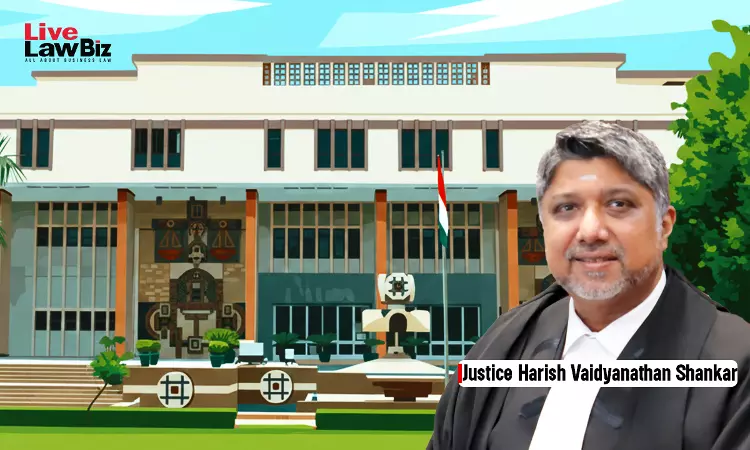
Justice Harish Vaidyanathan Shankar dismissed NCC Limited's petition seeking a stay on an Airports Authority of India (AAI) order debarring it from participating in AAI's future tenders for two years.
The Court observed, “The mere fact that an administrative action is triggered by events occurring during the performance of a contract does not ipso facto transform the action into one arising under the contract. The determinative consideration is not the factual backdrop against which the power is exercised, but the legal source from which such power is derived. If the power to debar is not founded upon the contractual terms agreed between the parties, but emanates from an independent administrative or executive authority vested in the Respondent, the character of the action remains administrative, notwithstanding that the underlying allegations may relate to contractual performance.”
The court found that AAI's power to debar contractors flowed from the statutory and administrative framework governing the authority, including the Airports Authority of India Act, 1994 and the AAI Works Manual, 2017. It was not derived from the construction contract between the parties.
The court therefore held that the dispute over the debarment was non-arbitrable and fell outside the scope of interim relief under the Arbitration Act.
The court said interim relief under the Arbitration Act must have a "direct and proximate nexus" with the arbitration agreement. It cannot operate as an independent remedy against an action that an arbitral tribunal itself cannot adjudicate.
Background
The dispute arose from a contract awarded to NCC in November 2018 for the construction of a new domestic terminal building and allied structures at Patna Airport.
The project was originally scheduled for completion in October 2022. The parties disputed the reasons for the delay. The completion period was eventually extended until December 15, 2025. The terminal was inaugurated and partially commissioned in June 2025.
AAI later raised concerns about water seepage, concrete strength and deterioration of vitrified flooring. It alleged that NCC failed to provide an acceptable programme for rectifying the defects despite repeated communications.
On January 30, 2026, AAI issued a show-cause notice proposing NCC's debarment. It cited delays in completing the project, failure to rectify defects and deficiencies in the execution of the works.
After considering NCC's reply, AAI debarred the company on March 23, 2026 from participating in its future tenders for two years.
NCC then approached the Delhi High Court seeking interim relief under the Arbitration and Conciliation Act. It sought a stay of the debarment order and removal of the debarment notice from public platforms.
AAI's submissions
Appearing for AAI, Additional Solicitor General Raghvendra Shankar raised a preliminary objection to the maintainability of the petition.
He argued that the debarment was an independent administrative measure taken under the Airports Authority of India Act, Clause 35.12 of the AAI Works Manual, and related technical instructions. The source of the power lay outside the contract.
The ASG submitted that although the alleged contractual deficiencies led to the debarment proceedings, the authority to impose debarment arose from AAI's independent public law power to regulate its future commercial dealings.
NCC's submissions
Senior Advocate Parag P. Tripathi, appearing for NCC, argued that AAI was attempting to artificially separate the debarment from the underlying contractual disputes.
He submitted that the debarment was entirely based on allegations relating to delay, quality of work and failure to rectify defects under the contract. Since the arbitration clause covered all disputes arising out of or relating to the contract, he argued that the challenge was arbitrable.
Court's analysis
The Court held that the existence of an arbitration clause does not make every dispute between contracting parties arbitrable. The real question was whether the debarment enforced a contractual right or amounted to an independent exercise of administrative authority.
It noted that the debarment neither terminated the contract nor sought recovery of contractual dues. It also did not invoke risk-and-cost measures or encash securities. Instead, it operated prospectively by preventing NCC from participating in AAI's future tenders.
"Merely because the allegations forming the basis of the impugned action are connected with the performance of the Contract may not necessarily give a contractual flavour to the debarment," the Court said.
Relying on Patel Engineering Ltd. v. Union of India, the Court observed that the State's power to blacklist or debar is inherent in its authority to decide with whom it will enter into future contracts. It does not depend on an express contractual provision.
The court also relied on the Supreme Court's recent decision in A.K.G. Construction and Developers Pvt. Ltd. v. State of Jharkhand. It noted that while termination concerns an existing contract, blacklisting regulates future dealings. Such action must therefore be examined on the touchstones of legality, proportionality, application of mind and compliance with the principles of natural justice.
The court further found that Clause 35.12 of the AAI Works Manual expressly authorises blacklisting or debarment where a contractor's performance is reported to be unsatisfactory during or upon completion of the work.
This power was not incorporated as a contractual remedy in the agreement or its general conditions. Instead, it formed part of a separate administrative mechanism governing AAI's future dealings with contractors.
The debarment letter also referred to considerations of public interest, quality standards, public infrastructure and integrity in public procurement. It expressly preserved AAI's other contractual rights and remedies.
The court therefore held that the action was administrative in nature. Even if issues such as delay and defective performance were referred to arbitration, the legality of the debarment would remain a separate public law issue.
Holding that the debarment dispute was non-arbitrable, the court said the very foundation for seeking interim relief under the Arbitration Act did not exist. It accordingly dismissed NCC's petition.
For NCC Ltd: Senior Advocate Parag P. Tripathi, with Rishi Agarwala, Aanchal Mullik, Daksh Arora, Rajat Sinha, Aparajito Sen and Rini Mehrai
For AAI: Additional Solicitor General Raghvendra Shankar, with R. Venkat Prabhat, Daksh Pandit, Neeraj Paulose Raj, S.D. Sharma, P.K. Gorai, Gagan Koehar, Pragya Bansal, Kashish Singhal and Kamna Behrani