
SBI Officers' Association Member's Removal Dispute Not Arbitrable Under Bye-Laws: Madras High Court
Kirit Singhania
17 Oct 2026 10:00 AM IST
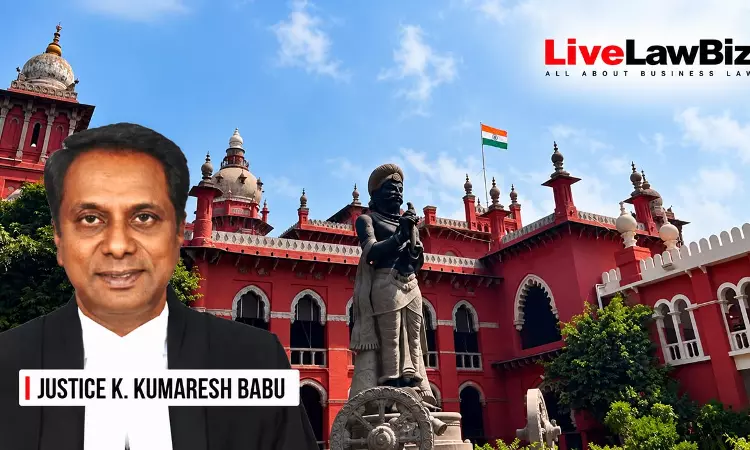
The Madras High Court has ruled that the State Bank of India Officers' Association's bye-laws did not provide for arbitration of a dispute over the removal of a member from the Association's membership and elected post.
Justice K. Kumaresh Babu dismissed an application filed by former Regional Secretary G. Ganapathy seeking to stay the Association's July 28, 2026 order removing him from its Executive Committee and primary membership pending arbitration.
“When that being the interpretation, this Court is of the view that the applicant for resolving a dispute that arises out of his removal from membership of the association including his elected post cannot be subject matter of an arbitration, as there is no arbitration clause for resolving such a dispute,” the court observed.
Ganapathy was elected Deputy Regional Secretary of the Association's Madurai Module in 2020. He became Regional Secretary in April 2024.
The dispute followed a complaint and counter-complaint involving another office bearer. Ganapathy alleged that the inquiry committee constituted to examine the matter was biased and that his removal violated the principles of natural justice.
The Association defended the removal and argued that Ganapathy could appeal to its General Body under the bye-laws instead of seeking arbitration. It also contended that the dispute was not arbitrable.
The court noted that Clause 74 of the Association's bye-laws empowered its Executive Committee to remove a member whose conduct it considered contrary or detrimental to the Association's interests. A member removed from the Association could appeal to the General Body.
The court also noted that Ganapathy had not filed an appeal against his removal from the Executive Committee.
Examining Bye-law 39, the court observed that it covered specified disputes involving the interpretation of the bye-laws, situations where the bye-laws were silent, and actions of the Secretariat or office bearers. Such disputes had to be referred to the Executive Committee first.
If serious differences arose over the committee's decision on a matter of substantial importance, the dispute could then be referred to voluntary arbitration.
The court held that Bye-law 39 did not cover Ganapathy's dispute over his removal from membership and his elected post. It consequently dismissed his application under Section 9 of the Arbitration and Conciliation Act, 1996, as not maintainable.
For Applicant: Advocate M. Santhana Raman
For Respondent: Advocate R.Shivakumar for M/s.K.M.Vijayan Associates