
Party Aware Of Arbitration Can't Challenge Unilateral Arbitrator's Appointment For First Time In Appeal: Madras HC
Ananya Tangri
15 July 2026 2:06 PM IST
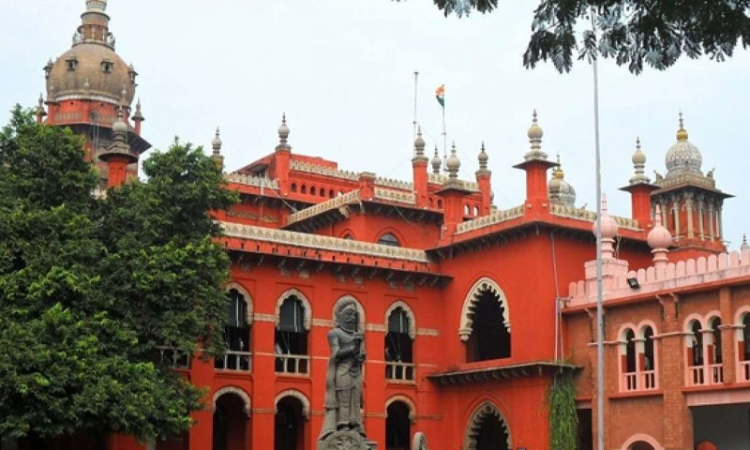
The Madras High Court has held that a party that knew of arbitral proceedings, sought adjournments, and then remained ex parte cannot raise a challenge to the unilateral appointment of the arbitrator for the first time in a Section 37 appeal after remaining silent for nearly ten years.
A Division Bench of Justice P. Velmurugan and Justice K. Govindarajan Thilakavadi dismissed an appeal by Nirmal Datacomm Private Limited and others against an arbitral award directing them to pay Redington (India) Limited over ₹6.44 crore with 18% interest.
Holding that the appellants' conduct amounted to waiver and acquiescence, the Court observed:
“In the present case, the appellants/respondents who had notice of the Arbitral proceedings, sought time to appear before the Arbitrator, but thereafter, deliberately failed to participate, and remained silent for nearly 10 years ordinarily cannot later challenged the unilateral appointment of the Arbitrator for the first time in proceedings under Section 34 of the A&C Act, 1996. Further, under Section 4 of the A&C Act, 1996, the party who knows of a procedural irregularity but proceeds without timely objection is deemed to have waived the objection. Under Section 16 of the A&C Act, 1996, objections relating to the jurisdiction or constitution of the Tribunal should ordinarily be raised before the Arbitral Tribunal itself.”
The Court further noted that the appellants did not challenge the appointment either before the tribunal or promptly before the Single Judge in the Section 34 proceedings. Their conduct therefore amounted to “acquiescence”.
Background
Redington, a public limited company engaged in the distribution of information technology hardware, software and other products, supplied goods to the appellants on a revolving credit basis between May 2011 and March 2012.
According to Redington, the appellants confirmed an outstanding balance of ₹6.52 crore in January 2015. After adjusting part-payments, an amount of ₹6.44 crore remained due.
The dispute was referred to a sole arbitrator appointed under Clause 19 of the invoices. Despite receiving notice and seeking adjournments, the appellants ultimately failed to participate in the proceedings. The arbitrator consequently passed an ex parte award for ₹6.44 crore with interest at 18%.
The appellants challenged the award under Section 34, alleging denial of a fair opportunity, non-communication of the claim statement and documents, absence of reasons and failure to reconcile the accounts. A Single Judge dismissed the challenge in August 2019, leading to the present appeal.
Appellants' Submissions
Advocate K.V. Sajeevkumar, appearing for the appellants, argued that the arbitrator had not followed the mandatory procedure under the Arbitration Act and failed to provide a fair and reasonable opportunity to contest the claim.
It was submitted that the claim statement and supporting documents were not properly communicated and that payments of nearly ₹2 crore had not been accounted for. The arbitrator also failed to consider limitation and reconciliation of accounts, counsel argued.
Before the Division Bench, the appellants also challenged the arbitrator's appointment as unilateral and relied upon the Supreme Court's decisions in TRF Limited v. Energo Engineering Projects Limited and Bhadra International (India) Pvt. Ltd. v. Airports Authority of India. It was argued that ineligibility went to the root of the arbitrator's authority and rendered the award unenforceable.
Redington's Submissions
Advocate S.S. Rajesh, appearing for Redington, submitted that the arbitrator had been appointed in July 2015, before the 2015 amendments to the Arbitration Act came into force on October 23, 2015.
He argued that the appellants never challenged the tribunal's constitution during the arbitration or in the Section 34 proceedings, even though they had sought several adjournments from the arbitrator.
Redington submitted that the appellants could not rely for the first time in the Section 37 appeal upon judgments delivered years after the appointment and award. Raising such an objection after nearly ten years would defeat Section 4 and the object of the Arbitration Act, it argued.
Court's Findings: Appointment Preceded 2015 Amendment
The High Court noted that the arbitrator was appointed on July 28, 2015, when Section 11(2) permitted parties to agree upon their appointment procedure. The 2015 amendments came into force only in October that year.
The award was passed on January 23, 2017, before the Supreme Court delivered TRF Limited in July 2017 and Perkins Eastman Architects DPC v. HSCC (India) Ltd. in November 2019.
The Court acknowledged that the Supreme Court has held in TRF Limited, Perkins Eastman and Bharat Broadband Network Ltd. v. United Telecoms Ltd. that an appointment made by an ineligible person may be treated as fundamentally invalid.
However, it held that those decisions could assist the appellants only if they had raised an objection during the arbitration or in the Section 34 proceedings. Having submitted to the proceedings and failed to object for years, the appellants could not raise the issue for the first time in appeal.
“When the appellants/respondents having participated in the proceedings without any objection for a long, a subsequent challenge to the validity of the appointment of the Arbitrator is not open in view of acquiescence,” the Court said.
Under Section 16(2), a jurisdictional plea must ordinarily be raised no later than submission of the statement of defence, while Section 4 deems a known objection waived when it is not raised without undue delay.
On merits, the Court found that the appellants had received notice and sufficient opportunities but chose not to participate. The arbitrator was therefore entitled under Section 25 to continue the proceedings and decide the claim on the available material.
Accordingly, the Court held that neither patent illegality nor any ground under Section 34 had been established and refused to interfere with the award, dismissing the appeal.
The court also noted that when the arbitrator was appointed on July 28, 2015, the unamended Arbitration Act permitted parties to agree on the procedure for appointing an arbitrator under Section 11(2). Since the 2015 amendments came into force only on October 23, 2015, the appointment had to be assessed under the law prevailing at the time.
For Appellants: K.V. Sajeevkumar
For Respondents: S.S. Rajesh for Redington (India) Limited.