
Pending Insolvency Proceedings, Financial Distress Can Warrant Asset Protection Pending Arbitration: Bombay High Court
Kirit Singhania
10 Oct 2026 10:19 AM IST
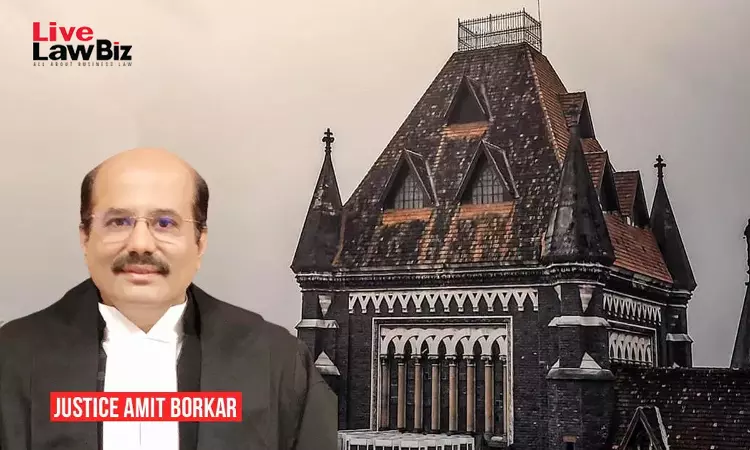
The Bombay High Court has held that the pendency of insolvency proceedings against a company does not, by itself, mean that a creditor's claim will fail.
However, when considered alongside audited financial losses, negative net worth, substantial liabilities and limited assets, such proceedings can strengthen the case for securing a creditor's claim pending arbitration.
“The mere pendency of such proceedings does not mean that the claim of the Petitioner will necessarily fail. But when this circumstance is seen together with the audited financial loss, negative net worth, substantial liabilities and limited assets disclosed by the Respondent, it adds to the circumstances which show that protection of the assets is required,” Justice Amit Borkar observed.
The dispute arose from unpaid invoices for goods supplied by Ingram Micro between July 26, 2024 and April 30, 2025. Ingram Micro relied on a balance confirmation showing approximately ₹23.84 crore outstanding as of February 15, 2025, an email dated July 29, 2025 acknowledging dues of ₹24.06 crore and subsequent assurances of payment.
It also relied on a cheque for ₹24.03 crore that was dishonoured on February 18, 2026. The company claimed ₹32.60 crore, including interest and sought interim protection under Section 9 of the Arbitration and Conciliation Act, 1996. Best Hawk disputed the final liability citing reconciliation, credit notes and adjustments and contended that the cheque was an old blank security instrument linked to an account closed in March 2021.
The Court observed that the correspondence contained repeated references to outstanding dues and assurances of payment, which did not support the claim that there had been a genuine denial of liability from the outset. However, it left the reconciliation and adjustment issues open for the arbitral tribunal.
On the issue of the dishonoured cheque, the Court declined to treat it as proof of the entire monetary claim, noting that the cheque dispute required examination in appropriate proceedings.
It nevertheless held that the invoices, correspondence, balance confirmation and financial statements independently supported the request for interim protection.
Relying on the principle laid down in Norvic, the Court held that financial difficulty alone does not establish dishonest intent to dissipate assets. However, proof of such intent is unnecessary where objective material indicates a “strong possibility” of asset diminution, warranting protection based on the Respondent's financial position and the likely availability of assets for execution.
Accordinbgly, the Court directed Best Hawk to secure ₹32.60 crore within four weeks through a deposit or bank guarantee, clarifying that this was not a payment decree and that the claim's merits, including reconciliation, interest and cheque validity would be decided in arbitration.
For Petitioner: Advocates Sagar Wagle with Kashyap Samant, and Lisa Rasquinha i/by K & P Legal Combine LLP
For Respondent: Advocates Sonal with Vaibhav Singh, Anushka Parab and Mohammad Adil i/by The Max Legal