
Arbitral Award Challenge Limitation Runs From Certified Copy Receipt: Madhya Pradesh High Court
Mohd.Rehan Ali
27 Oct 2026 6:19 PM IST
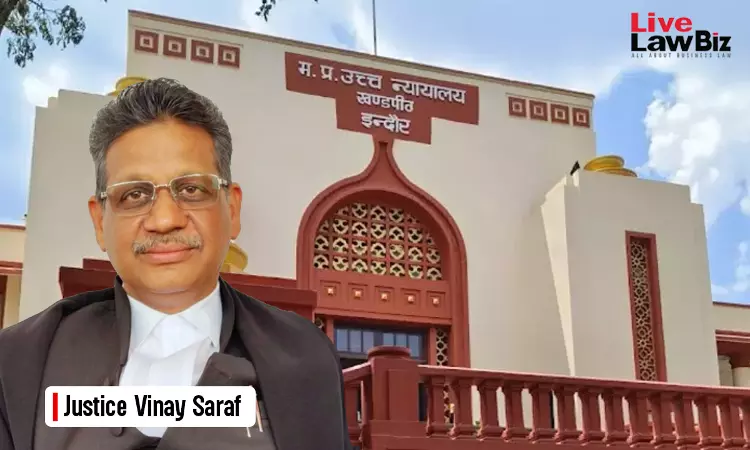
The Madhya Pradesh High Court on 23 October held that where an arbitral tribunal has not served a signed copy of an award under Section 31(5) of the Arbitration and Conciliation Act, 1996 (Arbitration Act), the limitation period for challenging the award under Section 34(3) begins when the aggrieved party receives a certified copy.
Justice Vinay Saraf dismissed an appeal filed by Anjana, proprietor of Maheshwari Vastra Bhandar, against the rejection of her application to set aside an arbitral award in favour of Sulabh Syntex. The Bench held:
“…The application under Section 34 for setting aside the award can be filed along with the signed copy of the award or with the certified copy of the award, meaning thereby if a party receives the certified copy of the award, the party may file the application under Section 34 and there would be no difficulty for the party to file the application for setting aside the award. Once the certified copy is received and a party is aggrieved by the award and does not choose to file the application for setting aside the same within the limitation period prescribed by the law, then the party would have to suffer for the negligent inaction.”
Sulabh Syntex filed a claim before the Arbitration Board of Shrimant Maharaja Tukoji Rao Cloth Market Merchants Association, Indore, on 24 May 2018, seeking recovery of Rs. 2,28,210 for goods allegedly purchased by Maheshwari Vastra Bhandar. On 11 December 2018, the Board ruled in favour of Sulabh Syntex and directed recovery of Rs. 2,27,710, along with interest and arbitration costs.
Anjana contended that the arbitral tribunal had not served her with a signed copy of the award and that she received a certified copy on 18 March 2019. She subsequently filed an application under Section 34 of the Arbitration Act to set aside the award, but the District Court dismissed it as time-barred.
Before the High Court, Anjana relied on Union of India v. Tecco Trichy Engineers and Contractors and State of Maharashtra v. ARK Builders Private Limited, arguing that limitation begins only upon delivery of a signed copy by the arbitral tribunal under Section 31(5). She contended that since no signed copy had been served, the limitation period had not commenced.
The High Court relied on the Bombay High Court's decision in Rahul S/o Omprakash Gandhi v. The Akola Janta Commercial Co-operative Bank Limited, 2023 SCC OnLine Bombay 814, and the Chhattisgarh High Court's decision in Union of India v. Bhola Prasad Agrawal and Another, 2022 SCC OnLine Chhattisgarh 1644, to hold that receipt of a certified copy could trigger the limitation period where the arbitral tribunal had not served the signed award.
Further, the Bench noted that Section 34(3) prescribes three months to challenge an arbitral award, with a further 30 days available for condonation of delay on sufficient cause, but no extension beyond that period. Anjana filed her application on 7 September 2019, approximately 183 days after receiving the certified copy on 18 March 2019.
Accordingly, the High Court dismissed Anjana's appeal and upheld the rejection of her application as time-barred.
For Appellant: Shri Akash Rathi
For Respondent: Shri Pranay Joshi