
Period Of Judicially Foreclosed Arbitral Award Execution Excluded From Limitation: Calcutta High Court
Kirit Singhania
10 Sept 2026 3:28 PM IST
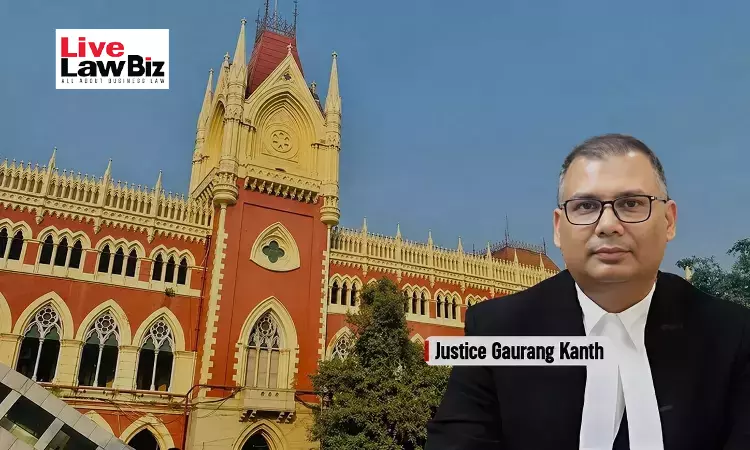
The Calcutta High Court on 7 September held that the period during which execution of an arbitral award was practically unavailable due to binding judicial precedent cannot be counted for computing the limitation period.
Justice Gaurang Kanth allowed Steel Authority of India Limited's (SAIL) execution petition, holding that the period from 29 February 2008 to 22 October 2015 had to be excluded while computing the 12-year limitation period. The Bench held:
“To hold that limitation ran uninterrupted through the very period in which the award-holder's remedy stood paralysed by binding authority would allow the mischief the Amendment was designed to cure to operate as an independent and permanent bar to the Award notwithstanding the cure.”
The dispute arose from an arbitral award dated 29 February 2008 in favour of SAIL, awarding it Rs. 5.51 crore along with 18% interest compounded monthly.
The award debtor had challenged the award. The challenge was initially dismissed for default, later restored and remained pending. SAIL subsequently filed the execution petition.
SAIL argued that under the law prevailing before the 2015 amendment, the pendency of a challenge to an arbitral award prevented its execution in practice. It relied on the Supreme Court's decision in National Aluminium and the 246th Law Commission Report, which had noted that the automatic stay regime “virtually paralyses” the winning party. The award debtor, however, argued that the execution petition was barred by limitation as it had been filed nearly 17 years after the award.
The Court noted that the Supreme Court in BCCI v. Kochi Cricket had held that the amended enforcement regime applied to pending court proceedings from 23 October 2015. It also noted that the Supreme Court in Hindustan Construction Co. v. Union of India subsequently struck down the legislative provision seeking to revive the automatic stay regime.
It held that although Hindustan Construction declared the earlier automatic stay doctrine legally incorrect, it could not retrospectively make a remedy practically available when binding precedent had foreclosed it.
Relying also on the principle that the law does not compel the impossible, the Bench held that the period during which execution was judicially foreclosed could not prejudice the award-holder. It observed:
“The period from 29.02.2008 to 22.10.2015 stands excluded in computing when the Award “became enforceable” for the purposes of Article 136, on the ground that execution stood judicially foreclosed to the Award-holder throughout that period by binding authority later held to be per incuriam. The Award is accordingly to be treated, for the purposes of Article 136, as having become enforceable on 23.10.2015.”
The Bench also distinguished the Calcutta High Court's earlier decision in Goutam Paul, observing that it had not decided the specific question of whether the practical unavailability of execution between 2008 and 2015 postponed the date on which the award became enforceable.
Accordingly, the High Court held that the award became enforceable on 23 October 2015, from which the 12-year limitation period would expire on 23 October 2027. As SAIL had filed the execution petition before that date, the Bench held that it was not barred by limitation. It directed the award debtor to file its affidavit of assets within four weeks.
For Petitioner: Rudraman Bhattacharya, Sr. Adv, Advocates Supriya Dubey, Akash Munshi
For Respondent: Jishnu Saha, Sr. Adv, Advocates Chayan Gupta, Tanay Agarwal, Chitresh Saraogi