
Arbitral Tribunal Can Decide Limitation Even After Appointment Under Section 11: Allahabad High Court
Upasna Agrawal
30 April 2026 4:28 PM IST
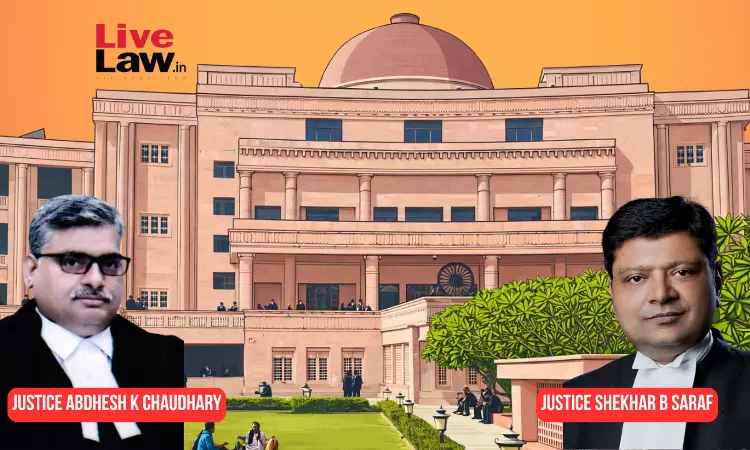
The Allahabad High Court on 27 April held that even where a Court appoints an Arbitral Tribunal under Section 11 of the Arbitration and Conciliation Act, 1996 without examining limitation, the Arbitral Tribunal can still decide such objections under Section 16.
A Bench of Justices Shekhar B. Saraf and Abdesh Kumar Chaudhary held that Arbitral Tribunals retain full authority to decide their own jurisdiction, including limitation, even after a Section 11 reference, and set aside the Tribunal's view that it lacked such power. It noted:
“even if the High Court referred the matter to arbitration, the Arbitral Tribunal under Section 16 of the Act had the power to decide on its own jurisdiction. The Arbitral Tribunal is the forum for deciding all issues that the parties may raise including the issues of limitation that may have not been raised by the parties at the time of order passed by the High Court under Section 11 of the Act.”
The dispute arose from a partnership deed between Rajendra Prasad Singh, the petitioner and Santosh Kumar Singh (Respondent 2) over running Arch Construction Thru. Disputes arose regarding payments, after which the petitioner wrote to the bank, leading to freezing of the firm's account. The respondent then opened another account and received payments from Power Grid Corporation in the name of the firm.
The petitioner lodged an FIR alleging diversion of funds, leading to the arrest of Respondent 2. While criminal proceedings remained pending, the respondent issued a legal notice and sought arbitration by approaching the High Court under Section 11.
The High Court appointed a sole Arbitrator ex parte. The petitioner's recall application against the appointment failed, and Arbitral proceedings commenced. The petitioner then filed an application under Section 16 challenging jurisdiction on the ground that the Section 11 application itself was barred by limitation.
The Arbitral Tribunal rejected the objection, holding that it could not examine limitation since the High Court had appointed it. The petitioner challenged this order before the High Court.
The High Court reiterated that Arbitral Tribunals function as the primary forum to decide jurisdictional objections under the doctrine of competence-competence. It observed that judicial interference in Section 16 orders remains limited to exceptional cases such as perversity or absence of any alternative remedy.
It further held that if such orders are not corrected, the party would be left without any remedy under the Arbitration Act. The judges observed:
“The doctrine of competence-competence enshrined under Section 16 of the Act empowers an Arbitral Tribunal to rule on its own jurisdiction which makes it crystal clear that all the issues of jurisdiction which includes the issue of deciding its jurisdiction on the ground of limitation for appointing an arbitrator should be adjudicated upon by the Tribunal…”
The Court also reiterated the broader Section 16 principle:
“Even if the High Court refers the matter to the Arbitral Tribunal under Section 11 of the Act, the Tribunal has the power under Section 16 of the Act to hold that there is no valid and subsisting arbitration agreement. The issue of limitation being a jurisdictional point can be raised at any point.”
Accordingly, the High Court held that the Arbitral Tribunal could decide the limitation objection arising from the Section 11 proceedings. It found the Tribunal's refusal to do so perverse, set aside the order, and directed it to first decide the limitation issue.
Counsel for Petitioner(s): Nirmit Srivastava, Tejas Singh, Aakched Nath
Counsel for Respondent(s): Ritesh Kumar Srivastava, Alok Kumar Singh