
No Intra-Court Appeal Against Single Judge Order In Arbitration Execution Proceedings: Allahabad High Court
Upasna Agrawal
22 Sept 2026 8:46 PM IST
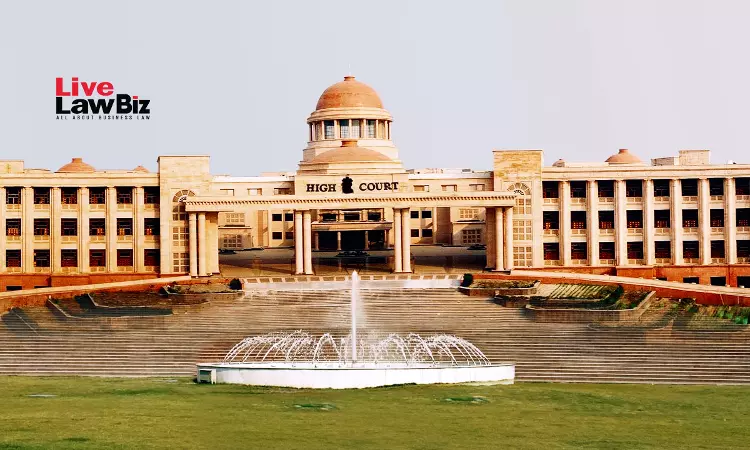
The Allahabad High Court at Lucknow has held that an intra-court appeal (special appeal) under Chapter VIII Rule 5 of the Allahabad High Court Rules, 1952, is not maintainable against an order passed by a Single Judge in proceedings for enforcement of an arbitral award under Section 36 of the Arbitration and Conciliation Act, 1996.
It held that the Act is a complete code that permits appeals only against the orders listed in Section 37, and an order under Section 36 is not one of them.
Section 37(1) of the Arbitration and Conciliation Act, 1996 provides that notwithstanding anything in any other law, an appeal shall lie “(and from no others)” against orders under Sections 8, 9 and 34, while Section 37(2) provides for appeals against orders of the arbitral tribunal under Sections 16 and 17. Section 5 of the Act bars any judicial authority from intervening in matters governed by Part I except where that Part so provides.
The bench of Justice Rajan Roy and Justice Manjive Shukla held
“When Section 37 is read with Section 5 the irresistible conclusion, especially in view of the settled legal position that the Act, 1996 is a complete and exhaustive code in itself prescribing specific remedies and not only this but also explicitly excluding any other remedy not prescribed under the Act, 1996 especially in respect of the provision contained in Part– I, is that an appeal under Chapter VIII Rule 5 of the Allahabad High Court Rules, 1952 against an order passed under Section 36, if entertained, would be against the grain of the Act, 1996, especially, Section 5 read with Section 37 thereof.”
The Court further held that an earlier ruling in the same execution proceedings, which had held such a special appeal maintainable, would not operate as res judicata, since the objection went to the jurisdiction of the Court and was a pure question of law.
The appellants filed two special appeals challenging orders dated 12.05.2026 and 11.07.2025 passed by a Single Judge in the same proceedings under Section 36 of the Act. The respondent objected to the maintainability of the appeals on the basis of Sections 5 and 37 of the Act.
Counsel for the appellants argued that in an earlier round between the same parties, arising from the same Section 36 proceedings, the High Court had held Special Appeal No. 394 of 2025 to be maintainable, and since the respondent never challenged that decision, the objection was barred by res judicata and constructive res judicata.
It was further argued that arbitral proceedings come to an end with the final award under Section 32, and an award is executed as a decree under Order XXI CPC, so an order in execution is not an order under the Act. Since the Act is silent on any remedy against Section 36 orders, it was pleaded that the High Court Rules would govern and an intra-court appeal would lie.
Counsel for the respondent argued that res judicata cannot apply to a question of jurisdiction or a pure point of law.
On res judicata, the Court relied on the decisions of the Supreme Court in Canara Bank v. N.G. Subbaraya Setty and Smt. Isabella Johnson v. M.A. Susai to hold that an erroneous decision on jurisdiction, or on a pure question of law unconnected with the rights of the parties, does not bar the issue from being raised again, even at a later stage of the same proceedings. It observed that the respondent was questioning whether the forum itself was available, and the earlier bench had examined only Chapter VIII Rule 5 and not the provisions of the Act.
“The legal position is settled that even consent can not confer jurisdiction upon a Court. The earlier decision can not be applied on the pretext of the principle of res judicata/ constructive res judicata to vest this Court with jurisdiction if it otherwise does not have in law.”
On maintainability, the Court relied on Fuerst Day Lawson Limited v. Jindal Exports Limited, wherein the Supreme Court held that the Act is a self-contained and exhaustive code and a Letters Patent Appeal would not lie.
Rejecting the argument that the case concerned a foreign award under Part II, the Court held that Section 37, which governs domestic awards, contains an express bar and is stricter than the provision considered there, so the ratio would apply with greater force.
The Court held that Bharat Kantilal Dalal v. Chetan Surendra Dalal, wherein the Supreme Court dismissed Letters Patent Appeals arising from execution of an arbitral award as not maintainable, applied squarely to the case. It also relied on Union of India v. Simplex Infrastructures Limited and the seven-judge bench decision of the Supreme Court on the interplay between the Arbitration Act and the Stamp Act, which treated the Act as a self-contained code covering execution of awards as well, leaving no room for procedures not mentioned in it.
Rejecting the argument that execution takes place under the CPC and not under the Act, the Court observed
“What it means is that a legal fiction has been created by which the award is deemed to be a decree and is to be enforced under Section 36 of the Act, 1996 with the aid of the provisions of the Code of Civil Procedure but it does not mean that the award is in fact a decree and its execution is not under the Act, 1996 but under the Code of Civil Procedure, 1908.”
Relying on Government of India v. Vedanta Limited and Amazon.com NV Investment Holdings LLC v. Future Retail Limited, the Court held that an award is deemed to be a decree only for the purpose of execution and an application to enforce it is under the Act and not under Order XXI CPC. It also rejected the argument that an intra-court appeal is akin to a revision.
The Court held that the remedy, if any, lies before the Supreme Court under Article 136 of the Constitution of India.
Accordingly, Special Appeals were dismissed.