Receipt Of Ink-Signed Arbitral Award Not Required; Scanned Copy Sufficient To Trigger Limitation: Allahabad HC
Upasna Agrawal
26 Nov 2026 9:34 AM IST
The Allahabad High Court has held that the limitation for challenging an arbitral award under Section 34(3) of the Arbitration and Conciliation Act, 1996, runs from receipt of a copy of the signed award, and that the Act nowhere requires an ink-signed copy to be delivered.
It held that a copy bearing a photocopied signature, a copy certified by the arbitrator, or a scanned copy sent by e-mail is enough.
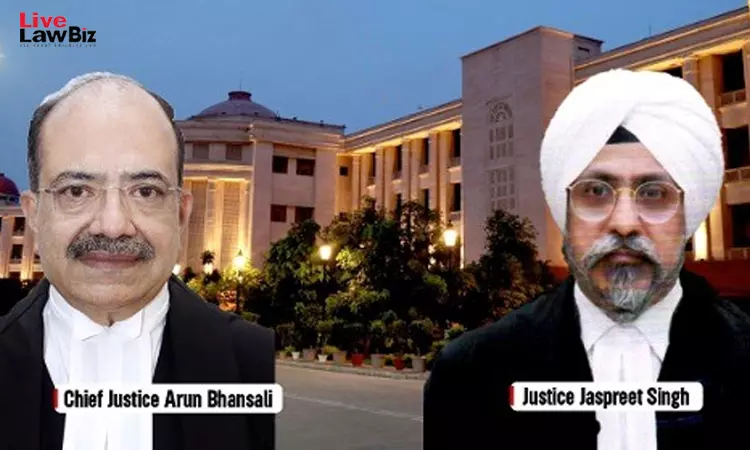
The bench of Chief Justice Arun Bhansali and Justice Jaspreet Singh held
“The law/provisions nowhere envisage or prescribe delivery of an ink signed copy of the arbitral award as the arbitral award can only be one bearing the inked signature of the arbitrator and the parties are delivered the copy of the award, which may bear photocopied signature, may be indicated as a certified copy by the arbitrator or even a scanned copy transmitted by e-mail or supplied in physical form to the party.”
The sole arbitrator passed an award of ₹52,78,166.25 against the appellant railway on August 6, 2024. Its application under Section 34 was filed on April 5, 2025, along with an application for condonation of delay, on the plea that the award had reached it through e-office on December 9, 2024, and the original on December 17, 2024.
The respondent produced a communication dated August 6, 2024, by which the arbitrator forwarded the award to the DGM, North Eastern Railway, Gorakhpur, with copies endorsed to both sides and receipted under signature by each on that date. The Commercial Court held that the award had been received on August 6, 2024, and dismissed the application as barred by limitation, the delay exceeding the additional 30 days that Section 34(3) permits to be condoned.
Before the High Court, the appellant claimed that the arbitrator had only returned the original record to its staff that day and had supplied no certified copy. The court rejected the plea as false on the face of it. The attachment was described as the original award, copies were marked and receipted by both sides, and nothing in the document referred to any record.
The respondent had also written to the appellant the next day, seeking compliance and annexing a copy of the award, which it could not have done without having received the award.
The arbitrator, who was an official of the appellant, had stated in an RTI reply dated April 8, 2025, that a colour scanned copy was sent on August 6, 2024, and the original on December 17, 2024. Even on that version, the Court held, the scanned copy together with the covering communication satisfied Section 34(3) read with Section 31(5).
On a communication dated July 1, 2025, from the Office Superintendent claiming that he had received only the tender file record on August 6, 2024, the Court said:
“A self serving document cannot be permitted to be used by the appellant for distorting the facts.”
Holding that the Commercial Court was justified in finding the application barred by limitation, the court dismissed the appeal.
For Appellant: Deepanshu Dass
For Respondent: Shailendra Singh Rajawat, Alok Singh