
State Gets No Special Leeway In Delay Condonation Under Arbitration Act: Allahabad High Court
Upasna Agrawal
4 Aug 2026 1:57 PM IST
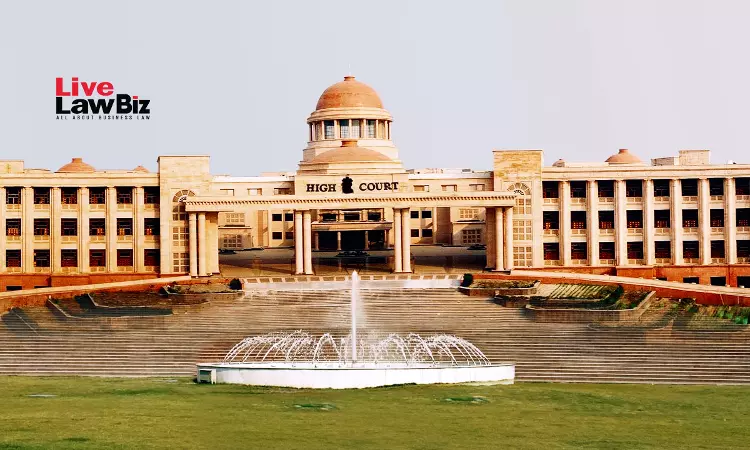
The Allahabad High Court on 30 July held that government bodies are not entitled to any special concession under Section 34(3) of the Arbitration and Conciliation Act, 1996 and that the State and private parties are subject to the same standard for proving “sufficient cause.”
A Division Bench of Justices Rajan Roy and Abdhesh Kumar Chaudhary dismissed an appeal filed by the railway authorities against the Commercial Court's refusal to condone a 28 day delay in filing objections to an arbitral award. The judges held:
“Different yard-sticks cannot be employed for a government entity and a private body for deciding an application for condonation of delay. The law of limitation applies in equal force to both the litigating parties. Whether it is a government body or a private, the parties have to show existence of 'sufficient cause' in their favour, before the discretionary power of the court could be triggered for condoning the delay. The said understanding of this court gathers specific significance in the wake of section 18 of the Arbitration & Conciliation Act, which mandates for equal treatment of the parties.”
The dispute arose from a lease executed in 2010 under which the respondent company, which operates an integrated steel plant at Sahjanwa in Gorakhpur district, took about 7,702.07 square metres of railway land on lease for a private railway siding at an annual rent of Rs. 9,60,684. After the lease expired, the railway authorities proposed a fresh agreement in 2016 increasing the annual rent to Rs. 13,47,409 along with 7 per cent service tax. The company disputed the revision and invoked the arbitration clause.
The High Court appointed a sole arbitrator under Section 11 of the Arbitration Act, (which empowers the Court to appoint an arbitrator where parties fail to do so) in 2022. By an award dated 8 December 2023, the arbitrator allowed the company's claim, revised the annual lease rent to Rs. 1,23,300 and directed the railway authorities to refund Rs. 1,79,26,701 with 8 per cent interest on the excess amount recovered.
The railway authorities filed objections to the award under Section 34 of the Arbitration Act, before the Commercial Court, Lucknow after a delay of 28 days along with an application seeking condonation of delay. The Commercial Court held that the authorities had failed to establish sufficient cause, rejected the application and consequently dismissed the objections.
The railway authorities challenged that order under Section 13 of the Commercial Courts Act, 2015 (which provides for appeals from Commercial Courts) read with Section 37 of the Arbitration Act (which governs appeals in arbitration matters).
They argued that the delay fell within the additional 30 day period permitted under the proviso to Section 34(3) and resulted from administrative procedures. Further, government departments should receive greater latitude than private parties because administrative delays are unavoidable. They also argued that the challenge raised substantial grounds on merits and that procedural limitation should not defeat justice.
The company argued that delay within the additional 30 day period can be condoned only if sufficient cause is established. It submitted that the affidavit filed by the railway authorities disclosed no cogent explanation and that the State cannot claim any treatment different from that available to a private litigant.
The High Court held that its jurisdiction under Section 37 is confined to examining whether the Court exercising powers under Section 34 acted within the limits of its jurisdiction. Referring to the Supreme Court's decision in Punjab State Civil Supplies Corpn. Ltd. v. Sanman Rice Mills, it observed:
“the recent trend of the Courts had been to more marginalize the power of the Appellate Courts in interfering an Award and has technically switched over from appellate forum to superintendence forum.”
It found that the arbitral award was received on 8 December 2023 and the three month limitation period expired on 7 March 2024. The affidavit showed that the railway authorities obtained the first legal opinion on 29 January 2024, received a second opinion from the railway law department on 29 February 2024, appointed counsel on 14 March 2024 and prepared the application on 18 March 2024. However, they filed it only on 5 April 2024.
Finding that the authorities failed to explain the 17 day delay in signing and filing the application after they already knew that the statutory period had expired, the Bench held:
“We are afraid this indifferent attitude of the concerned officials in delaying the signing and sending it across for filing and taking almost 17 days cannot be termed to be a sufficient cause for condoning the delay and has to be termed nothing short of negligent.”
Further, it rejected the contention that the merits of the challenge justified condonation of delay. It held that the strength of the case is irrelevant while deciding whether sufficient cause has been established and that considering the merits at that stage would conflate a procedural enquiry with adjudication of the challenge itself. It noted:
“The summation of our aforesaid discussion is that the proof of sufficient cause is a condition precedent for exercising of the discretionary jurisdiction as provided under proviso to Section 34(3) of the Act. If sufficient cause is not proved the matter should rest, then and there.”
Accordingly, the High Court held that the railway authorities had failed to establish sufficient cause for the delay, agreed with the Commercial Court that the explanation was inadequate and dismissed the appeal.
Counsel for Appellant: Deepanshu Dass
Counsel for Respondent: Gaurav Mehrotra, senior advocate assisted by Akber Ahmad and Utkarsh Vardhan Singh, advocates.