
Arbitrator's Hasty Closure of Evidence During COVID Violated Section 18, Vitiating Award: Gujarat High Court
Ananya Tangri
15 July 2026 3:12 PM IST
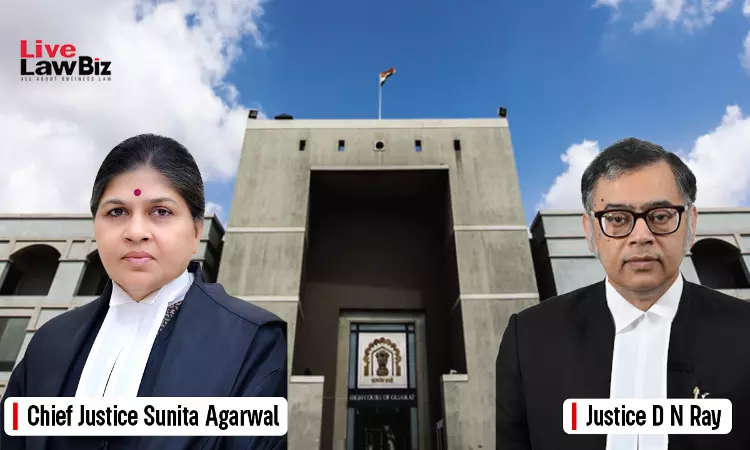
The Gujarat High Court has set aside an arbitral award after finding that the arbitrator unnecessarily hastened to close a party's right to lead evidence during the second wave of the COVID-19 pandemic.
The Court held that such treatment violated the requirement under Section 18 of the Arbitration and Conciliation Act, 1996 to treat the parties equally and give each side a full opportunity to present its case.
A Division Bench of Chief Justice Sunita Agarwal and Justice D.N. Ray set aside an award dated July 16, 2021, under which a contractor had been granted approximately ₹1.98 crore against Indore Sahkari Dugdh Sangh.
The Court found it particularly significant that the arbitrator had acknowledged that several months remained available for making the award, but still refused to accept notarised affidavits tendered one day after the respondents' evidence had been closed.
The bench observed, “What is not palatable to us is that, despite noting the fact that ample time was available for the award to be made and that the respondents had notarized affidavits which they were seeking to place on record in the proceedings, which were being conducted right in the midst of the second wave of the COVID-19 pandemic, the learned Arbitrator closed the right of the respondents and proceeded to deliver the award.”
It further held that the decision to close the evidence, despite the affidavits being ready and available, could not be sustained.
“The treatment meted out to the respondents was such as to vitiate the proceedings on account of the volatility and lack of even temperament demonstrated by the learned Arbitrator,” the Court said.
Background
The dispute arose from a 2013 contract for civil, structural, road and allied works connected with construction of a new dairy plant for Indore Dugdh Sangh.
The contractor invoked arbitration over disputes concerning running account bills, reimbursement of service tax and other contractual claims. A sole arbitrator partly allowed the claims and awarded an aggregate amount of ₹1,97,78,235, along with interest on certain components and costs.
Indore Dugdh Sangh challenged the award under Section 34 of the Arbitration Act. However, the Commercial Court at Ahmedabad dismissed the challenge in March 2023, leading to the appeal before the High Court under Section 37.
Appellant's Submissions
Senior Advocate Dhaval C. Dave, appearing for Indore Dugdh Sangh, argued that the arbitrator denied the organisation a fair opportunity to lead evidence.
He submitted that affidavits filed on behalf of two witnesses under Order XVIII Rule 4 of the Code of Civil Procedure were rejected because one was unsigned and unattested, while the other, though signed, had not been notarised or attested.
It was further argued that the arbitration took place during the COVID-19 pandemic, when access to notaries and oath commissioners was severely restricted. Despite notarised affidavits being produced immediately thereafter, the arbitrator refused to take them on record.
Respondent's Submissions
Senior Advocate R.S. Sanjanwala, appearing for the contractor, defended the award and submitted that the contract required reimbursement of service tax upon production of the necessary receipts.
He argued that delays in execution had resulted from the appellant's own defaults, including failure to provide drawings and designs, delayed verification and payment of bills, failure to obtain pollution clearance and waterlogging at the site.
Evidence Closed During Second COVID Wave
Examining the arbitral record, the High Court noted that the contractor closed its evidence on April 6, 2021. The appellant was granted two weeks to file affidavits of its witnesses.
Although the matter was initially fixed for April 22, no proceedings were held that day, and the next effective hearing took place on June 29 during the second wave of the COVID-19 pandemic.
On that date, affidavits of two witnesses were presented. One had not been signed or attested, while the other was signed but not notarised. The arbitrator held that they could not be treated as evidence and closed the appellant's right to lead evidence.
The following day, counsel for the appellant produced notarised affidavits and explained that the earlier defect arose because notaries and oath commissioners had not been available during the lockdown.
The arbitrator nevertheless rejected the request, observing that once the right to lead evidence had been closed, “that was end of the matter”.
The High Court said the concluding portion of the June 30 order disclosed “a tone of irritability, if not anger”, merely because an explanation that could have been offered the previous day was advanced one day later.
The Court also noted that the arbitrator had expressly calculated that, after excluding the period covered by the Supreme Court's COVID limitation orders, at least nine months remained available for making the award.
Thus, there was no limitation-related urgency requiring immediate closure of the appellant's evidence.
Relying on the Supreme Court's decision in Narinder Singh and Sons v. Union of India, the Bench said speedy disposal and reasonable opportunity are both essential to a fair arbitral process.
The award was therefore vitiated under Section 18 and liable to be set aside. The Court consequently quashed both the arbitral award and the Commercial Court's order dismissing the Section 34 challenge.
The parties were granted liberty to initiate fresh arbitration or court proceedings. The Court further directed that, if fresh proceedings were commenced within four weeks, the period between commencement of the earlier arbitration and the High Court's judgment would be excluded while calculating limitation.
For Appellants: Senior Advocate Dhaval C. Dave, with Udit N. Vyas and R.P. Pansari
For Respondents: Senior Advocate R.S. Sanjanwala, with Ankit Shah