Approval Of Invoices Does Not Automatically Mean Approval Of Revised Fee Arrangement: Delhi High Court
Mohd.Rehan Ali
7 Nov 2026 10:36 AM IST
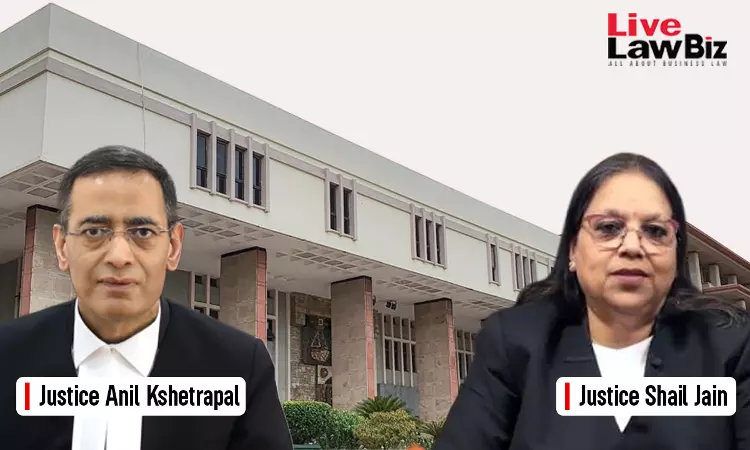
The Delhi High Court has held that approval of invoices does not automatically establish acceptance of a revised fee arrangement. While invoice approvals may be relevant evidence, they do not replace the contractual requirements for changing the agreed rates.
A Division Bench of Justice Anil Kshetarpal and Justice Shail Jain observed that the two forms of approval are distinct.
“Approval of invoices and approval of a revision to the fee arrangement are distinct matters, although evidence of the former may bear upon the latter. This Court cannot assume that the original arrangement governed in order to treat evidence of its replacement as immaterial,” the court held.
The Bench was hearing an appeal by Viceroy Engineering challenging the dismissal of its petition against an arbitral award that rejected its counterclaims against Smiths Detection Veecon Systems.
The dispute arose from a 2010 outsourcing agreement under which Viceroy provided technicians for installation, commissioning and maintenance of Smiths Detection equipment. An amendment executed in April 2011 introduced revised rates, which Viceroy claimed continued to apply until July 2015.
The agreement required revisions to the fee arrangement to be approved by Smiths' Vice President Service, Finance Director and Managing Director. The court noted that the arbitral tribunal had found that approval by the first two officials was not established.
The Bench clarified that approval could be inferred from the parties' conduct and did not necessarily require all three officials to sign the revised fee schedule. However, Viceroy had failed to show how the correspondence, payment assurances and tax records established the required officials' assent to the revised rates.
The court also upheld the rejection of Viceroy's ₹17.40 crore damages claim alleging breach of a non-solicitation clause. Although it found that some emails referred to approaches made to Viceroy's employees before the agreement expired, the company had not established the actual business loss underlying its damages claim.
It further upheld the rejection of the viceroy's ₹10 lakh claim for reputational injury, finding no demonstrated harm attributable to Smiths.
Its separate claim of ₹63.02 lakh for services allegedly provided after the agreement expired was not entertained in appeal.
For Appellant: Senior Advocate Murari Tiwari, along with Advocates Nimisha Gupta, Rahul Kumar, Indira Murthy and Devansh Malhotra.
For Respondent: Advocates Payal Chawla, Heena Shaheen, Sidharth Kaushik and Anushka.