
Writ Against Highways Act Arbitration Award Not Entertainable When Statutory Remedy Available: Andhra Pradesh High Court
Ritika Verma
19 Aug 2026 11:12 AM IST
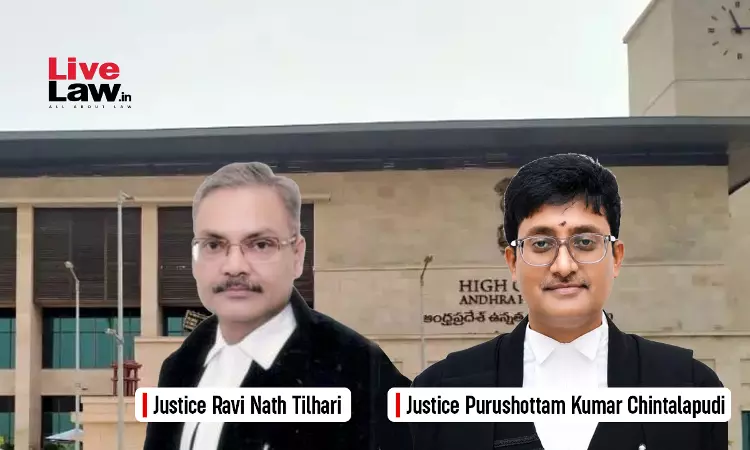
The Andhra Pradesh High Court has recently ruled that a party challenging an arbitral award under the National Highways Act, 1956 cannot ordinarily bypass the statutory remedy under the Arbitration and Conciliation Act, 1996.
The party cannot directly approach the court under Article 226 of the Constitution
“The N.H. Act and the Act, 1996 are complete code. The statute provides the remedy under Section 34 of the Act, 1996 to challenge the award of the arbitrator on specified grounds and any party aggrieved from the decision under Section 34 has the statutory remedy of appeal under Section 37 of the Act. So, ordinarily a challenge to an award shall be made in proceedings under Section 34 of the Act, 1996 on the statutorily recognized grounds. Challenge to the award directly under Article 226 of the Constitution of India without taking recourse to Section 34 of the Act, 1996, in the absence of any well recognized exceptions being attracted, must ordinarily fail on the ground of statutory alternative remedy. ” a Division Bench of Justice Ravi Nath Tilhari and Justice Purushottam Kumar Chintalapudi observed.
Section 3G(6) of the National Highways Act applies the Arbitration and Conciliation Act, 1996 to arbitration under the National Highways Act. Section 34 provides the mechanism for challenging an arbitral award, while Section 37 provides an appeal against the decision under Section 34.
The case concerned compensation for land acquired in Anakapalli Village and Mandal for a National Highway. Dissatisfied by the compensation awarded to them by the arbitrator, the landowners approached High Court under its writ jurisdiction.
They argued that since the land was covered by commercial or industrial land use it should have been reflected in the order.
They relied on a September 29, 2018, letter issued by the Visakhapatnam Urban Development Authority.
The Single Judge set aside the arbitrator's award and remanded the matter for fresh consideration of the VUDA letter.
NHAI challenged this before the Division Bench, arguing that the writ petition should not have been entertained when the landowners had a Section 34 remedy.
The bench relied on the Supreme Court's decisions in Whirlpool Corporation v. Registrar of Trade Marks, Commissioner of Income Tax v. Chhabil Dass Agarwal, and Rikhab Chand Jain v. Union of India.
It also considered Thansingh Nathmal v. Superintendent of Taxes and the Allahabad High Court's decision in Ramashankar Yadav v. Union of India.
These decisions recognise that a High Court should ordinarily not entertain a writ petition when an effective statutory remedy is available, subject to exceptions such as violation of fundamental rights, natural justice, lack of jurisdiction, or challenge to the vires of a statute.
None of those exceptions applied here, the bench held. It also found that the arbitrator had in fact considered the VUDA letter but declined to rely on it for the reasons recorded in the award.
The bench distinguished Hareshbhai Punabhai Moradiya v. Competent Authority and Vittal Reddy v. Principal Secretary, relied on by the landowners. In those cases, the courts found circumstances such as relevant material not being considered or statutory violations.
The present case was different because the VUDA letter had been considered while determining the compensation.
The writ appeal was allowed and the Single Judge's January 24, 2025 judgment was set aside. The landowners were left free to pursue any other remedy available before the appropriate forum. There was no order as to costs.
For Appellant: Advocate Sodum Anvesha, for Chaudhary & Chaudhary Associates and Solicitors
For Respondents: Advocate Narasimha Rao Gudiseva, for B.S. Mani Kumar, Government Pleader for Land Acquisition